Sephora's Loyalty Overhaul: What a 46-Million-Member Program Tells Investors About $60B Beauty Retail's Next Distribution War

Prestige beauty retail is no longer a destination business. It is a retention business, and the economics of that shift are reshaping how specialty retailers structure their distribution architecture, brand partnerships, and member engagement models at scale.
Sephora's Beauty Insider program now claims more than 46 million enrolled members, a figure that rivals the active customer bases of several mid-tier e-commerce platforms. The LVMH-owned retailer's decision to deepen the program's experiential layer, through tiered celebration events, gamified challenge mechanics, and an expanded month-long engagement window in August, signals something beyond a loyalty refresh. It signals a structural repositioning of the retail floor as a data-capture and brand-amplification infrastructure, not merely a point-of-sale environment.
Loyalty Mechanics as Distribution Leverage
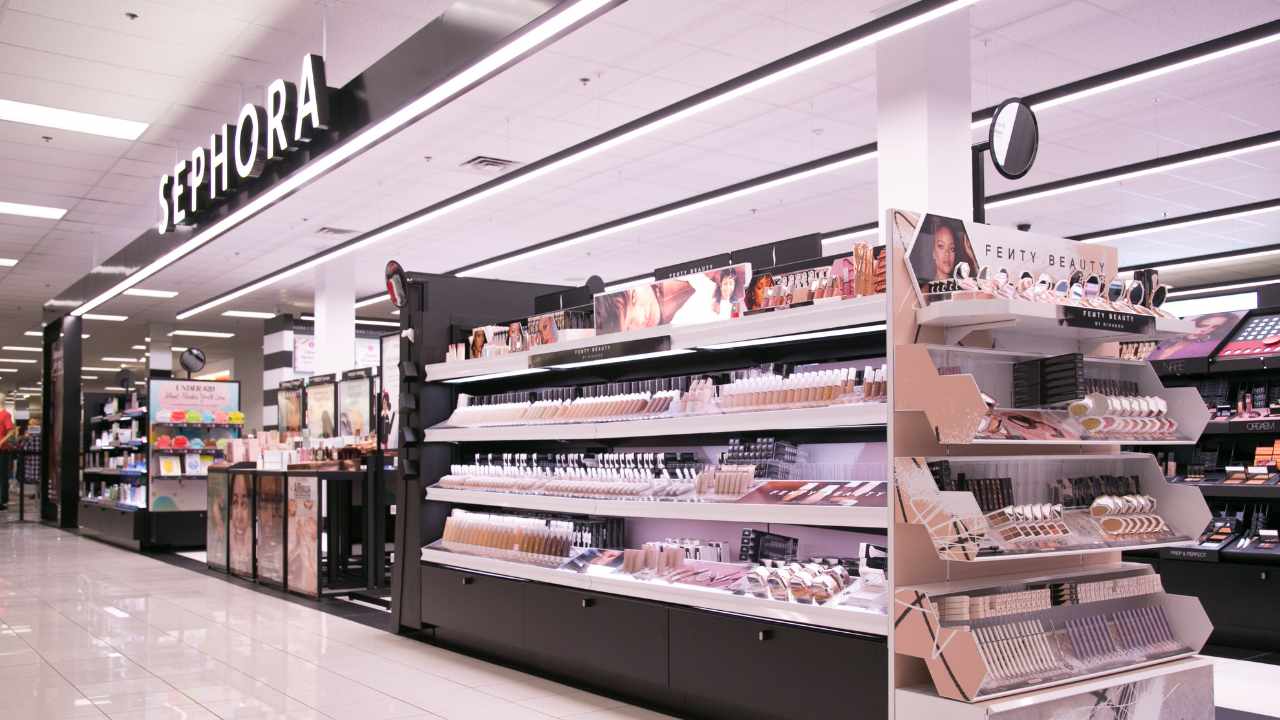
The Rouge Celebration Weekend, now in its second iteration and expanded to more than 1,000 Sephora at Kohl's locations for the first time in 2026, illustrates how Sephora is using tiered loyalty architecture to drive traffic deeper into its physical network. Rouge status, achieved at a $1,000 annual spend threshold, represents the program's highest-value cohort. Extending exclusive event access to Kohl's doors is not a concession to masstige positioning. It is a deliberate move to activate a distribution partnership that added significant incremental square footage to Sephora's U.S. footprint beginning in 2021.
Emmy Berlind, svp and gm of loyalty at Sephora, framed the program's direction plainly: "We're trying to do more than just reward transactions and reward their relationship with Sephora, too." For brand managers, that framing carries operational consequence. Brands selected for bonus-point promotions, such as Rare Beauty and Danessa Myricks during this cycle, receive the equivalent of a paid media amplification without a media buy. Inclusion in Sephora's loyalty activation calendar is increasingly a strategic distribution asset.
The Competitive Calculus Against Ulta, Amazon, and Walmart
Ulta Beauty runs a structurally comparable program. Its Diamond and Platinum Appreciation Day in August maps almost exactly onto Sephora's Rouge weekend timing, with Diamond status set at a $1,200 annual spend threshold. The timing overlap is not coincidental. Both retailers are competing for the same high-frequency beauty buyer during a calendar period that, historically, precedes the Q4 gifting surge.
The more consequential competitive pressure, however, comes from non-specialty channels. Walmart's beauty premiumization push, Amazon's continued expansion of prestige brand distribution, and TikTok Shop's friction-reducing commerce layer have collectively eroded the specialty retailer's exclusivity position. Brands that once relied on Sephora or Ulta as their primary prestige positioning channel now face a distribution environment where the same SKU can be purchased across five or more retail contexts simultaneously. For brands managing prestige positioning, that fragmentation is a pricing and brand equity risk that loyalty incentives alone cannot resolve.
Gamification as a First-Party Data Engine
Sephora's Beauty Insider Challenges program, launched in 2023, has achieved a 30% participation rate across enrolled members. That figure represents something more significant than engagement: it represents a structured pipeline for first-party behavioral data collected under consent-based conditions, at a moment when third-party data deprecation continues to compress digital marketing efficiency across the industry.
Each challenge, whether an in-store color match appointment or an SMS opt-in, generates a behavioral data point that refines Sephora's ability to personalize future offers and, critically, informs brand partners about how their customers actually shop. Berlind acknowledged this directly, describing the dynamic as "a virtuous cycle" of personalization. For brands seeking to justify retail exclusivity arrangements, access to that behavioral layer is a negotiating variable that does not appear on a standard wholesale agreement.
Forward Outlook: Loyalty Infrastructure as M&A Signal
The broader industry implication is this: as Sephora and Ulta continue investing in loyalty infrastructure at scale, the retailers are effectively building proprietary consumer intelligence assets that increase their negotiating leverage over brand partners and, increasingly, over potential acquisition targets. A brand with strong Beauty Insider engagement metrics carries a demonstrably different valuation profile than one without retail-level behavioral data.
For investors tracking beauty retail consolidation, the sophistication of a retailer's loyalty architecture now functions as a proxy for the durability of its distribution moat. Sephora's 2026 program evolution suggests that LVMH views that moat as worth deepening, even as the broader competitive environment compresses margin assumptions across specialty retail. The next phase of beauty M&A will be decided, in part, by which brands have built genuine loyalty within these ecosystems, and which have simply rented shelf space.
This article references and builds on original reporting by Emily Jensen for Glossy. Read the original piece here: https://www.glossy.co/beauty/beauty-briefing-how-sephora-is-evolving-its-loyalty-program-in-a-competitive-retail-environment. BeautyScale is a commercial agency; our editorial notes are commentary on industry reporting.
Nya Ravel
Beauty market analyst covering trends, brands, and distribution shifts.