Founder-Led Brands and the $580B Reckoning: Distribution Architecture, Prestige Positioning, and What September's Conversations Actually Signal

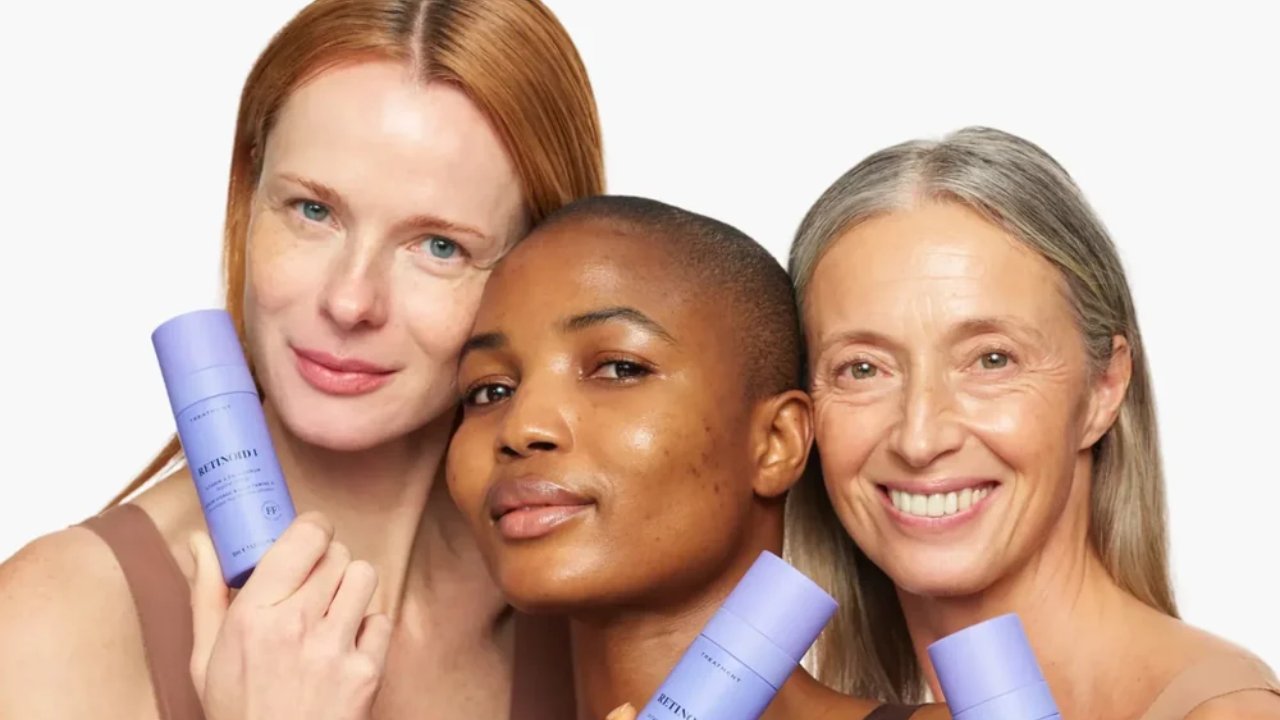
The global prestige beauty market is projected to reach $580 billion by 2027, growing at a CAGR of 6.2 percent, yet the most consequential strategic questions in the sector right now have nothing to do with product formulation. They concern distribution architecture, channel discipline, and whether founder-led brands can scale without dissolving the conviction that made them fundable in the first place. September's industry conversation cycle, spanning Skin Rocks, Neom Wellbeing, SURI, Space NK, and Boots, surfaced a coherent strategic thesis beneath its surface-level product and career narratives. Taken together, these conversations constitute a real-time briefing on where prestige positioning is hardening, where masstige is absorbing pressure from above and below, and which distribution moves are shaping the next phase of beauty's premiumization curve.
Prestige Positioning Requires Performance Proof, Not Price Architecture Alone
Caroline Hirons positioning Skin Rocks' The Eye Cream with a no-budget, best-in-class brief is not a product story. It is a margin defense strategy. In a category where prestige SKUs are increasingly scrutinized for efficacy relative to mass-market alternatives, brands that cannot anchor premium price points to demonstrable performance data are losing ground at the retailer negotiation table. Nicola Elliott's articulation of a similar brief at Neom, specifically that the Great Day Pro-Vitamin D3 Dry Body Oil had to perform rather than simply smell appealing, reflects the same strategic logic. Prestige brands in 2026 are being asked to justify price premiums with formulation science, not heritage positioning alone.
Distribution Architecture Is the Real Strategic Variable
Space NK CEO Emma Simpson-Scott's commentary on the Oxford Street flagship winning a physical retail award is more consequential than it reads as a headline. Specialty multi-brand retail in the UK is consolidating around experiential formats, and the brands that secure anchor placement in those environments gain a distribution advantage that no performance marketing spend can replicate. Sarah Creal Beauty's UK debut through Space NK rather than a mass channel or direct-to-consumer launch reflects a deliberate prestige channel strategy, one that trades volume for positioning and margin integrity. SURI's articulation of its retail partnership strategy, framed explicitly around awareness and consumer trust, follows the same logic from the accessible premium segment. Brands that cannot afford paid media at scale are engineering distribution to do the brand-building work instead.

Wellness Convergence Is Accelerating Retailer Category Resets
Vicky Kelly's category transformation mandate at Holland & Barrett, bringing topical beauty and ingestible wellness into a unified commercial framework, is a material signal for any brand operating in the functional beauty or wellness-adjacent space. Holland & Barrett generated approximately 900 million pounds in revenue in its most recent fiscal year, and a portfolio reset of this scale within its beauty and wellness category will reshape ranging decisions, supplier negotiations, and private label priorities across a 1,000-plus store network. The double-digit category growth Kelly references within her first 12 months confirms that channel alignment, rather than product novelty, is the primary growth lever in mass wellness retail. Brands competing for space in this channel need a clear wellness narrative that is operationally integrated into their distribution pitch, not bolted on for retail presentations.
Boots' Unified Campaign Architecture Signals a Deeper Assortment Reset
Charlotte Lock's customer mission framework at Boots is not a marketing philosophy. It is a merchandising and assortment strategy in early public formation. When the UK's largest pharmacy retailer moves from category-led commercial logic to mission-led consumer logic, the downstream consequence is a structural change in how brands are ranged, cross-merchandised, and promoted across approximately 2,200 doors. Brands that have historically relied on category adjacency for discovery, particularly in skincare and the fast-expanding perimenopause segment, need to model how their portfolio maps to consumer missions rather than aisle architectures. The brands that adapt their commercial story to Boots' evolving framework earliest will hold a negotiating advantage in the next ranging cycle.
The forward signal across all four of these strategic threads is the same: the brands that win distribution in 2027 will be those that arrive at retailer conversations with a thesis, not a product sheet. As premiumization pressure continues to compress the middle of the market, portfolio clarity, channel discipline, and performance-anchored prestige positioning are becoming non-negotiable inputs to any viable distribution strategy. The founder-led brands that built on conviction now need to build on structure.
This article references and builds on original reporting by Sophie Smith for The Industry Beauty. Read the original piece here: https://theindustry.beauty/in-conversation-caroline-hirons-dr-sam-bunting-nicola-elliott-and-more/. BeautyScale is a commercial agency; our editorial notes are commentary on industry reporting.
Rami Al Ariss
Beauty market analyst covering trends, brands, and distribution shifts.