Maesa Magic's 2027 Class: $35,000 Grants Signal a $9.3B Incubator Economy Reshaping Early-Stage Beauty Distribution

The global beauty incubator and accelerator market is projected to influence upward of $9.3 billion in early-stage brand valuation by 2028, according to composite estimates from CB Insights and Euromonitor International. Against that backdrop, Maesa's announcement of its 2027 Maesa Magic Incubator cohort is less a philanthropic headline and more a precise read on where category-level demand is accumulating ahead of retail adoption curves. The three selected brands, UV-detection patch brand Beame, K-beauty hand-care label Gemi, and tween press-on nail brand Sugar Standard, collectively represent three of the fastest-moving subcategories in prestige-adjacent beauty: sun-care tech, hand-care premiumization, and the junior beauty segment now estimated at over $1.2 billion in North American retail sales. For brand managers and investors tracking early signals, the cohort reads like a category thesis dressed in grant funding.
Subcategory Selection as Forward Market Intelligence
Maesa CEO Piyush Jain has consistently framed the incubator's selection criteria around underrepresentation, but the 2027 cohort also functions as a directional call on distribution-ready subcategories. Hand care has moved from pharmacy filler to a premiumization target following the post-pandemic hygiene cycle, with K-beauty formats accelerating the category's prestige repositioning across APAC and now seeding into MENA and North American specialty retail. Gemi, co-founded by Hau Yeung and Erin Choi, enters a hand-care segment where unit economics are structurally favorable: high repurchase rates, accessible price architecture, and limited shelf competition in the masstige tier between drugstore and luxury. The brand's K-beauty provenance is not incidental. It is a distribution lever, given that K-beauty credentials have demonstrably compressed the retailer onboarding timeline at Sephora, Ulta Beauty, and emerging APAC-facing wholesale platforms.
Brands that enter this pipeline with prestige positioning intact, retail proof points established, and founder diversity embedded are arriving at the M&A table better prepared than at any prior point in the modern beauty cycle.
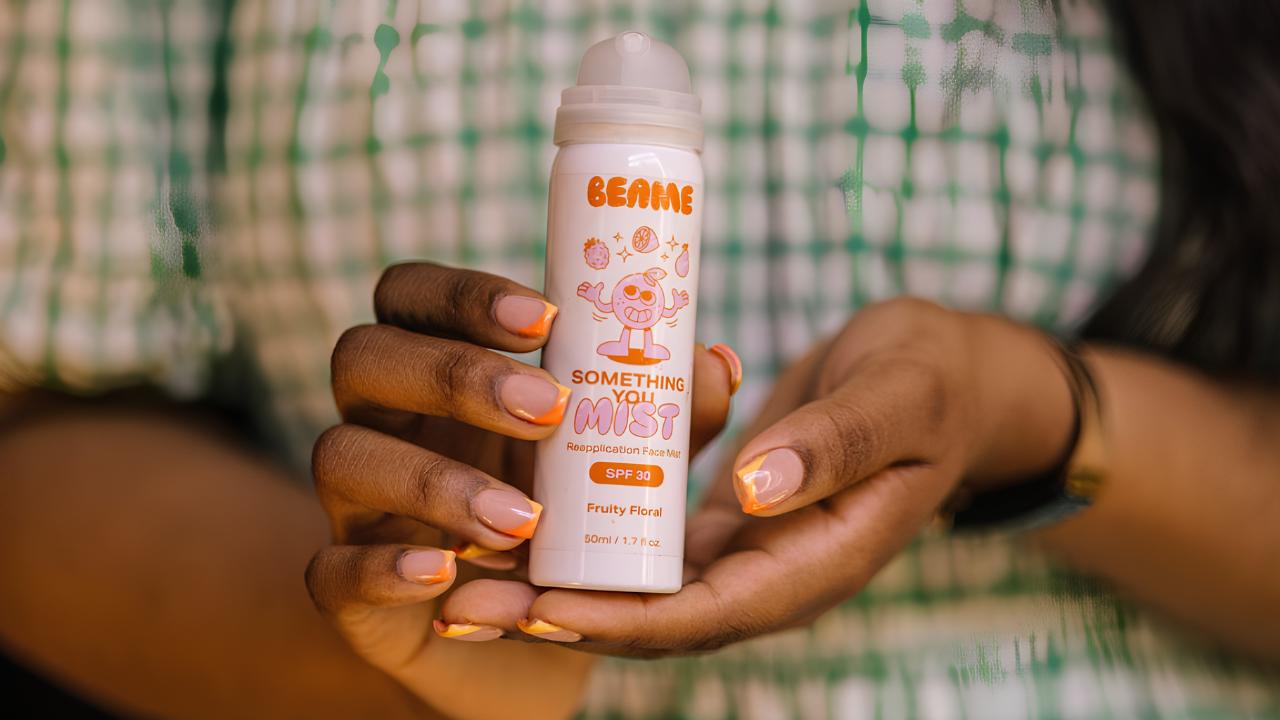
Beame's UV-detection patches occupy an equally calculated position. Founder Eniye Okah has already secured placement at Lookfantastic, a European specialty e-tailer with strong prestige positioning, establishing proof-of-concept outside the U.S. before executing a domestic retail launch. The SPF-adjacent wearable format aligns with the broader sunscreen premiumization trend that has driven category CAGR of approximately 6.8 percent across North America and Western Europe since 2021. A pending major U.S. retailer launch, referenced by Okah without specification, suggests Beame's distribution architecture is already in motion.

The Tween Segment: Masstige Meets a $1.2B Retail Opportunity
Sugar Standard, founded by Monique Claiborne Cardwell, targets a cohort that legacy beauty brands have historically underserved at the product level while simultaneously overclaiming at the marketing level. The tween beauty segment has attracted significant retail attention since 2023, when Sephora and Ulta Beauty both reported accelerating unit velocity in the under-18 demographic, driven by social-native product discovery and elevated gifting behavior. Press-on nails, as a format, carry meaningful margin characteristics: low cost of goods relative to retail price, minimal regulatory complexity compared to leave-on cosmetics, and high impulse purchase frequency. Sugar Standard's ambition to define the junior nail category implies a portfolio reset opportunity for any prestige retailer seeking to own this demographic before mass market competitors consolidate the space.
Press-on nails, as a format, carry meaningful margin characteristics: low cost of goods relative to retail price, minimal regulatory complexity compared to leave-on cosmetics, and high impulse purchase frequency.
Incubator Architecture as Strategic M&A Intelligence
Maesa's decision to withhold investment stakes in its incubator graduates is a deliberate separation of program integrity from business development, as Jain has noted publicly. But the strategic implication for the broader market is significant. Brands that pass through Maesa Magic, including Tonal Cosmetics, which has since attracted Glossier backing and entered Sephora's accelerator, and The Potion Studio, which launched at Ulta Beauty in August 2026, are emerging as pre-qualified acquisition targets with institutional validation, retail credibility, and founder infrastructure already in place. For strategic acquirers evaluating the sub-$10 million revenue segment, incubator alumni represent a compressed due diligence pathway. The program's advisory board, which includes Bain Capital Private Equity Portfolio Group Managing Director Liraz Evenor alongside Starface co-founder Brian Bordainick, reinforces the institutional seriousness behind what could otherwise be read as a community grant program.
What the $100 Million Ambition Tells Investors
Jain's stated aspiration, that a Maesa Magic alumna will cross the $100 million revenue threshold within a decade, is not an idle projection. It reflects a structural view that incubator-to-retail pipelines are increasingly the primary distribution architecture for emerging brands reaching scale, displacing the traditional trade show cold-call model. The 2027 cohort's concentration in tech-adjacent formats, SPF patches, K-beauty hand care, and premium tween nail products signals that the next generation of beauty acquirers will need to look at subcategory velocity and distribution readiness simultaneously. Brands that enter this pipeline with prestige positioning intact, retail proof points established, and founder diversity embedded are arriving at the M&A table better prepared than at any prior point in the modern beauty cycle.
This article references and builds on original reporting by Emily Jensen for Glossy. Read the original piece here: https://www.glossy.co/beauty/maesa-backs-k-beauty-hand-care-tween-manicures-and-spf-patches-as-the-future-of-beauty/. BeautyScale is a commercial agency; our editorial notes are commentary on industry reporting.
Rami Al Ariss
Beauty market analyst covering trends, brands, and distribution shifts.