NIOD Enters Sephora: How Estée Lauder is Engineering Wellness Activations

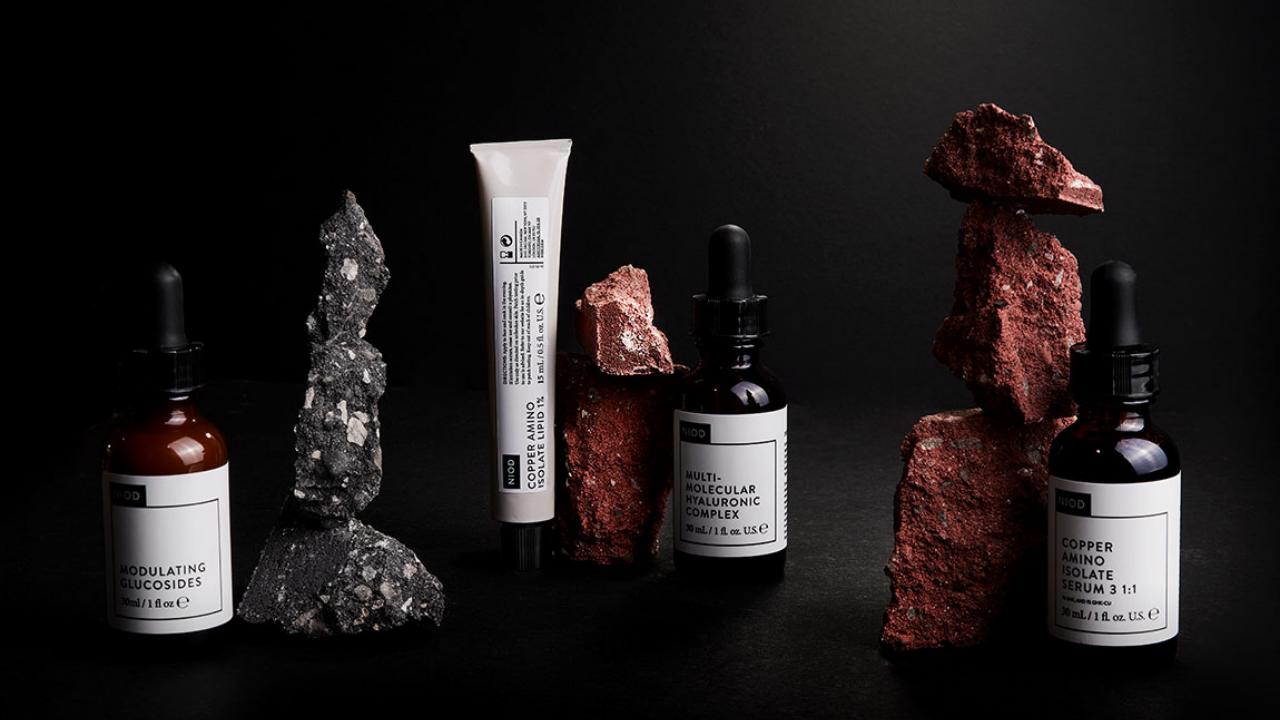
Estée Lauder Companies' Deciem portfolio generated approximately $1 billion in retail sales in 2023, making it one of the most consequential acquisitions in prestige skincare of the past decade. Yet NIOD, the incubator's highest-tier brand, operated almost entirely through direct-to-consumer channels while The Ordinary scaled aggressively across Sephora, ULTA Beauty, and global pharmacy doors. That bifurcation was a deliberate distribution architecture decision. Now, with NIOD's confirmed entry into Sephora, ELC is signaling that the next phase of Deciem's value extraction requires a fundamentally different channel strategy, one built at the intersection of prestige positioning, wellness retail, and experiential activation.
A Portfolio Reset Engineered for the Prestige Ceiling
The Ordinary's retail ubiquity established Deciem's consumer funnel at scale, but it also created a ceiling. A brand retailing cleansers and serums at single-digit price points has limited runway for the kind of premiumization story that sustains long-term gross margin expansion. NIOD was always the answer to that ceiling. With formulations backed by deep bioactive science and average retail price points that compete directly with La Mer and Augustinus Bader, NIOD occupies the tier where ELC's core brand equity has historically lived.
The Sephora entry restructures that calculus entirely. Selective distribution at Sephora carries specific strategic weight: it signals prestige without the wholesale dependency that erodes brand equity at mass-adjacent doors. For ELC, which has been executing a portfolio reset across its brand architecture following several years of mixed performance in prestige fragrance and makeup, placing NIOD inside Sephora completes a vertical within Deciem that did not previously exist at retail.
With formulations backed by deep bioactive science and average retail price points that compete directly with La Mer and Augustinus Bader, NIOD occupies the tier where ELC's core brand equity has historically lived.
Why Wellness Is the Activation Frame, Not the Category
ELC's approach to NIOD's retail launch is not being positioned as a skincare story in the conventional sense. The brand's clinical language, its reference to the skin as a biological system requiring intervention rather than care, sits comfortably inside the broader wellness intelligence that Sephora has been actively courting since it expanded its wellness category beginning in the early 2020s. Brands including Tata Harper, Westman Atelier, and 111SKIN have demonstrated that prestige shoppers inside Sephora will transact on science-credentialed positioning when the retail environment supports discovery.
NIOD's in-store execution is expected to lean into education-forward activation, an experiential retail format that treats the selling floor as a consultation environment rather than a display case. That model has proved durable in APAC markets, particularly in South Korea and Japan, where ingredient-literate consumers have normalized diagnostic skincare retail. Importing that format into North American Sephora doors positions NIOD not as another serum brand, but as a science platform with a physical presence.
The Omni-Channel Tension ELC Must Navigate
The structural risk in this move is real. NIOD's DTC channel has functioned as a data asset for ELC, generating first-party consumer intelligence on purchase behavior, ingredient preferences, and replenishment cycles that wholesale does not replicate. Shifting volume into Sephora means accepting some dilution of that data advantage while gaining the discovery surface and foot traffic that DTC alone cannot deliver.
Brands including Tata Harper, Westman Atelier, and 111SKIN have demonstrated that prestige shoppers inside Sephora will transact on science-credentialed positioning when the retail environment supports discovery.
ELC has managed similar tension across its broader portfolio. MAC and Clinique both operate hybrid distribution architectures that balance branded retail environments against department store and specialty retailer exposure. The lesson from those brands is that channel discipline matters more than channel volume. NIOD's long-term prestige positioning depends on ELC's ability to maintain controlled distribution rather than chasing door count the way The Ordinary did in its global expansion phase.
The GCC and MENA markets present a secondary consideration here. Prestige skincare penetration in those geographies continues to outpace Western markets on a relative growth basis, and Sephora's footprint in the region offers NIOD immediate access to a consumer cohort that already indexes highly on bioactive skincare. ELC's regional retail strategy for NIOD should be tracked as a leading indicator of whether this distribution expansion is a North America-first thesis or a global portfolio repositioning.
What the Market Should Watch Next
The NIOD Sephora entry is a signal, not an endpoint. Brand managers and retail buyers tracking prestige skincare architecture should monitor whether ELC introduces dedicated NIOD counter formats inside high-volume Sephora doors, a move that would confirm the experiential retail thesis rather than a conventional wholesale expansion. Investors watching ELC's broader portfolio recovery should treat NIOD's sell-through velocity in its first two retail quarters as a proxy for whether Deciem's prestige tier can convert its scientific credibility into scalable specialty retail performance. The distribution architecture is now in place. Execution is the variable that determines whether this is a prestige growth story or an expensive wholesale experiment.
This article references and builds on original reporting by Lexy Lebsack for Glossy. Read the original piece here: https://www.glossy.co/beauty/wellness/wellness-briefing-elc-owned-niod-enters-sephora-with-wellness-positioning-and-cold-plunge-activation-plus-news/. BeautyScale is a commercial agency; our editorial notes are commentary on industry reporting.
Nya Ravel
Beauty market analyst covering trends, brands, and distribution shifts.