Kylie Cosmetics Enters China via Harmay to Test a $6.8B Distribution Shift

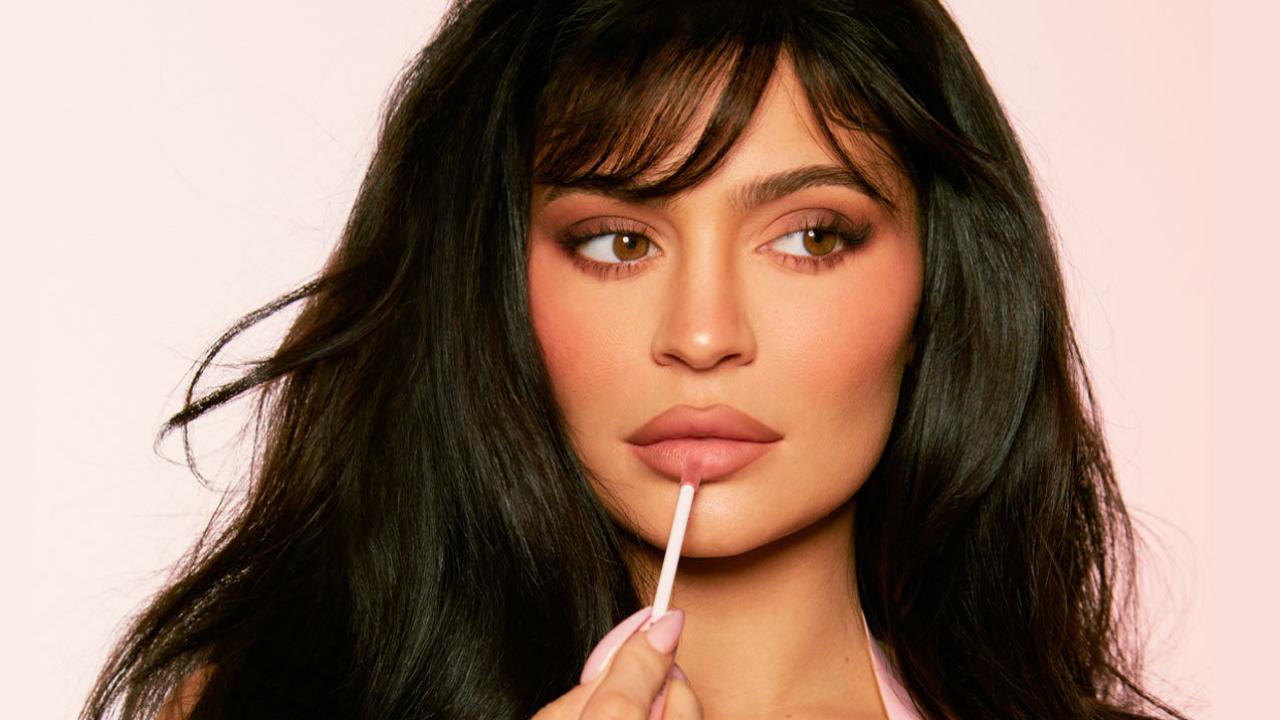
China's prestige beauty market generated an estimated $6.8 billion in retail sales in 2025, yet the most strategically significant launch of Q3 2026 did not originate on Tmall or JD.com. Kylie Cosmetics, operating under the Coty Inc. portfolio since the company's $600 million acquisition of a 51% stake, chose Harmay as its China debut partner, a decision that carries implications well beyond a single brand activation. The move signals a recalibrating distribution architecture across the prestige-to-masstige continuum, where physical curation is increasingly valued over raw digital reach. For brand managers and investors tracking Western beauty's China re-entry strategies, this is the data point that reframes the channel conversation.
Harmay Is Not a Retailer, It Is a Prestige Filter
Harmay's retail model functions less as a conventional multi-brand channel and more as a credentialing mechanism for prestige positioning. Its store environments, concentrated across Shanghai, Beijing, and Chengdu, are architected to manufacture discovery rather than drive volume transactions. The retailer's consumer base skews toward the Gen Z and millennial cohorts that index highest on Xiaohongshu engagement, the exact demographic Kylie Cosmetics requires to establish brand legitimacy in a market where it holds zero prior retail equity. This is not a distribution decision. It is a brand-building decision expressed through distribution.
That distinction matters enormously for how Coty structures its broader China rollout. Entering through Tmall flagship would have delivered immediate reach across a platform with over 800 million annual active users, but it would have positioned Kylie Cosmetics alongside thousands of competing SKUs in a scroll-driven environment that compresses brand storytelling to thumbnail dimensions. Harmay's physical architecture does the opposite. It imposes scarcity, context, and editorial framing on every product it carries.
It also provides Coty's commercial team with clean sell-through data from a controlled retail environment before committing to the inventory exposure and platform fee structures that Tmall flagship operations typically require.
Coty's Portfolio Logic and the Premiumization Imperative
Coty's rationale extends beyond any single brand's launch mechanics. The company has spent the past three fiscal years executing a portfolio reset, divesting mass-market assets and concentrating capital around prestige and masstige properties. Kylie Cosmetics sits at the upper edge of that masstige band, and its China positioning will influence how Coty's broader prestige architecture is perceived by Chinese retail partners and wholesale buyers.
Launching via a curated independent retailer rather than a digital platform sends a deliberate signal about where Coty intends to position the brand on the value hierarchy. It also provides Coty's commercial team with clean sell-through data from a controlled retail environment before committing to the inventory exposure and platform fee structures that Tmall flagship operations typically require. That sequencing, physical proof-of-concept before digital scale, reflects a matured understanding of how prestige brands build durable consumer relationships in APAC.
Harmay's Strategic Calculus Amid a Compressed Store Footprint
Harmay's participation in this partnership is not without its own strategic complexity. The retailer has faced well-documented pressure on its physical store network, with several locations closing or consolidating through 2025 and into 2026 as consumer traffic patterns shifted and operating costs in Tier 1 cities remained elevated. Securing a high-visibility collaboration with a globally recognized brand under Coty's umbrella provides Harmay with a counternarrative for its retail partners, landlords, and potential investors.
Several European prestige houses have executed this sequence deliberately in the GCC over the past 24 months, using experiential retail flagships to anchor brand perception before expanding into e-commerce fulfillment.
The Kylie Cosmetics activation effectively functions as a proof point that Harmay retains the curatorial authority to attract internationally distributed prestige brands. In a retail environment where independent multi-brand beauty retailers are being squeezed between DTC digital flagships and domestic e-commerce dominance, that authority is the core asset. Any M&A interest in Harmay, and the retailer has attracted speculative attention from strategic buyers, will price that curatorial reputation directly into the valuation.
Physical Retail as a Strategic Entry Vehicle, Not a Scaling Mechanism
The forward trajectory of this partnership is likely to follow a pattern now visible across MENA and APAC: physical retail as the brand-building entry point, digital platforms as the scaling infrastructure activated only after brand equity is established in market. Several European prestige houses have executed this sequence deliberately in the GCC over the past 24 months, using experiential retail flagships to anchor brand perception before expanding into e-commerce fulfillment.
For Kylie Cosmetics, success at Harmay is measured less by unit velocity than by the quality of the brand narrative that emerges from the activation on Xiaohongshu and Douyin. If that content loop performs, Coty holds a substantially stronger negotiating position when it eventually approaches Tmall's luxury and prestige category teams. The Harmay launch is not the China strategy. It is the credential that makes the China strategy viable.
This article references and builds on original reporting by Lisa Nan for jingdaily.com. Read the original piece here: https://jingdaily.com/posts/why-kylie-jenner-picked-harmay-over-tmall-for-her-china-debut. BeautyScale is a commercial agency; our editorial notes are commentary on industry reporting.
Rayane Mahmoud
Beauty market analyst covering trends, brands, and distribution shifts.