Travel Retail's $47B Reset: How TFWA 2026 Will Redraw Beauty's Distribution Architecture

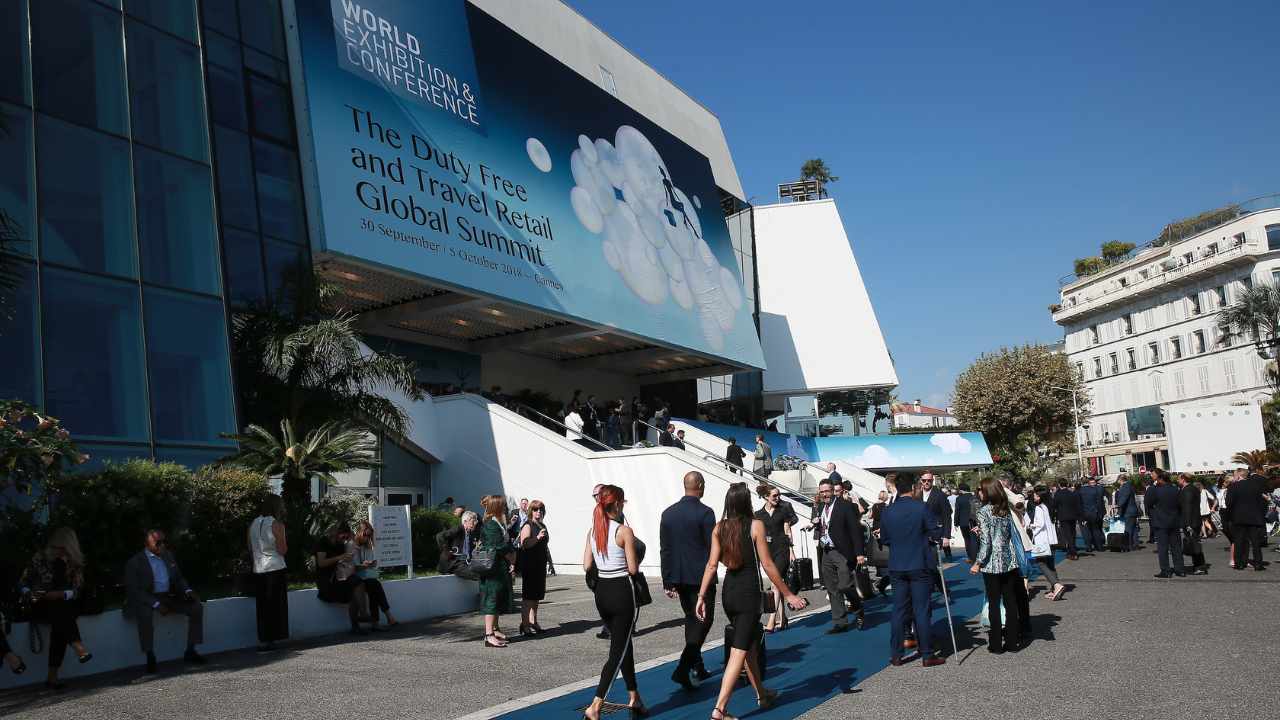
Global travel retail beauty sales are projected to reach $47 billion by 2027, recovering past pre-pandemic peaks on the back of APAC passenger volume normalization and aggressive premiumization across fragrance and skincare. Against that backdrop, TFWA World Exhibition and Conference 2026 arrives not as a trade calendar fixture but as a genuine strategic inflection point. The channel's top operators, including Dufry, Lagardère Travel Retail, and DFS Group, are actively renegotiating brand partnerships, restructuring floor allocations, and demanding demonstrable retail productivity metrics. For beauty brands navigating post-consolidation portfolios, the timing is precise: TFWA 2026 will effectively function as a market-sorting mechanism, separating brands with credible travel retail propositions from those coasting on legacy distribution agreements.
The stakes extend well beyond booth traffic. M&A activity across the beauty sector has generated a new class of multi-brand operators that must now rationalize which assets receive travel retail investment and which are quietly deprioritized.
Travel Retail as Portfolio Reset Catalyst
The channel has historically served prestige positioning as a proving ground, where brands could build aspirational equity across GCC airports and APAC transit hubs before rolling out broader wholesale strategies. That dynamic is compressing. Travel retail operators are now applying retail-per-square-foot discipline to beauty concessions with the same rigor applied to luxury accessories, and brands that cannot demonstrate sell-through velocity are losing prime gate-adjacent placements.
For conglomerates managing post-acquisition portfolios, TFWA 2026 creates an accelerated review cycle. A brand acquired at a $200 million to $400 million valuation on DTC momentum must prove it can translate that equity into a channel defined by impulse purchase mechanics, high tourist spend concentration, and SKU-level efficiency. Portfolio reset decisions made in Cannes this October will shape which brands receive 2027 travel retail investment and which are repositioned toward domestic retail or digital-first distribution.
Masstige Pressure and the Premiumization Ceiling
One of the more structurally consequential tensions visible at TFWA 2026 will be the collision between masstige entrants and legacy prestige incumbents. Operators across MENA and APAC airports have begun allocating incremental floor space to accessible luxury brands, particularly in color cosmetics and hair care, responding to demographic shifts in passenger mix as GCC carriers expand routes into secondary-tier origin markets.
This creates a premiumization ceiling problem for heritage prestige houses. Brands like Sisley, La Mer, and Clé de Peau Beauté have built travel retail equity on exclusivity mechanics and high average transaction values. As masstige competitors from brands including Sol de Janeiro and Charlotte Tilbury extend their travel retail footprints, the floor space competition tightens and the brand adjacency calculus becomes commercially sensitive. Premium positioning in a shared fixture environment requires more than price architecture. It requires distribution architecture that enforces brand context at the point of sale.
The M&A Overhang Shaping 2026 Conversations
Beauty M&A between 2019 and 2024 generated more than $30 billion in aggregate deal value across fragrance, skincare, and wellness subcategories. Many of those acquired assets were priced on the assumption of multi-channel scalability, with travel retail factored into long-term revenue models at optimistic penetration rates. The current environment is more demanding.
Acquirers including LVMH Perfumes and Cosmetics, Puig, and Kering Beauté are each arriving at TFWA 2026 managing overlapping brand portfolios with competing claims on operator attention, fixture space, and marketing co-investment. The travel retail channel rewards portfolio discipline. Operators have limited appetite for managing five fragrance SKUs from the same parent group when three deliver the majority of velocity. Expect consolidation conversations at TFWA to translate directly into reduced brand representation in duty-free formats by mid-2027.
Independent brands with clean distribution architecture and single-brand operator relationships may find the current environment more navigable than it appears. Without portfolio cannibalization risk and with undivided operator focus, well-positioned independents can negotiate with structural advantages that multi-brand groups cannot replicate.
The Next 18 Months Belong to Distribution Architects
TFWA 2026 will not be remembered as the year beauty discovered travel retail. It will be remembered as the year the channel demanded commercial accountability from every brand that had treated duty-free as a margin-accretive afterthought. Brands that arrive in Cannes with rigorous retail productivity data, coherent premiumization narratives, and distribution architecture built for channel-specific shopper behavior will leave with strengthened operator partnerships and expanded 2027 allocations.
The broader implication for beauty investors and brand strategists is clear: in a $47 billion channel undergoing structural re-curation, distribution strategy is now indistinguishable from brand strategy.
This article references and builds on original reporting by cantonfair.net. Read the original piece here: https://www.cantonfair.net/event/32419-tfwa-world-exhibition-conference-tfwa-world-exhibition-conference-2026. BeautyScale is a commercial agency; our editorial notes are commentary on industry reporting.
Martin Jacob
Beauty market analyst covering trends, brands, and distribution shifts.