The Mini Format Trend: How $4-to-$200 Sizes Shift Consumer Purchasing Behavior

Mini beauty products now represent more than 1,500 SKUs in Sephora's online assortment alone, a figure that has nearly quadrupled since 2017, while CVS is reporting 140% year-over-year growth in mini category sales. These numbers do not describe a novelty format. They describe a structural shift in how consumers trial, purchase, and commit to beauty products across every price tier. For brand strategists and retail buyers operating in 2024 and beyond, the mini format has evolved from a sampling mechanism into a fully realized distribution architecture with its own economics, consumer psychology, and portfolio implications. Ignoring it is no longer a defensible position.
The Format Is a Full-Price Trojan Horse
The foundational mistake brands make is categorizing minis as trial vehicles rather than revenue-generating SKUs in their own right. A $4 travel-size lip balm and a $200 prestige facial oil in a 5ml vial occupy the same format category but serve entirely different strategic functions. The $4 entry point removes purchase friction for new consumers and seeds brand awareness at mass and masstige retail. The $200 micro-size operates differently: it functions as a premiumization signal, positioning a full-size SKU at $380 as psychologically accessible by offering a legitimate first encounter at a lower absolute spend.
This price range, $4 to $200, is not arbitrary. It maps directly onto the full spectrum of beauty distribution, from drug channel to ultra-prestige, and it tells brand managers something precise about where their consumer acquisition is actually happening. Brands that have not audited their mini pricing architecture against their full-size margin structure are leaving both data and revenue on the table.
The $200 micro-size operates differently: it functions as a premiumization signal, positioning a full-size SKU at $380 as psychologically accessible by offering a legitimate first encounter at a lower absolute spend.
Distribution Architecture Is Being Rewritten by Format
Retail buyers at Sephora, Ulta, and specialty e-commerce platforms are now actively curating mini assortments as distinct category segments, not as afterthoughts in the travel section. This shift in buyer behavior has direct implications for how brands build their distribution architecture, particularly founders navigating their first major retail partnership. The mini SKU has become a de facto gating mechanism: buyers use it to test velocity, assess consumer response, and manage shelf risk before committing to a full-size exclusive or expanded door count.
For brands in growth stages, this creates a compelling entry point into prestige retail that did not exist a decade ago. It also creates a new set of brand risks. A mini that underperforms on velocity signals weak consumer pull regardless of the full-size's track record. Brand teams need to approach mini retail placement with the same rigor they apply to hero SKU strategy, including dedicated forecasting, marketing support, and sellthrough targets.
High-Low Assortment Strategy in Practice
The strategic potential of this format becomes clear when observing how diverse brands utilize mini architecture across the price spectrum. At the lower friction end, impulse items like Patchology hydrogel eye gels ($4) lower customer acquisition costs by driving instant trial at checkout counters. Moving up the pyramid, prestige hair care staples from Olaplex and Oribe, alongside color cosmetics icons like Anastasia Beverly Hills, utilize mini formats as gateway SKUs to capture cross-category basket growth without diluting brand equity.
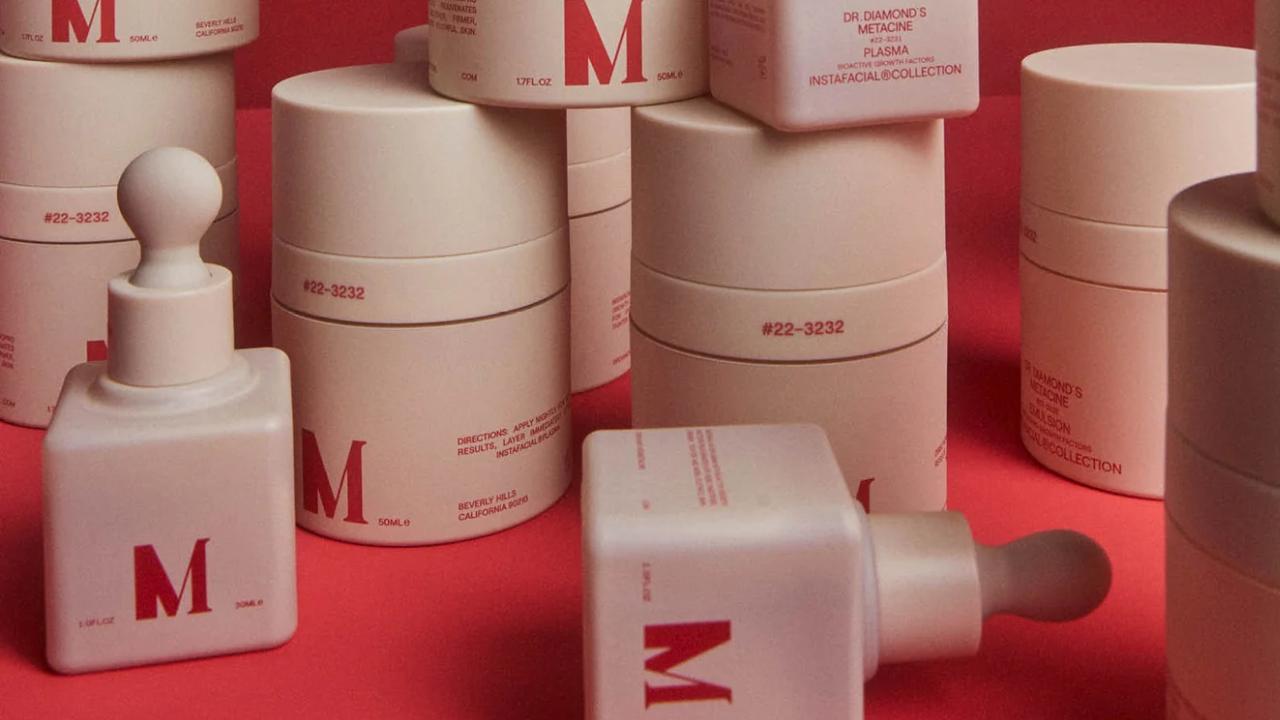
Simultaneously, ultra-luxury skincare and clinical brands—ranging from 111Skin and Sisley to Dr. Diamond’s Metacine—occupy the upper boundary of the format. By offering items like Dr. Diamond's InstaFacial Plasma at a $200 mini price point, these brands test consumer willingness to spend on science-backed formulas before committing to full-sized regimens. To maximize the conversion from trial to retention, progressive retail models pair these assortments with promotional hooks—such as Béis luggage activations or value-back rewards programs—turning introductory mini purchases into long-term full-size customer lifecycles.
Travel retail's mini-native environment has effectively trained a global consumer base to accept the format as a premium delivery mechanism, and that conditioning is now flowing back into domestic retail behavior.
Portfolio Reset Decisions Now Center on Format Mix
Established brands with legacy portfolios are increasingly using mini format expansion as a portfolio reset strategy. Rather than launching new products, they are re-entering existing retail doors with tiered size offerings that address multiple consumer segments simultaneously. A brand that has historically positioned at prestige price points can use a mini format to capture masstige volume without repositioning its brand equity or disrupting existing channel relationships.
This dynamic is particularly visible in fragrance and skincare, where the format supports both gifting occasions and travel retail, two channels that are growing faster than domestic brick-and-mortar in several key markets including GCC and APAC. Travel retail's mini-native environment has effectively trained a global consumer base to accept the format as a premium delivery mechanism, and that conditioning is now flowing back into domestic retail behavior.
The Intelligence Imperative for Brand Operators
The strategic implication for brand managers and investors is direct: mini SKU performance data is now one of the clearest leading indicators of brand health and consumer intent available in the market. Velocity at the mini level predicts full-size conversion. SKU proliferation at the mini level signals a brand's confidence in its portfolio breadth. The price ceiling on a brand's mini offering reveals its prestige positioning ambitions more accurately than its marketing language does.
Brands that are not systematically tracking mini SKU performance as a standalone data set within their retail analytics are operating without a critical instrument. As retail buyers continue to formalize mini as a distinct category, the brands with the clearest format strategy, including intentional pricing across the $4 to $200 range, coordinated distribution by channel, and dedicated marketing investment, will capture disproportionate shelf placement and consumer mindshare in the next 24 months. The window to build that infrastructure deliberately, rather than reactively, remains open. It will not stay open indefinitely.
This article references and builds on original reporting by Rachel Brown for Beauty Independent. Read the original piece here: https://www.beautyindependent.com/mini-products-beautyspace-launches-retail-concept-little-luxuries/. BeautyScale is a commercial agency; our editorial notes are commentary on industry reporting.
Martin Jacob
Beauty market analyst covering trends, brands, and distribution shifts.