Target’s $1.2B Prestige Expansion: 600 Doors, 90 Brands

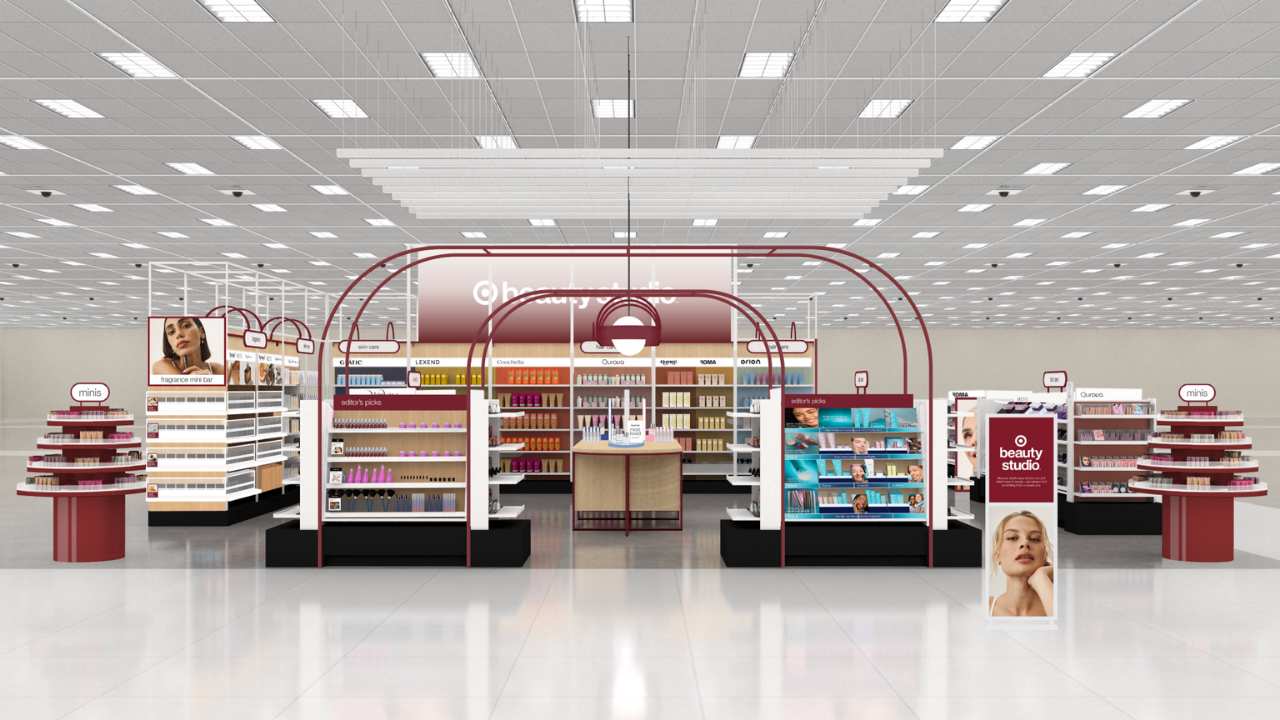
The U.S. prestige beauty market posted $15.5 billion in retail sales in 2024, according to Circana data, with specialty-retail channels capturing the dominant share of that spend. Target's launch of Target Beauty Studio on September 10 across more than 600 stores and Target.com is not a merchandising refresh. It is a deliberate distribution architecture play, repositioning the mass retailer as a credible third channel for prestige and emerging brands that have historically treated Ulta Beauty and Sephora as their primary off-department-store pathways. The strategic stakes are significant, and the brand-side implications are more complex than the press materials suggest.
A Portfolio Reset Disguised as a Discovery Concept
Target Beauty Studio introduces more than 1,600 SKUs spanning skincare, haircare, fragrance, K-beauty, and nailcare, with over two-thirds of its 90 brand partners classified as new to Target's assortment. Sunday Riley, Briogeo, and Boy Smells are not mass-market brands by origin or pricing architecture. Their presence in a 600-door Target rollout signals a meaningful shift in how prestige-adjacent founders and investors are evaluating distribution risk and volume upside.
For brands at the Series A or Series B stage, a Target Beauty Studio listing represents a compressed path to national scale that previously required either a Sephora partnership or a costly direct-to-consumer buildout. The trade-off is real: channel integrity and average selling price compression remain structural concerns when a brand moves from specialty to mass-adjacent environments.
That rotation dynamic introduces a new variable into brand distribution planning: shelf life inside a mass-adjacent prestige format may prove shorter and more performance-dependent than brands have historically experienced inside specialty.
The Masstige Corridor Gets Structurally Wider
Amanda Nusz, SVP of Merchandising, Essentials and Beauty at Target, described the concept as "an inspiring destination to discover what's new, now and next in beauty." The language is consumer-facing, but the commercial logic is a premiumization play executed at mass scale. Target is essentially engineering a masstige corridor inside its existing fleet, using dedicated Beauty Advisors, a rotational center-table feature system, and curated editorial placements including "Editors' Picks" and "Standouts of the Season" to create a specialty-adjacent environment without the square footage or capital intensity of a standalone specialty retailer.
This is the same structural logic Ulta deployed when it embedded Ulta shop-in-shops inside Target beginning in 2021, a partnership that now spans more than 800 locations. Target Beauty Studio operates as a parallel prestige lane, one that Ulta does not control and cannot restrict. Whether the two concepts cannibalize each other or serve genuinely different consumer occasions will define the profitability ceiling of this investment.
Brand Strategy Implications for the Mid-Market
The brand roster inside Target Beauty Studio warrants close reading from an M&A intelligence perspective. Several of the labels, including Tan-Luxe, Joico, and First Aid Beauty, already carry private equity or strategic acquirer ownership. Their appearance in a 600-door mass-adjacent format ahead of potential exit events will be interpreted by buyers as either positive proof of volume scalability or a warning signal on channel premiumization integrity, depending entirely on category and price point.
For brands at the Series A or Series B stage, a Target Beauty Studio listing represents a compressed path to national scale that previously required either a Sephora partnership or a costly direct-to-consumer buildout.
Emerging brands like Clearstem and Purito Seoul represent a different calculus. These are growth-stage companies entering their first or second major U.S. retail partnership. A Target Beauty Studio listing at this stage functions as a market validation event, compressing the timeline to profitability but simultaneously anchoring brand equity in a retail context that may conflict with future specialty or direct-to-consumer premiumization strategies.
What Comes Next for Specialty Retail
Target's move arrives as Ulta Beauty navigates comparable-store pressure and as Sephora continues its aggressive Kohl's shop-in-shop expansion, now at more than 900 doors. The specialty beauty channel is no longer a protected distribution moat. Prestige positioning has become a layered, multi-channel condition rather than a channel-exclusive attribute, and that structural shift has direct consequences for how brands negotiate distribution exclusivity, minimum order quantities, and co-op marketing budgets with retail partners.
Target Beauty Studio will evolve its brand roster several times per year, per the company's own communications. That rotation dynamic introduces a new variable into brand distribution planning: shelf life inside a mass-adjacent prestige format may prove shorter and more performance-dependent than brands have historically experienced inside specialty. The retailers that succeed in this environment will be those that treat discovery formats as marketing infrastructure, not permanent distribution. The brands that thrive will have the margin architecture and retail media investment capacity to earn their position in every reset cycle.
This article references and builds on original reporting by Target Corporation for PR Newswire. Read the original piece here: https://www.prnewswire.com/news-releases/target-launches-target-beauty-studio-its-destination-for-whats-new-now-and-next-in-beauty-302860452.html. BeautyScale is a commercial agency; our editorial notes are commentary on industry reporting.
Ruth Estabillo
Beauty market analyst covering trends, brands, and distribution shifts.