Skin Rocks Eyes $6.2B European Prestige Skincare Market: Distribution Architecture and the PLUS Pivot

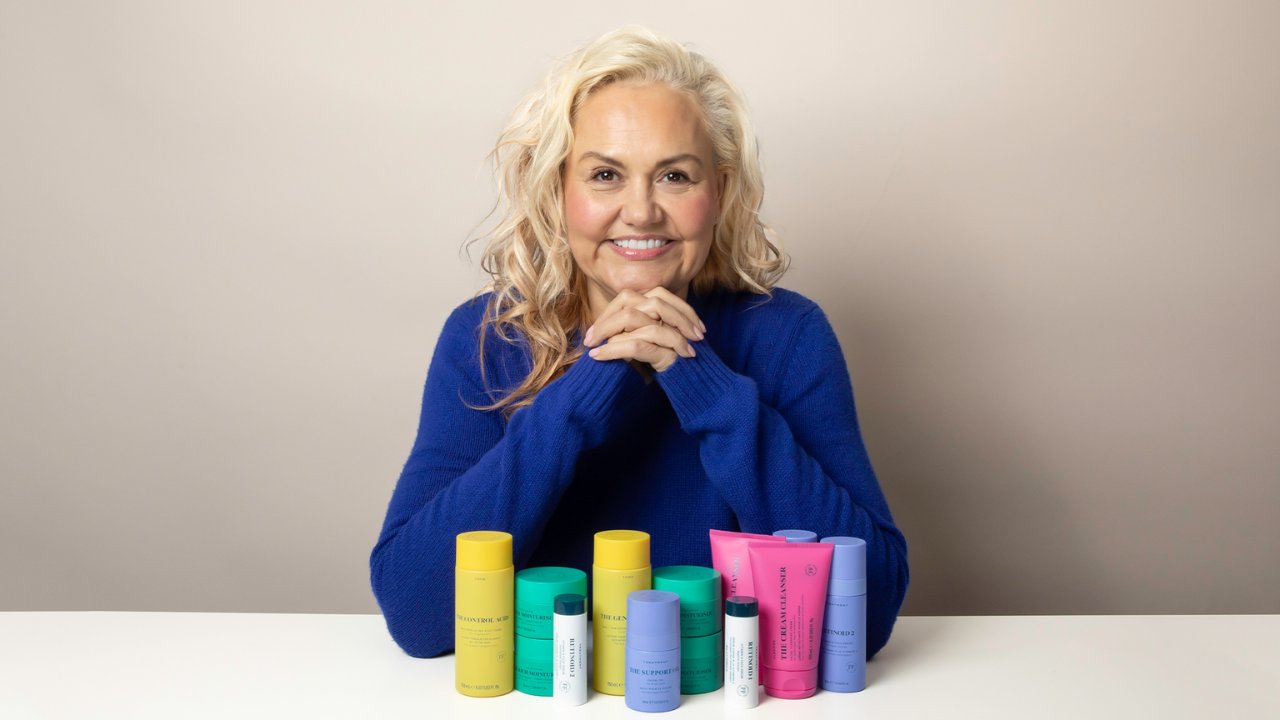
The European prestige skincare market is projected to reach $6.2 billion by 2027, compounding at 5.8% CAGR, and the brands capturing disproportionate share are not the ones launching the most SKUs. They are the ones engineering the tightest alignment between portfolio architecture, retail distribution, and consumer trust. Skin Rocks, the Caroline Hirons-founded skincare label that launched commercially in 2022, is executing precisely that playbook with the introduction of its PLUS category and a Douglas-anchored continental expansion. The strategic signals embedded in both moves warrant close attention from brand managers and retail investors tracking prestige positioning across EMEA.
A New Product Tier Is a Brand Architecture Decision First
The PLUS category, inaugurated by The Support Mask, is not a product launch in the conventional sense. It is a portfolio reset, one that repositions Skin Rocks from a results-focused core range into a tiered system capable of addressing acute, situational skin concerns separately from baseline regimen products. This distinction matters commercially. Tiered architecture allows brands to defend average order value, extend repurchase frequency, and create entry points for consumers who find full-routine adoption too high a commitment.
Douglas operates approximately 1,850 doors across Europe and has been executing an aggressive own-brand and prestige third-party curation strategy since its 2023 relisting on the Frankfurt Stock Exchange, where it raised roughly 1.
Hirons' stated rationale is also strategically coherent. Her own proprietary consumer research, drawn from a survey of 2,000 women, found that 85% felt the industry was characterised by inaccessible jargon, while 37% had purchased high-profile active ingredients including retinol and hyaluronic acid without confidence in their application. That data does not describe a consumer rejecting sophistication. It describes a consumer who has been oversold complexity and is now seeking authoritative simplification. Skin Rocks, built on Hirons' two-decade reputation as an educator rather than an aesthete, is structurally positioned to own that space.
The Douglas Partnership as Distribution Architecture Signal
The decision to enter Germany, Austria, Switzerland, and Poland exclusively through Douglas is the more consequential near-term strategic variable. Douglas operates approximately 1,850 doors across Europe and has been executing an aggressive own-brand and prestige third-party curation strategy since its 2023 relisting on the Frankfurt Stock Exchange, where it raised roughly 1.1 billion euros at IPO. For an independent prestige brand with no prior continental European retail presence, that network compresses what would otherwise be a three-to-five year distribution build into a single partnership activation.
The exclusivity structure also communicates intentional prestige positioning. Mass and masstige brands entering new geographies typically pursue broad, multi-retailer distribution immediately to generate volume. Prestige brands, by contrast, use exclusivity to signal scarcity and curation, both of which are prerequisites for holding premium price architecture in unfamiliar markets. Skin Rocks' existing UK retail partners, Space NK, Liberty, and John Lewis, represent a similarly curated tier, and the brand is replicating that logic in its continental European distribution architecture rather than trading down for reach.
It is a portfolio reset, one that repositions Skin Rocks from a results-focused core range into a tiered system capable of addressing acute, situational skin concerns separately from baseline regimen products.
Premiumization Without Retailer Dependency
Skin Rocks' concurrent investment in professional infrastructure deserves more analytical weight than it typically receives in trade coverage. The London training hub, accredited by BABTAC and CIBTAC, and the separately positioned Skin Rocks Pro clinical line, are not ancillary initiatives. They constitute a deliberate two-channel premiumization strategy in which the consumer-facing retail brand is legitimised by a parallel professional ecosystem. This is a framework with clear precedent in dermo-cosmetic brands such as La Roche-Posay and SkinCeuticals, both of which have sustained price resilience in part because professional endorsement creates a credibility floor that marketing spend alone cannot replicate.
For investors evaluating Skin Rocks as a potential M&A target or minority investment opportunity, that professional channel also represents a structural moat. Distribution breadth is acquirable. A trained, credentialed practitioner community with direct loyalty to the founder and the brand is not.
The Independent Prestige Trajectory
The forward-looking question for Skin Rocks is whether its current architecture scales ahead of, or behind, its distribution ambitions. The Douglas partnership opens four markets simultaneously, and planned PLUS category extensions will add portfolio depth, but both dynamics increase operational complexity for a brand that has differentiated itself through editorial precision and founder-led authority. Brands at this stage of the prestige independent lifecycle, roughly four years post-launch with multi-market retail coverage and a professional sub-brand, frequently reach a structural inflection where capital requirements for inventory, education, and retail support exceed what founder-funded operations can sustain efficiently. Whether Skin Rocks pursues a strategic partnership, a minority stake from a beauty-focused fund, or continued independent scaling will define the next chapter of its positioning story across EMEA and beyond.
This article references and builds on original reporting by Sophie Smith for The Industry Beauty. Read the original piece here: https://theindustry.beauty/skin-rocks-launches-new-plus-category-and-accelerates-european-expansion/. BeautyScale is a commercial agency; our editorial notes are commentary on industry reporting.
Rami Al Ariss
Beauty market analyst covering trends, brands, and distribution shifts.