Mascara's $58.8M Packaging Arms Race: What Applicator Innovation Signals for Brand Strategy and Shelf Architecture

The global mascara applicator market, valued at $36.1 million in 2025, is projected to reach $58.8 million by 2035 at a 5% CAGR, according to Future Market Insights. That figure alone reframes what the industry has historically treated as a commodity input. Packaging is no longer a cost center in the lash category. It is an active lever in prestige positioning, distribution architecture, and portfolio reset strategy. As Circana SVP and Global Industry Advisor Larissa Jensen confirmed, prestige eye makeup reversed its prior-year decline, with mascara contributing materially to that rebound. The supply chain is responding accordingly, and brands that read this signal correctly will gain measurable shelf advantage.
Premiumization Is Restructuring the Supplier Landscape
The move toward premium mascara packaging is not aesthetic preference. It is a structural market response to category premiumization pressures that have reshaped adjacent segments including foundation and lip. Suppliers including Albéa Cosmetics and Fragrance, Brivaplast, Geka, and HCT by KDC/One are each introducing collections that compete directly on tactile sophistication, decorative complexity, and material credibility. Albéa's Sugar Rush collection, Brivaplast's 1389 Round Mascara, and HCT by KDC/One's aluminum-overshell Lash Lab Pure Mascara Pack all reflect deliberate moves toward formats that carry prestige visual signals at masstige price points. This compression between prestige and masstige aesthetics mirrors the same dynamic that drove M&A consolidation across the skincare tools segment in the 2021-2023 cycle.
Distribution Architecture Is Forcing a Design Reckoning
Retail channel strategy is increasingly dictating packaging decisions upstream. A mascara pack designed to perform in Sephora's prestige gondola, Douglas across EMEA, or Nykaa's curated shelves in APAC carries different dimensional, decorative, and sustainability requirements than one engineered for mass-channel velocity in Walmart or Boots. Brands operating across multiple distribution tiers, including Kiko Milano with its Just Cavalli Maxi-Mod Rebel Edition, are using limited-edition packaging collaborations as a precision instrument. Fashion co-branding at the pack level signals repositioning intent to retail buyers before a formal range review ever begins. Lancôme's Curl Goddess Mascara, with its hourglass silhouette and rose gold etching, deploys the same logic at the prestige tier, using packaging geometry to direct the consumer's eye toward brush performance as a brand claim.
The Skinification of Lash Is Expanding the SKU Opportunity
The convergence of lash care and mascara into a unified product architecture creates meaningful portfolio implications. Strengthening serums, conditioning primers, and brush-on removers are entering the category in mascara-format packaging, effectively extending the SKU count a brand can rationalize within a single shelf footprint. This is not a trend. It is a portfolio reset in progress. Brands with existing mascara equity are positioned to cross-merchandise lash treatment products into the same retail bay without requiring buyer negotiation for incremental shelf space. ICONS America's work with Soshe Beauty on its Peptide Lengthening Mascara illustrates how in-mold branding, including embossed logos on square bottles in distinctive colorways, allows emerging brands to enter the category with a packaging vocabulary that supports both a hero mascara and a lash treatment line without visual discontinuity.
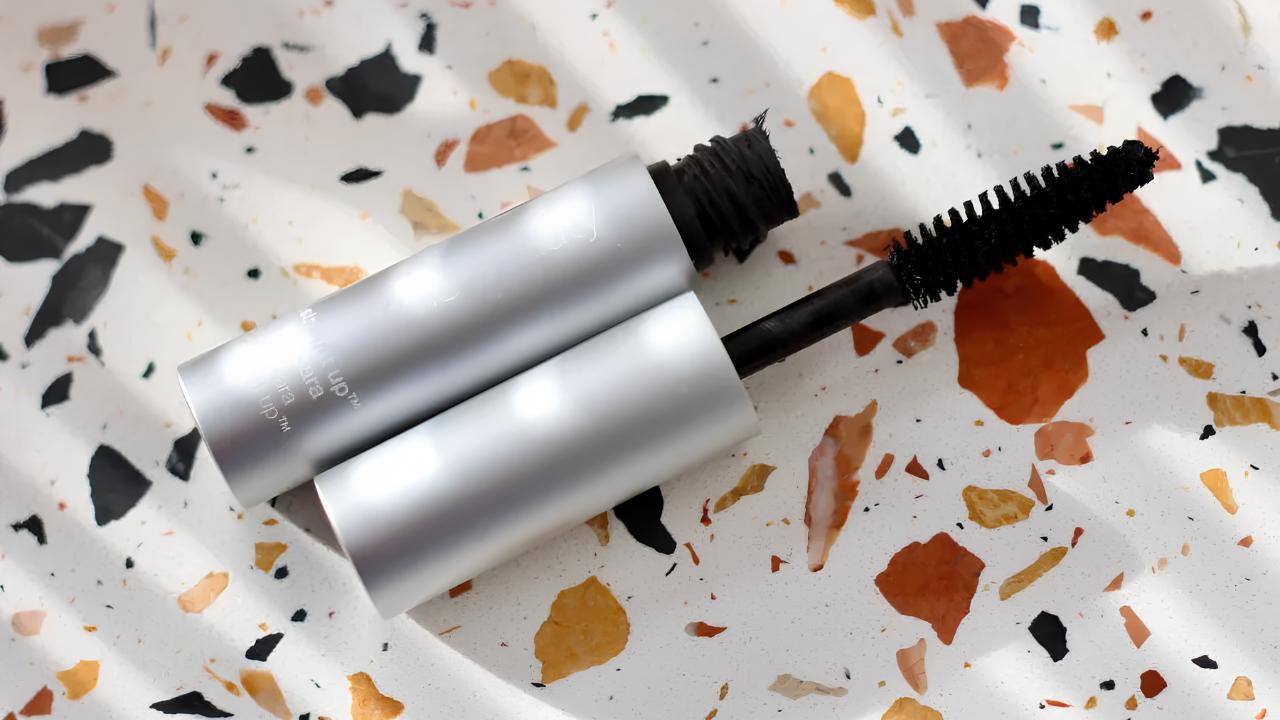
RMS Beauty’s deployment of its Straight Up Volumizing Peptide Mascara underscores how established clean-beauty players are leveraging high-tactile componentry to validate active skinification claims at the prestige tier. By combining tri-peptide complexes with heavy-walled, custom-weighted aluminum packaging, the brand converts physical packaging density into a surrogate signal for clinical efficacy. This tactile weight reinforces the consumer perception of a treatment-first product, allowing RMS to command a premium price point while establishing a modular aesthetic template that effortlessly extends into adjacent brow and lash-conditioning SKUs on prestige shelves like Ulta and Bluemercury.
Sustainability Credentials Are Becoming a Retailer Compliance Issue
Geka's patented Shadow Printing technology, which achieves a matte finish without ink or foil while preserving recyclability, signals where the regulatory pressure is heading. Retail groups across the EU are accelerating ESG compliance timelines for vendor packaging, and brands supplying Carrefour, DM, or Boots cannot absorb a secondary decorating process that compromises material mono-stream recyclability. Geka's production relationship with Maybelline's Colossal WOW Mascara confirms that sustainable decoration is already operating at mass-market scale, not only in premium niches. For brand managers conducting packaging audits, this closes the cost justification gap that previously made sustainable decoration a prestige-only conversation.
The forward implication is direct. Mascara packaging will function as a category entry signal for lash treatment lines as the skinification trend matures, and brands that invest now in scalable, modular applicator architecture will carry a structural advantage into the next retail range review cycle. Suppliers with proprietary brush, wiper, and decoration platforms will attract acquisition interest as large-scale beauty groups look to internalize packaging capability rather than manage it as a fragmented vendor relationship.
This article references and builds on original reporting by Rachel Clancy Rachel Clancy for Beauty Packaging. Read the original piece here: https://www.beautypackaging.com/mascara-packaging-options-grow-as-the-market-evolves/. BeautyScale is a commercial agency; our editorial notes are commentary on industry reporting.
Rami Al Ariss
Beauty market analyst covering trends, brands, and distribution shifts.