Men's Beauty Hits $1.5B in M&A Validation: How Looksmaxxing Culture Is Redrawing Distribution Architecture
Men's personal care in the U.S. grew 4.2 percent in 2025, outpacing total beauty's 3.3 percent gain, according to NielsenIQ, and the structural forces driving that outperformance have shifted decisively from demographic assumption to behavioral data. This is no longer a category expanding on the promise of male grooming's potential. It is a category in active portfolio reset, attracting nine-figure acquisition capital, recalibrating distribution architecture, and forcing brand managers to navigate the collision between self-optimization culture and responsible messaging with genuine commercial precision.
Unilever's $1.5B Signal Reframes the Competitive Map
Unilever's acquisition of Dr. Squatch at a $1.5 billion valuation in 2025 is the clearest indicator that masstige men's personal care has crossed from emerging segment to strategic asset class. Dr. Squatch currently ranks fourth by social media resonance among Gen Z men, per Nectar Social's scraping of 1.8 million TikTok, Instagram, and Reddit posts, and its distribution architecture spans mass retail, TikTok Shop (where it has moved more than 387,000 units), and limited-edition drops tied to high-affinity cultural properties including the 2026 FIFA World Cup. Unilever did not acquire a soap brand. It acquired a Gen Z acquisition engine with proven digital commerce conversion and a tone of voice, built on humor and accessibility, that mass-market incumbents have consistently failed to replicate internally. For investors benchmarking consolidation targets, the deal establishes a valuation ceiling for brands that can demonstrate social resonance, TikTok Shop traction, and a defensible retail footprint simultaneously.
Prestige Fragrance Is the Category-Entry Vehicle
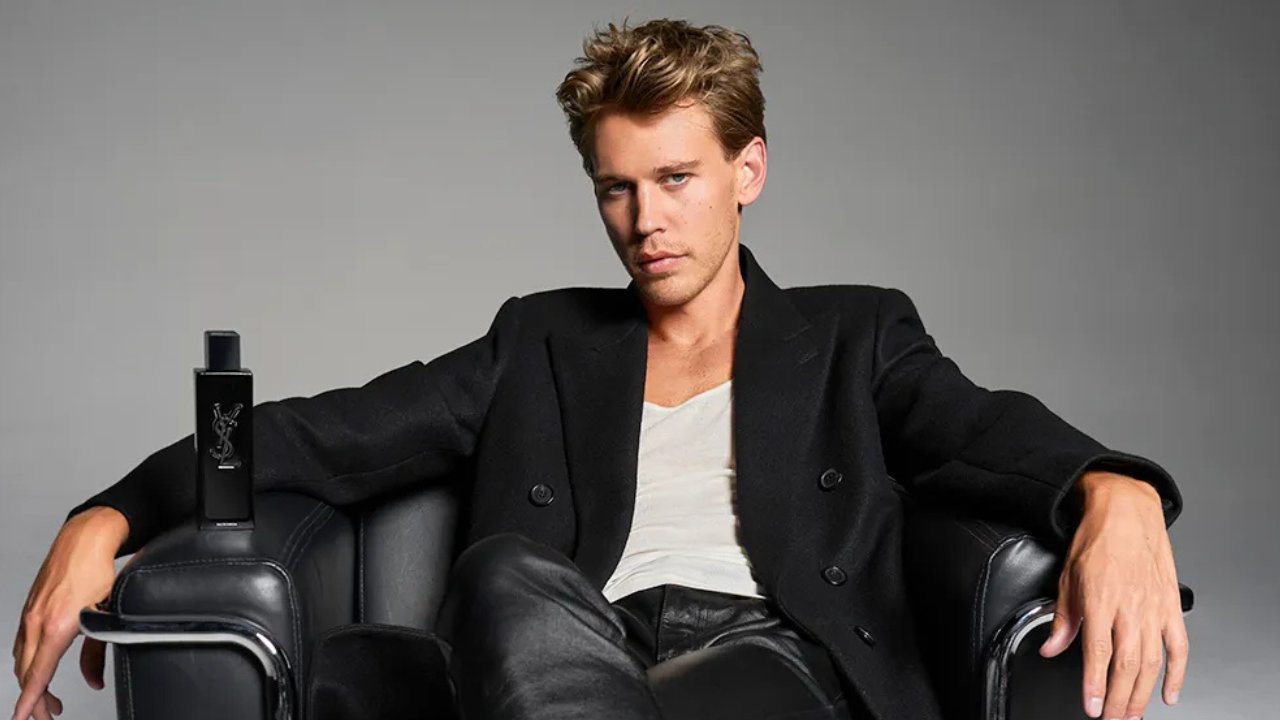
Men's prestige fragrance grew 5 percent over the last 12 months and now accounts for 32 percent of the prestige fragrance market, per Circana, making it the single most effective premiumization lever available to men's beauty brands at scale. YSL Beauty's Myslf Eau de Parfum, developed with L'Oreal and fronted by Austin Butler, captured nearly 9 percent of all U.S. prestige fragrance sales in April alone, according to Daash Intelligence data, a market concentration figure that signals genuine consumer pull rather than promotional distortion. The strategic implication for brand managers is direct: fragrance is functioning as a gateway category, drawing men into broader beauty engagement before they self-identify as beauty consumers. Harry's recognized this dynamic and launched its first trio of $35 colognes last fall, pairing the move with a limited-edition body wash program called Scentlabs, which now represents more than 40 percent of body wash sales on harrys.com and the brand's TikTok Shop storefront. Scentlabs launches tied to wellness and sports fandom have each driven more than 50 percent new customer acquisition, a figure that validates scent as a distribution on-ramp into adjacent treatment categories.
Treatment Expansion Is Where Prestige Positioning Gets Tested
Harry's move into targeted treatment products, including a $28 Cooling Eye Kit, a $20 antishine facial stick, and a Korean plumping lip balm, reflects a deliberate prestige positioning play layered on top of a mass distribution base. Co-CEO Jeff Raider, whose parent company Mammoth Brands exceeded $1 billion in total revenue over the last 12 months, has framed the expansion around consumer-perceived immediacy: men want visible results on a short feedback loop, not aspirational skincare regimens. That insight is directly legible in the product architecture. At the upper end of the market, Caldera + Lab is tracking to $60 million in 2026 sales, up from $40 million in 2025, serving a 35 to 70 demographic with a performance-first, fitness-adjacent positioning that brought the brand to nordstrom.com this spring. The Caldera + Lab trajectory illustrates a second viable prestige pathway, one built on results credibility with an older, higher-income male consumer whose grooming behavior is converging with longevity and wellness spend rather than social media identity.
The Looksmaxxing Variable Is a Brand Risk Factor, Not a Tailwind
The cultural context surrounding this growth carries measurable brand risk. Looksmaxxing content and manosphere-adjacent self-optimization discourse are accelerating male beauty engagement at the top of the funnel, but brands that align too closely with that content ecosystem face positioning liability as regulatory and media scrutiny intensifies. The brands gaining durable traction, Dr. Squatch, Harry's, YSL Myslf, are each executing narrative strategies that channel self-improvement sentiment without amplifying extremism. That balance is not incidental to their commercial performance. It is load-bearing.
The men's beauty market is approaching a maturation inflection. As APAC prestige players and GCC-based fragrance houses accelerate entry into Western men's categories, the distribution architecture and M&A activity of the next 18 months will determine which brands scale into multi-category platforms and which remain single-channel plays with limited consolidation value.
Rayane Mahmoud
Beauty market analyst covering trends, brands, and distribution shifts.