Maison Crivelli's $314 Rue Saint-Honoré Bet: What One Boutique Reveals About Niche Fragrance's Next Distribution Play

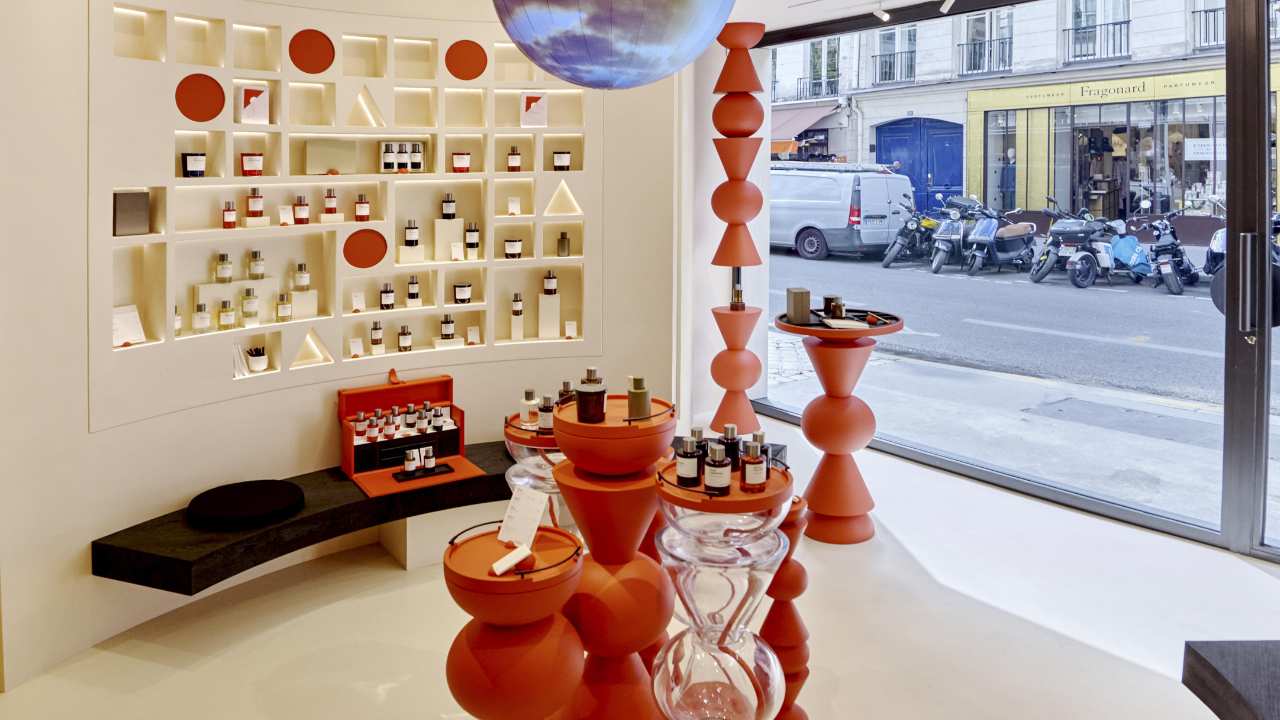
The global prestige fragrance market is projected to reach $24.2 billion by 2030, growing at a CAGR of 7.4 percent, and an increasingly disproportionate share of that expansion is being captured not by legacy conglomerate portfolios but by architecturally distinct, founder-led maisons operating with deliberate scarcity. Maison Crivelli's September 2026 debut at 314 rue Saint-Honoré, a flagship designed as what founder Thibaud Crivelli describes as an agora for fragrance, is a calculated distribution move as much as it is a retail aesthetic statement. For brand managers and investors tracking the niche-to-prestige pipeline, the decision carries implications that extend well beyond a single Paris address.
Mono-Brand Retail as Distribution Architecture, Not Decoration
The strategic logic behind Maison Crivelli's flagship is rooted in a distribution architecture built to resist the gravitational pull of multi-brand fragrance retailers, where shelf position determines discovery and margin compression is structural. Rue Saint-Honoré, flanked by Chanel, Saint Laurent, and Goyard, functions as a de facto luxury credentialing corridor, placing an independent maison in direct visual conversation with conglomerate-backed houses. That adjacency is not incidental. It is a deliberate positioning lever that signals prestige without requiring LVMH or Kering parentage to validate the claim.
The boutique's two-floor layout, with a ground-level open discovery space and a by-appointment upper floor for personalized consultation, mirrors the tiered access model that Creed and Parfums de Marly have used to sustain perceived exclusivity while scaling wholesale exposure in parallel. For a maison at Crivelli's stage of development, the owned-retail channel generates critical first-party customer data, insulates gross margin from retailer deductions, and establishes a brand narrative that no department store gondola can replicate.
Rue Saint-Honoré, flanked by Chanel, Saint Laurent, and Goyard, functions as a de facto luxury credentialing corridor, placing an independent maison in direct visual conversation with conglomerate-backed houses.
The Premiumization Signal Investors Are Watching
Within the fragrance M&A landscape, flagship boutique openings by independent niche houses have historically preceded acquisition conversations by 18 to 36 months. Parfums de Marly opened its first standalone door in Paris in 2019 and was acquired by Advent International in 2023 at a reported valuation exceeding $700 million. Initio Parfums Privés, Memo Paris, and Amouroud each accelerated institutional interest following mono-brand retail launches that demonstrated consumer pull without wholesale dependency.
Maison Crivelli's flagship positions the brand for a similar trajectory. The integration of a sensory discovery library, proprietary gift architecture, and appointment-based private consultation creates quantifiable experiential differentiation, the kind of operational sophistication that private equity and strategic acquirers price into EBITDA multiples during due diligence. Crivelli's model essentially demonstrates that the brand can own its customer relationship end to end, a capability that meaningfully de-risks any future distribution integration.

Olfactory Retail as Masstige Firewall
The boutique model also functions as a structural defense against the masstige drift that threatens mid-tier niche fragrance positioning. As Sephora and Douglas continue expanding their "niche" designations to include brands at accessible price points, genuine prestige players face a classification problem: distribution breadth risks signaling accessibility rather than exclusivity. Maison Crivelli's owned retail channel allows the brand to control the discovery context entirely. The charred wood benches, honeycombed wall structures, and founder's cabinet of curiosities are not interior design choices but margin-protection tools, ensuring that the first consumer encounter with the brand occurs in a curated environment the maison controls rather than a retailer-defined one.
Maison Crivelli's boutique establishes the spatial and experiential blueprint that makes international replication credible to potential retail partners, franchise operators, and institutional investors alike.
This approach maps directly to what Frederic Malle achieved over two decades at his Paris ateliers, where the deliberately disorienting, counter-intuitive retail format became the brand's most durable competitive asset long before LVMH completed its 2015 acquisition.
What Comes Next for Crivelli's Portfolio
The rue Saint-Honoré opening is most productively read as the first node in what will likely become a selective mono-brand retail network targeting GCC and APAC markets within a three-to-five-year horizon. Both regions are generating outsized fragrance premiumization momentum, with GCC per-capita fragrance spend ranking among the highest globally and APAC prestige fragrance posting double-digit volume growth in South Korea, China, and the UAE travel retail corridor.
Maison Crivelli's boutique establishes the spatial and experiential blueprint that makes international replication credible to potential retail partners, franchise operators, and institutional investors alike. The Paris flagship is proof of concept. The portfolio reset it enables, from multi-brand wholesale dependence toward owned-channel prestige positioning, is the actual strategic event worth tracking in 2026 and beyond.
This article references and builds on original reporting by maisoncrivelli.com. Read the original piece here: https://maisoncrivelli.com/en-fr/pages/boutique. BeautyScale is a commercial agency; our editorial notes are commentary on industry reporting.
Martin Jacob
Beauty market analyst covering trends, brands, and distribution shifts.