Virtual Try-On at $7.9B: How Brands Navigate Beauty Tech's Compliance Inflection

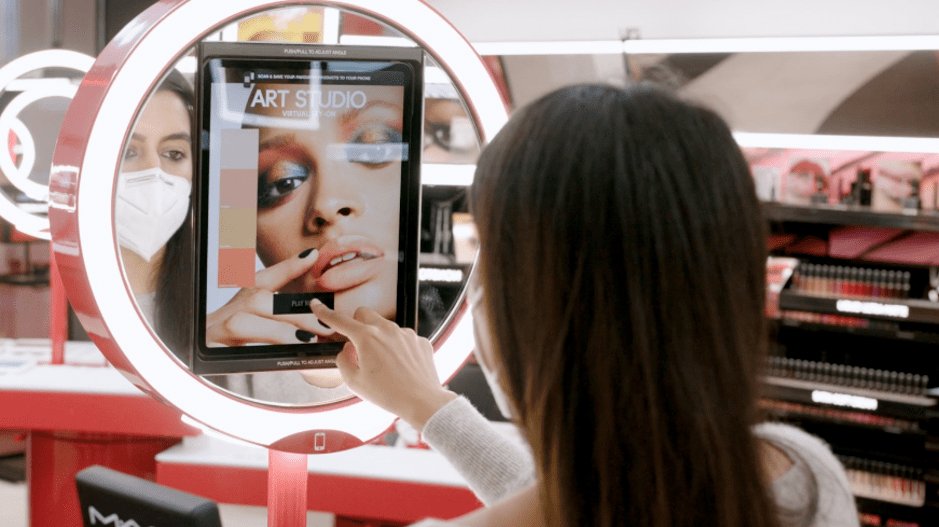
The global beauty AR and virtual try-on market is projected to reach $7.9 billion by 2028, growing at a CAGR of 14.2 percent, but a federal court ruling advancing a biometric privacy lawsuit against MAC Cosmetics is injecting material legal risk into what brands had previously treated as a frictionless acquisition channel. The case, brought by plaintiff Fiza Javid, centers on whether MAC's virtual try-on tools captured facial geometry data without adequate consumer consent under Illinois' Biometric Information Privacy Act. For brand strategists, investors, and retail partners, the ruling is not simply a legal footnote. It signals a structural inflection point in how prestige and masstige brands deploy AR technology across their distribution architecture.
Biometric Liability Is Now a Brand Equity Problem
BIPA litigation has quietly become one of the most financially consequential compliance categories in U.S. retail. Statutory damages under the act run $1,000 per negligent violation and $5,000 per intentional violation, with class certification now a realistic outcome in cases involving digital consumer touchpoints at scale. MAC Cosmetics operates across more than 500 freestanding retail locations in North America and maintains deep penetration in Sephora, Ulta Beauty, and department store channels, meaning the potential claimant pool in a certified class is not theoretical. The reputational calculus matters equally: MAC's parent company Estée Lauder Companies reported net sales of $11.2 billion in fiscal 2024, and any headline risk touching data practices compounds an already difficult recovery narrative for a portfolio navigating significant brand repositioning.
Expect the next 18 months to produce meaningful consolidation among AR beauty tech vendors, with acqui-hires targeting companies that have invested in privacy-by-design infrastructure rather than bolting compliance onto existing systems.
Distribution Architecture Determines Exposure Depth
The legal risk is not uniformly distributed across the industry. Brands that deploy virtual try-on natively within owned e-commerce environments carry a different compliance profile than those activating the same technology through third-party retailer platforms, brand.com integrations, or in-store kiosks managed by retail partners. This distinction matters acutely for M&A due diligence. Acquirers evaluating prestige beauty brands with significant AR infrastructure now face a latent liability line item that was largely absent from deal modeling three years ago. Private equity firms with portfolio exposure to digitally native beauty brands, including the growing cohort of indie prestige labels that adopted AR as a core conversion tool during the 2020 to 2022 DTC acceleration cycle, should be conducting immediate audits of consent architecture across every consumer touchpoint.
The masstige segment carries particular exposure. Brands operating in the $15 to $40 price tier have aggressively deployed AR to close the experience gap with prestige counters, often leveraging white-label virtual try-on vendors whose data governance practices vary considerably. A brand's liability does not diminish because the underlying technology was licensed rather than built. Contractual indemnification clauses in vendor agreements will face serious stress-testing as litigation volume grows.
Brands operating in the $15 to $40 price tier have aggressively deployed AR to close the experience gap with prestige counters, often leveraging white-label virtual try-on vendors whose data governance practices vary considerably.
Prestige Positioning Cannot Absorb Consent Deficits
For brands executing premiumization strategies, consumer trust is not a soft metric. It is a pricing permission structure. The prestige beauty consumer, particularly in the 25 to 44 demographic that drives disproportionate category spend, demonstrates measurable sensitivity to data practices. A 2023 survey by the International Association of Privacy Professionals found that 68 percent of U.S. consumers would reduce engagement with a brand following a data privacy incident. For a prestige label attempting to hold average unit retail above $45 in an increasingly promotional environment, that erosion of trust carries direct revenue consequences.
Estée Lauder Companies is not alone in this exposure. L'Oreal Group, Coty, and Shiseido have each invested materially in AR try-on capabilities across their brand portfolios, and all maintain meaningful U.S. retail footprints where state-level biometric statutes apply. Texas and Washington have enacted comparable privacy frameworks, and federal biometric legislation remains an active legislative discussion in the current Congressional session.
The Compliance Infrastructure Becomes a Competitive Asset
The forward trajectory here is not retreat from AR. Brands that build robust, auditable consent frameworks now will convert a regulatory burden into a genuine competitive differentiator, particularly as retail partners including Sephora and Ulta Beauty formalize their own vendor data governance requirements. Expect the next 18 months to produce meaningful consolidation among AR beauty tech vendors, with acqui-hires targeting companies that have invested in privacy-by-design infrastructure rather than bolting compliance onto existing systems. For brand managers conducting portfolio resets, technology partnerships warrant the same strategic scrutiny as retail door counts and pricing architecture. The MAC ruling is the opening signal. The industry response will define which brands enter 2026 with distribution architecture built for durability and which are still managing litigation calendars instead of innovation roadmaps.
Martin Jacob
Beauty market analyst covering trends, brands, and distribution shifts.