L'Oréal's $1.98 Billion AI Infrastructure Bet: How CreAItech Rewires Brand Strategy, Distribution, and the Future of Prestige Marketing
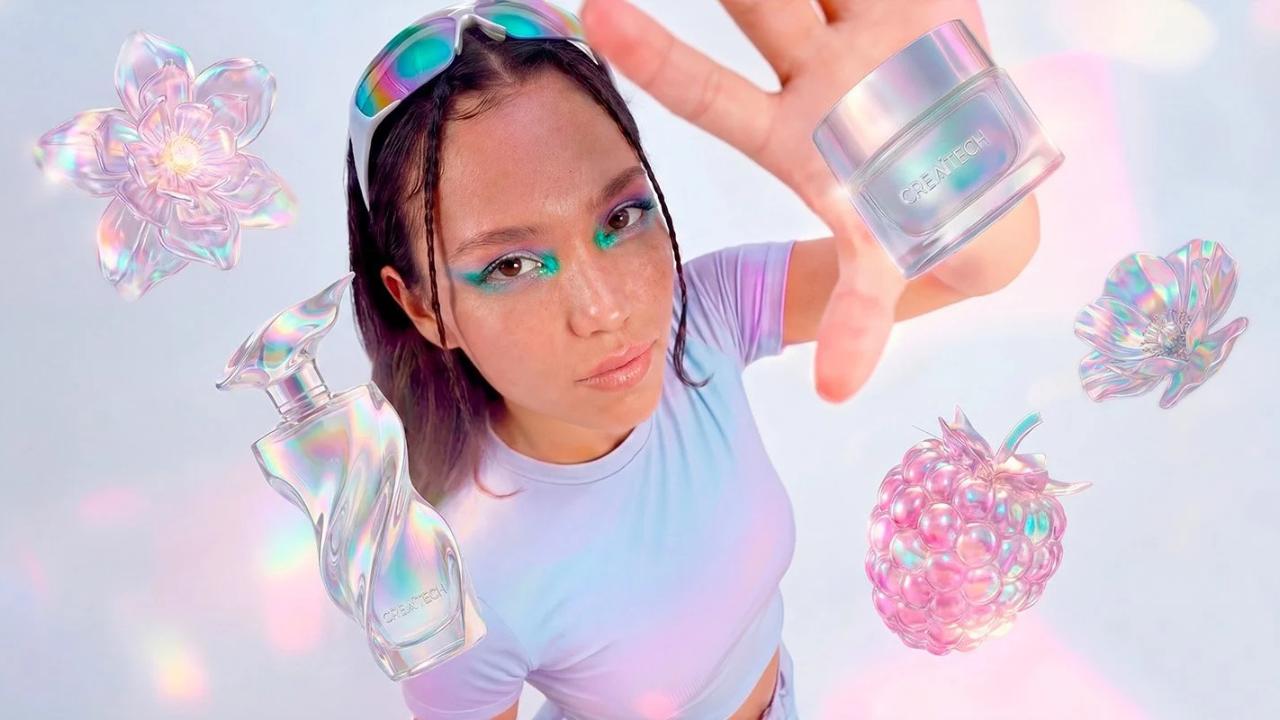
L'Oréal's €1.5 billion ($1.98 billion) technology investment in 2025 is no longer a line item in an earnings footnote. It is the structural backbone of a content and distribution architecture that now produces 50,000 marketing assets annually, cuts production costs by 40%, and positions the world's largest beauty conglomerate to dominate AI-native search at the precise moment that discovery channels are being fundamentally redrawn. The company's newly announced partnership with OpenAI, unveiled by Chief Digital and Marketing Officer Asmita Dubey at VivaTech in Paris on June 19, brings OpenAI's image generation and GPT-Rosalind life sciences reasoning model into L'Oréal's proprietary CreAItech system. For brand managers and retail partners watching from the sidelines, the operational gap between L'Oréal and the rest of the competitive field is now measurable in billions.
Distribution Architecture Is the Real Battleground
The OpenAI deal is as much a distribution play as a creative one. By feeding proprietary product data directly into ChatGPT's underlying models, L'Oréal is effectively engineering first-mover positioning inside AI-generated search responses. Gartner analyst Greg Carlucci has noted that personal care brands are already experiencing declining website traffic as consumers migrate to AI-led discovery, and nearly one in five consumers now use generative AI tools to research purchases. For brands that lack a direct data pipeline into these platforms, that migration represents a structural revenue risk, not a cyclical dip. L'Oréal's arrangement with OpenAI ensures its 40-brand portfolio, spanning masstige entries like Maybelline and Garnier to prestige positioning under Lancôme and Kiehl's, surfaces from authoritative product data rather than aggregated third-party noise.
For competing conglomerates including Estée Lauder Companies, Shiseido, Coty, and LVMH Perfumes and Cosmetics, the implication is clear: content infrastructure has become a strategic moat, not a shared-services function.
Portfolio Reset at Velocity: 40 Brands, One Engine
CreAItech functions as a centralizing force across a portfolio that has historically required fragmented creative pipelines. The system, built from a multi-model stack incorporating Google Gemini, Veo3, Imagen, Seedance, Adobe, and Stable Diffusion, and now OpenAI, allows L'Oréal's 10,000-strong global marketing staff to execute brand-level creative at mass-market speed without collapsing the premium differentiation that prestige positioning demands. This is the operational tension that most conglomerates fail to resolve: premiumization requires controlled, elevated storytelling, while masstige volume brands require relentless asset throughput. CreAItech, by enabling human marketers to select models appropriate to a given brief rather than locking into a single vendor, theoretically preserves both disciplines within one infrastructure.
The Nvidia GPU partnership inked in 2025 adds computational scale to that architecture, reducing the marginal cost of content at scale. Combined with a proprietary measurement tool, BETiQ, that tracks creative effectiveness against media performance metrics including ROAS and click-through rates, L'Oréal is building a closed-loop content-to-conversion system that most independent beauty brands could not replicate without M&A activity or significant external capital.
As the compound annual growth rate of AI-driven beauty content production accelerates, the valuation premium attached to brands with clean digital asset libraries and structured product data will rise accordingly.
The $15.48 Billion Advertising Machine and What It Signals
L'Oréal increased its worldwide advertising and promotions spend by 10% year over year to $15.48 billion, a figure that already represented 32% of total sales before the increase. Approximately 60% of that budget flows into paid social, and the company now manages relationships with 500,000 influencers and creators annually. At that scale, CreAItech is not supplementing the marketing operation. It is the operating system the marketing operation runs on. For competing conglomerates including Estée Lauder Companies, Shiseido, Coty, and LVMH Perfumes and Cosmetics, the implication is clear: content infrastructure has become a strategic moat, not a shared-services function.
The early deployment of ChatGPT advertising inventory across CeraVe, Garnier, and its pharmaceutical division in the U.S. market signals that L'Oréal intends to establish category dominance in AI-native paid media before CPM pricing on those platforms reflects true competitive demand. First-mover positioning in an emerging channel is a pattern the company has executed repeatedly, including in prestige e-commerce and short-form video commerce across APAC.
The M&A and Partner Implications for the Broader Industry
For retail partners, specialty chains, and MENA and GCC distributors evaluating shelf and digital placement strategies, L'Oréal's AI infrastructure deepens an already asymmetric data advantage. Brands seeking acquisition by or partnership with L'Oréal can expect integration readiness, meaning compatibility with CreAItech and BETiQ, to become an informal due diligence criterion. As the compound annual growth rate of AI-driven beauty content production accelerates, the valuation premium attached to brands with clean digital asset libraries and structured product data will rise accordingly. The infrastructure L'Oréal is building today will define the acquisition parameters of tomorrow's portfolio reset conversations.
This article references and builds on original reporting by digidaymedia for Glossy. Read the original piece here: https://www.glossy.co/beauty/loreal-accelerates-generative-ai-content-engine-with-fresh-openai-deal/?utm_campaign=glossydis&utm_medium=rss&utm_source=general-rss. BeautyScale is a commercial agency; our editorial notes are commentary on industry reporting.