Valentino Beauty's Mist Offensive: How a $49 Entry Point Is Rewiring Prestige Fragrance Distribution

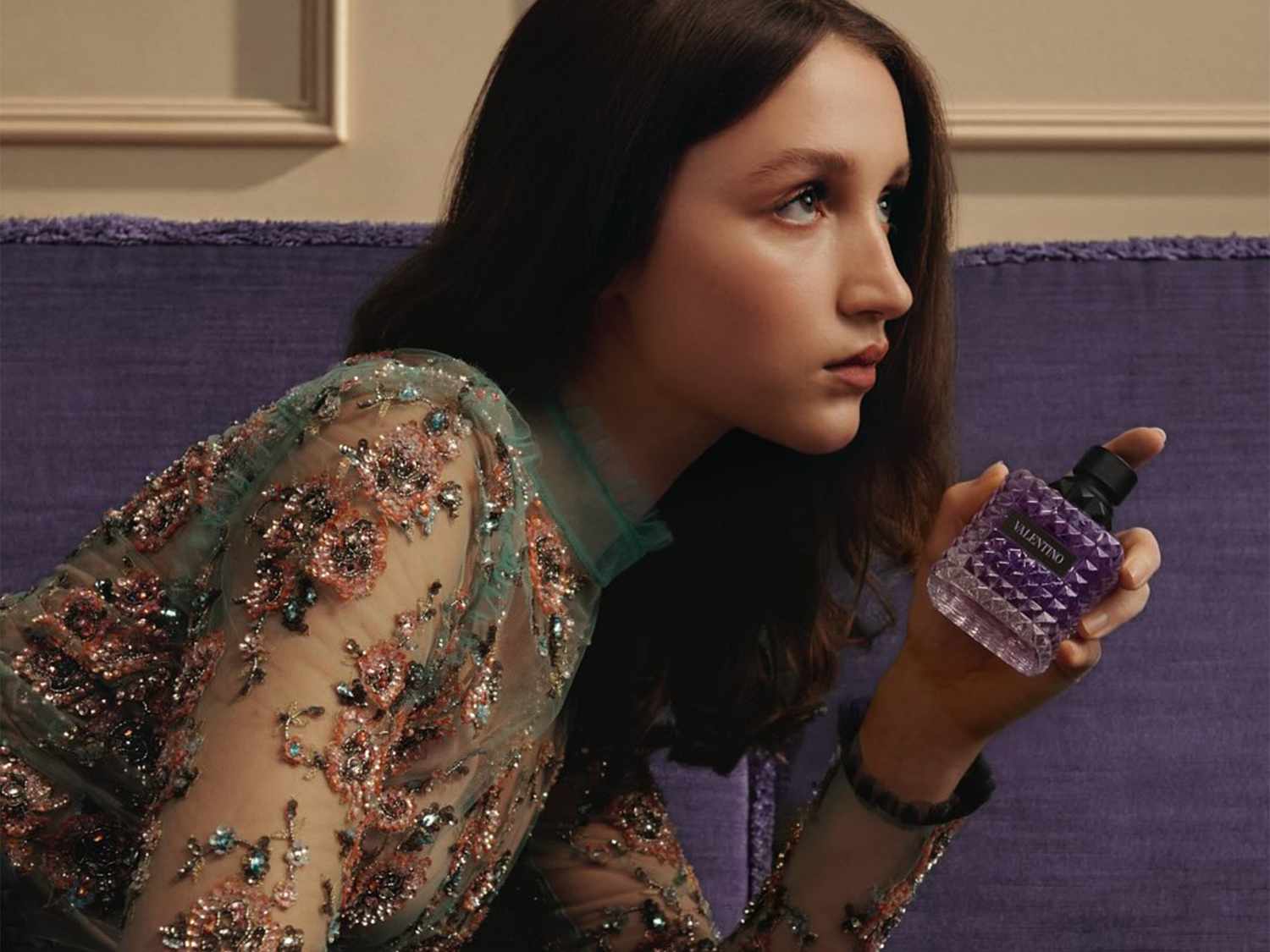
The global hair and body mist category is tracking toward $2.1 billion by 2027, expanding at a CAGR that outpaces core eau de parfum by nearly three percentage points — and L'Oréal's Valentino Beauty is now positioning Born in Roma as the prestige anchor in that architecture.
The launch of four gourmand-forward hair and body mists — Golden Coconut, Caramel Crush, Vanilla Bliss, and Salty Pistachio — at €49 per 100ml unit represents more than a product extension. It signals a deliberate portfolio reset designed to compress the entry price into the Born in Roma franchise without diluting its prestige equity. For brand managers and retail buyers parsing the move, the strategic logic is unambiguous: extend basket size, widen distribution occasion, and capture the fragrance-obsessed Gen Z consumer at a touch point that eau de parfum cannot reach structurally.
---
The Masstige Lever Hidden Inside a Luxury Launch
Claudia Marcocci, Global President of Valentino Beauty at L'Oréal, is precise about the positioning: this is a new category entry, not a flanker dilution. That distinction carries significant weight in prestige channel management. Flankers compress brand equity over time by multiplying like-for-like SKUs at equivalent price points. A category extension — particularly one that operates at a lower price tier while referencing the masterbrand's olfactory DNA — functions as a masstige bridge without repositioning the hero product.
At €49, the mists sit approximately 60 to 70 percent below the Born in Roma Donna eau de parfum's retail price, creating a two-tier access architecture that mirrors strategies deployed successfully by Armani Beauty and Yves Saint Laurent Beauté within the L'Oréal Luxe portfolio. The move converts occasional prestige buyers into repeat franchise participants — a materially different consumer lifetime value calculation.
That dual-channel deployment — experiential retail plus social commerce — is increasingly the standard execution model for prestige fragrance launches targeting sub-35 demographics across MENA, APAC, and Western European markets.
---
Distribution Architecture Is the Real Story
The sequential rollout — Europe first, U.S. to follow within the same month — reflects a distribution architecture calibrated around retailer readiness and summer seasonal windows rather than brand prestige signaling. Born in Roma's confirmed number-one franchise status in the U.S. across both women's and men's categories gives L'Oréal the retail leverage to command premium gondola placement and incremental fixture space for the mist category at Sephora and Ulta Beauty simultaneously.
Summer activation programming across Paris, Berlin, Düsseldorf, Madrid, and Lisbon anchors the physical retail play, while a TikTok-first content strategy handles the Gen Z acquisition funnel. That dual-channel deployment — experiential retail plus social commerce — is increasingly the standard execution model for prestige fragrance launches targeting sub-35 demographics across MENA, APAC, and Western European markets.
The portability argument Marcocci advances — lower alcohol content enabling beach bag and travel placement — is also a distribution signal. Mists open channels that regulated alcohol-content fragrances cannot access in certain travel retail and regional regulatory environments, particularly across the GCC where fragrance regulations present ongoing complexity for alcohol-based formats.
---
By formalizing the layering ritual within the Born in Roma universe — and providing explicit pairing guidance — Marcocci's team is systematically converting an organic consumer behavior into a managed revenue architecture.
Premiumization Through Scent Layering Behavior
Born in Roma's growth trajectory — reportedly 15 times larger by sales volume since L'Oréal acquired the license in 2018 — validates a premiumization thesis that the broader prestige fragrance market is still digesting. The franchise's acceleration maps directly against the fragrance content creator boom that redefined category discovery between 2020 and 2023, pulling average consumer age for prestige fragrance meaningfully downward.
Scent layering is not a peripheral behavior. Internal data from major fragrance retailers indicates that consumers who layer fragrances purchase 2.3x more fragrance SKUs annually than single-product buyers. By formalizing the layering ritual within the Born in Roma universe — and providing explicit pairing guidance — Marcocci's team is systematically converting an organic consumer behavior into a managed revenue architecture.
---
Forward Outlook: The License Model's Next Move
The deeper strategic question for investors tracking L'Oréal's license portfolio is whether the Valentino Beauty model — cultural brand-building, Gen Z acquisition through accessible formats, prestige retention through masterbrand discipline — becomes the blueprint for portfolio consolidation across the group's other luxury licenses.
With M&A activity in prestige fragrance licensing accelerating and Interparfums, Puig, and Coty all repositioning their licensed portfolios aggressively, L'Oréal's ability to demonstrate compounding franchise value through category expansion rather than SKU proliferation will define Valentino Beauty's long-term positioning. The mist launch is a data point in that argument. The activation pipeline across two continents this summer is how that argument gets proven at retail.
Ruth Estabillo
Beauty market analyst covering trends, brands, and distribution shifts.