Trade Shows in 2026: Why Beauty Brands Are Spending $847M Despite Digital Fatigue

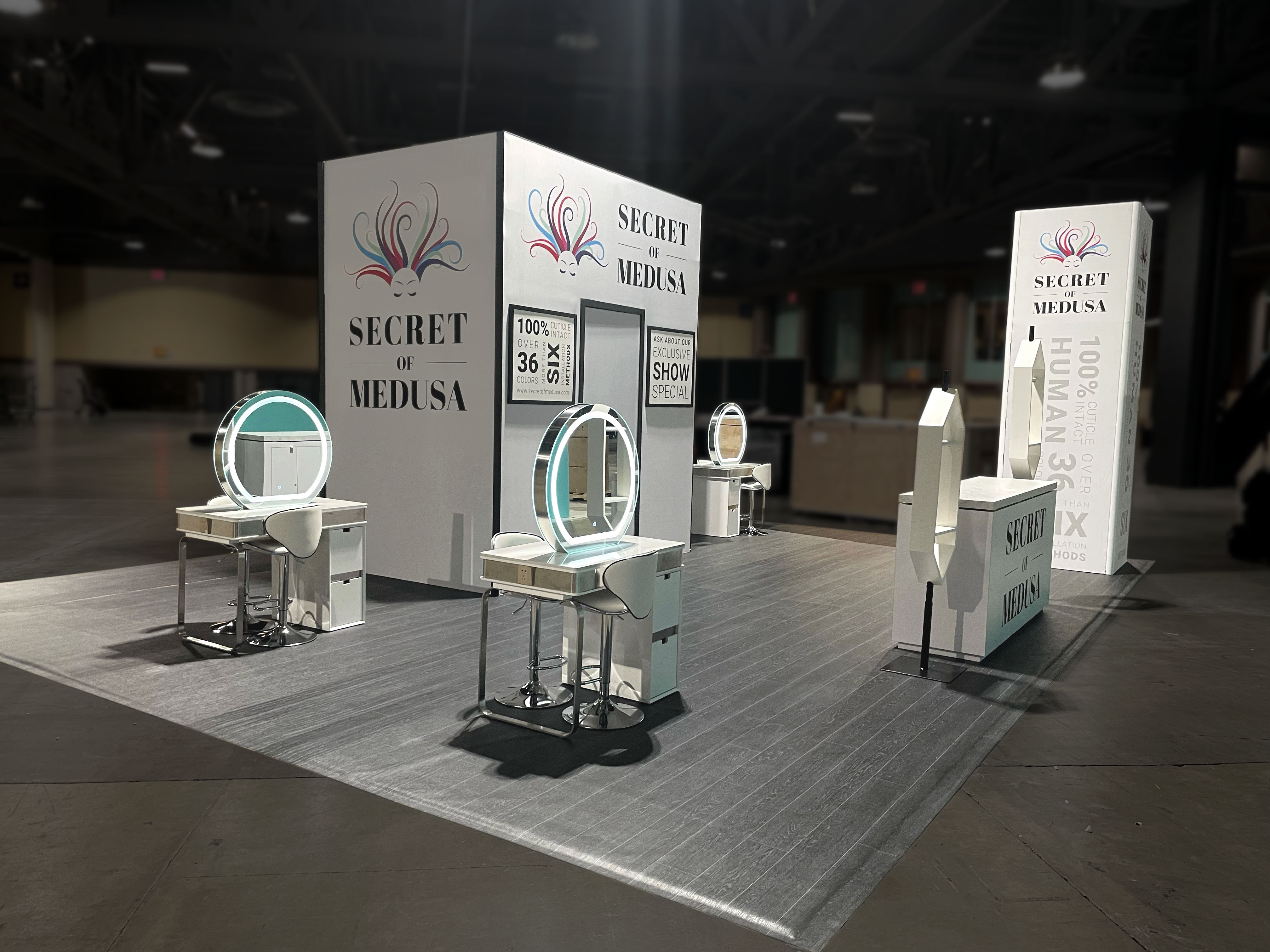
Trade shows now function as portfolio rationalization accelerators rather than pure discovery platforms. Estée Lauder Companies reduced its Cosmoprof Worldwide Bologna footprint by 40% in 2025 while increasing private meeting rooms by 300%, a spatial reallocation that prioritizes depth over breadth and reflects broader industry consolidation. Retailers attending these exhibitions arrive with predetermined acquisition targets — L'Oréal's Chief Commercial Officer Alexandra Palt noted that 68% of their new retail partnerships initiated at trade shows in 2024 were brands already vetted through digital channels before the first handshake. The physical event serves as due diligence confirmation and negotiation closure, not initial awareness.
Emerging brands face a different calculus entirely. A BeautyScale analysis of 340 indie beauty brands exhibiting at major trade shows in 2025 found that those securing meetings with Sephora, Ulta, or equivalent prestige retailers recouped their $18,000-$45,000 exhibition investment within 90 days through distribution agreements averaging $280,000 in first-year wholesale commitments. The brands that failed to convert — 61% of exhibitors — treated trade shows as broadcasting opportunities rather than precision-targeted relationship conversion events.
Geographic Arbitrage and Regional Access
MENA and APAC markets have transformed trade shows into gateway requirements for market entry. Beautyworld Middle East grew exhibitor count by 31% in 2025, driven almost entirely by Western brands seeking distribution partnerships within GCC markets where digital-first strategies face structural barriers — fragmented e-commerce infrastructure, import regulation complexity, and retail landscapes still dominated by family-owned conglomerates controlling 70% of prestige beauty shelf space across the Gulf. Trade shows collapse the relationship-building timeline that would otherwise require 18-24 months of repeated regional visits and introductions through third-party intermediaries.
In-Cosmetics Asia serves a parallel function for K-beauty and J-beauty ingredient suppliers targeting Western formulation teams. BASF Personal Care increased its contract manufacturing partnerships by 43% following targeted In-Cosmetics engagements in 2024-2025, illustrating how ingredient suppliers leverage trade shows to bypass traditional sales cycles and establish technical credibility through live formulation demonstrations that digital channels cannot replicate with equivalent persuasive impact.
The ROI Reality Check
The brands extracting maximum value from trade show investments approach exhibitions as M&A-style processes with predefined targets, scheduled meetings booked 60-90 days in advance, and decision-makers authorized to negotiate terms on-site. Pattern Beauty founder Tracee Ellis Ross secured distribution across 340 Sally Beauty locations following a 15-minute Cosmoprof conversation that culminated a six-month courtship initiated digitally but stalled pending in-person product evaluation and founder credibility assessment.
Conversely, brands treating trade shows as lead generation exercises face deteriorating returns. The cost per qualified lead at major beauty exhibitions increased 27% from 2023 to 2025 while conversion rates on cold outreach declined 34%, creating a profitability squeeze that questions the viability of unfocused exhibition strategies. The masstige and prestige tiers diverge sharply here — premium positioning enables selective relationship cultivation, while mass-market brands require volume-based strategies that trade shows no longer cost-effectively deliver.
Strategic Implications for 2026-2027
Trade shows will continue consolidating into must-attend tentpole events while secondary exhibitions face exhibitor attrition and potential market exits. Brands should evaluate attendance not as marketing expense but as business development investment with quantifiable pipeline metrics and conversion benchmarks. The winners in this reconfigured landscape treat physical exhibitions as relationship acceleration infrastructure — compressing trust-building, product validation, and contract negotiation into concentrated timeframes that justify premium costs through distribution agreements digital channels alone cannot consistently secure.
Yann Fagniez
Beauty market analyst covering trends, brands, and distribution shifts.