The $1B+ Club Plays the Grid: SkinCeuticals' Scuderia Ferrari Partnership Signals Prestige Positioning's New Distribution Frontier

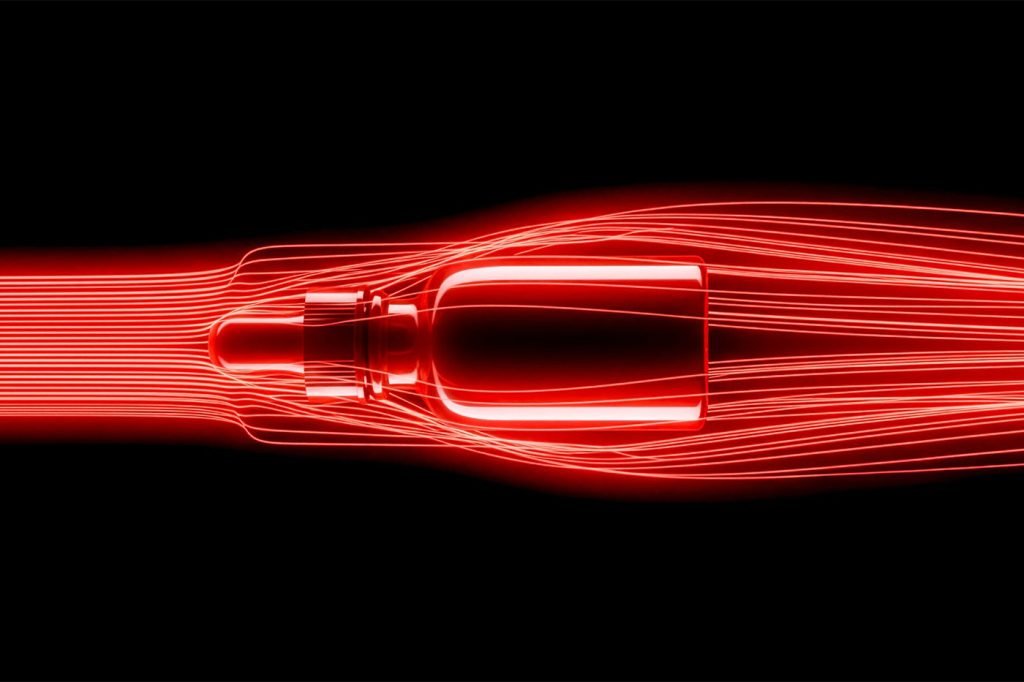
L'Oréal's Dermatological Beauty division generated approximately €5.8 billion in revenue in 2024, making it the group's second-fastest-growing division and the clearest proof point that clinical skincare has completed its pivot from pharmacy shelf to prestige cultural asset. SkinCeuticals' newly announced partnership with Scuderia Ferrari HP — the first official skincare collaboration in Formula 1 history — is not a sponsorship deal. It is a calculated distribution architecture move, designed to embed the brand inside a global experiential circuit that reaches high-net-worth consumers across MENA, APAC, and European markets simultaneously. Julien Chardon, Global President of SkinCeuticals, confirmed the brand has crossed L'Oréal's internal billionaire brand threshold, a milestone that reframes every subsequent strategic decision as portfolio-level, not brand-level.
Performance Equity Is the New Prestige Currency
SkinCeuticals has built its prestige positioning on clinical validation: C E Ferulic, recently repatented, remains one of the most referenced antioxidant serums in dermatological literature, commanding a $182 retail price point that holds without promotional pressure. That pricing discipline is foundational. In a masstige market crowded with ingredient-forward SKUs at the $40–$80 range, SkinCeuticals occupies an almost structurally protected tier — professional-channel dependent, physician-endorsed, and now, experientially anchored to the most aspirationally loaded sport in the luxury calendar. The Ferrari alignment doesn't dilute that positioning. It amplifies the brand's core equity by translating "scientific performance" into a visual and cultural language that resonates far beyond the dermatology waiting room.
The broader F1 luxury convergence is accelerating. LVMH formalized its multi-year F1 partnership in 2023. Gucci activated with the Alpine team. These are not peripheral marketing experiments — they are deliberate moves by $10B+ brand portfolios to claim territory inside a sport whose global viewership reached 1.5 billion in 2023, with disproportionate concentration among 18–34 affluent consumers across GCC and APAC markets. SkinCeuticals is arriving at precisely the right moment, before the category becomes saturated.
The Grand Prix Circuit as Pop-Up Distribution Network
What Chardon describes as "immersive experiences at pop-ups and hospitality moments" is, operationally, a non-traditional retail distribution layer. Beginning with Monaco in June, SkinCeuticals will activate a skin treatment spa aboard Scuderia Ferrari's yacht and deploy pop-up installations across multiple Grand Prix globally. For a brand that has historically grown through professional dermatology channels — medspas, plastic surgery practices, clinical aesthetics centers — this represents a meaningful channel extension without abandoning the brand's clinical credibility. The Grand Prix hospitality environment is, effectively, the same consumer who sits in a Park Avenue dermatologist's chair. The geography simply shifts.
This distribution logic matters for brand managers and retail partners watching from the outside. SkinCeuticals is not entering mass retail. It is building a parallel prestige experiential layer that reinforces channel exclusivity while expanding reach. For L'Oréal's Dermatological Beauty division, the strategic implication is compounding: each Grand Prix activation drives awareness that converts back through professional-channel stockists — the dermatologists, medspas, and authorized aesthetic clinics that still control the brand's primary revenue architecture.
M&A Context: What a Billionaire Brand Does Next
SkinCeuticals crossing L'Oréal's internal €1B revenue threshold places it in selective company — alongside La Roche-Posay and CeraVe as the division's anchor assets. At that scale, the strategic calculus shifts. Brands at this revenue tier within diversified beauty conglomerates typically face one of two trajectories: aggressive international expansion into underpenetrated markets, or deeper premiumization that protects margin against category commoditization. The Ferrari partnership is clearly oriented toward the latter. By associating the brand with a cultural property whose average hospitality ticket exceeds $5,000 per Grand Prix weekend, SkinCeuticals is constructing a perception ceiling that justifies continued price architecture elevation across its SKU portfolio.
The A.G.E. Interruptor range, cited by Chardon as a growth driver alongside C E Ferulic, positions the brand squarely inside the longevity skincare segment — a category projected to reach $93 billion globally by 2027 according to industry estimates, with CAGR outpacing traditional anti-aging at nearly 8.2%. Connecting longevity science to the performance narrative of Formula 1 engineering is not metaphorical. It is a strategic brand-building framework designed to make the association self-reinforcing over a multi-year horizon.
The Forward Position
As luxury conglomerates compete for the same F1 hospitality square footage and the sport's media footprint continues expanding across MENA and APAC markets, skincare's integration into performance culture will deepen. SkinCeuticals has moved first among clinical skincare brands — establishing category ownership inside an arena where prestige beauty has been largely absent. The brands that benchmark this partnership in 2025 will be architecting their own experiential distribution strategies in 2026. The grid is filling.
Rami Al Ariss
Beauty market analyst covering trends, brands, and distribution shifts.