Skinfix's $69 Serum Refresh: What a Portfolio Reset Signals About Prestige Positioning in Barrier Skincare

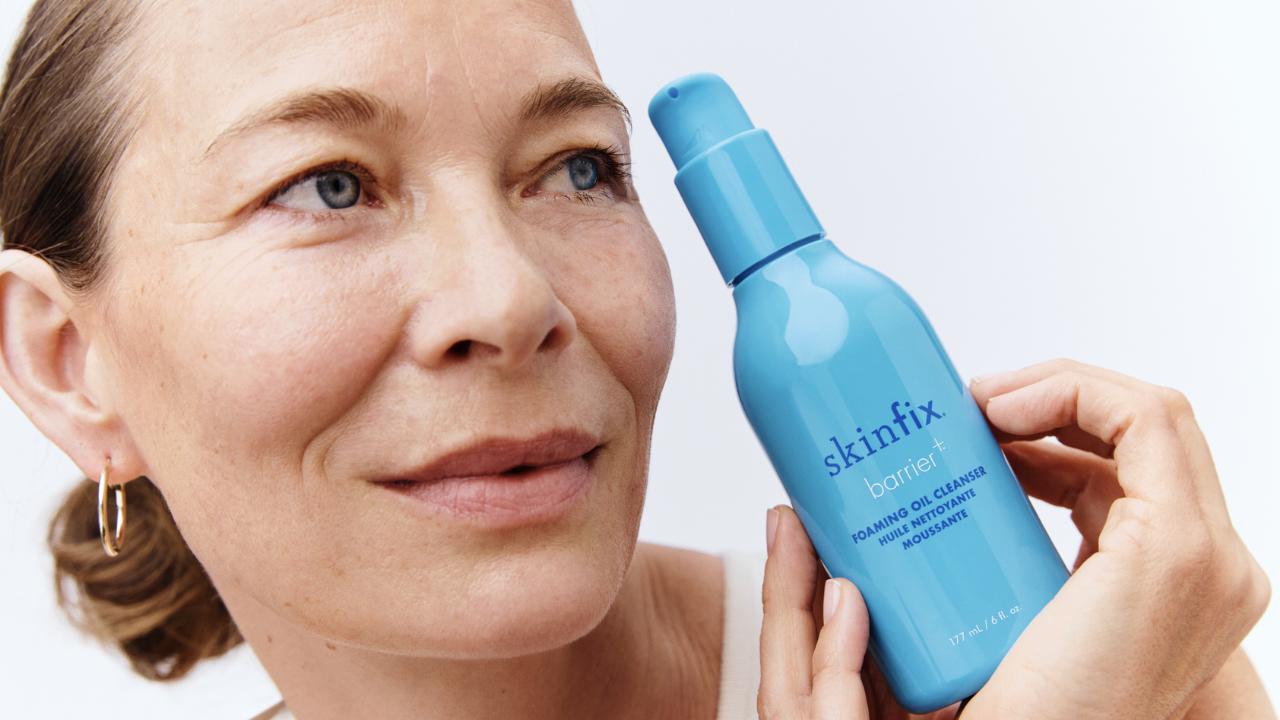
The global barrier repair skincare segment is projected to exceed $14.6 billion by 2027, expanding at a CAGR of approximately 8.3 percent as consumer fluency around ceramides, lipids, and microbiome integrity reshapes the prestige skincare conversation. Against that backdrop, Skinfix's coordinated product refresh, anchored by repackaged hero SKUs and a tiered bundling architecture spanning $18 entry points to $207 kit retail values, reads less like a seasonal marketing rotation and more like a deliberate prestige positioning maneuver. The brand is not simply updating aesthetics. It is restructuring its commercial signals for a retail and investor audience that increasingly rewards portfolio coherence over breadth.
Packaging Refresh as Brand Strategy, Not Aesthetics
Skinfix's decision to roll out a "New Look, Same Proven Formula" narrative across its Triple Lipid Activating Serum and Vitamin C Serum lines is a textbook prestige recalibration. In fragmented skincare markets, visual identity continuity across a full product line functions as a proxy for brand maturity. It tells retail buyers and channel partners that the brand is operationally disciplined. At a $69 price point for the Triple Lipid Activating Serum and $54 for the Triple Lipid-Peptide Cream, Skinfix occupies a masstige-to-prestige corridor that competes directly with Aveeno Restorative Science, La Roche-Posay, and the reformulated CeraVe prestige adjacencies. A coherent visual reset strengthens shelf differentiation at exactly the price band where consumer trade-up decisions are most elastic.
For a brand operating primarily direct-to-consumer alongside Sephora Canada, this approach builds the basket metrics that institutional retail partners evaluate before expanding door counts or awarding premium shelf placement.
Bundling Architecture as a Retention and ATV Engine
The more strategically interesting move is Skinfix's bundle construction. The $155 Fall Ritual Kit (originally $207), the $92 AM/PM Daily Hydration Duo (originally $108), and the $117 AM/PM Treatment Duo (originally $138) collectively reveal a distribution architecture designed to maximize average transaction value while anchoring repurchase cycles around seasonal ritual behavior. This is not promotional discounting. It is portfolio engineering. By packaging complementary SKUs at a 20 to 25 percent perceived discount, Skinfix drives multi-category trial within a single transaction, compressing the consumer journey from awareness to routine adoption. For a brand operating primarily direct-to-consumer alongside Sephora Canada, this approach builds the basket metrics that institutional retail partners evaluate before expanding door counts or awarding premium shelf placement.

Clinical Credibility as a Moat Against Masstige Commoditization
Skinfix's brand positioning rests on dermatologist validation and clinical proof claims, a differentiation strategy that carries meaningful weight as the broader masstige skincare market faces commoditization pressure from private-label ceramide products at Target and Amazon. The brand's Exo and Ectoin Intensive Repair Baume at $69, its Hypochlorous Daily Mist at $18, and its Dermatitis Relief Balm at $45 all signal a clinical ingredient strategy that references pharmaceutical-adjacent actives rather than standard cosmetic commodity inputs. This is a defensible position, but only if the brand maintains active dermatologist engagement and clinical study velocity. Brands that allow clinical credibility to stagnate into marketing language without ongoing evidence generation tend to lose prestige positioning within two to three product cycles, particularly as informed consumers and retail buyers grow more sophisticated in evaluating efficacy claims.
Skinfix's current portfolio reset positions the brand to enter 2025 with tighter visual identity, stronger bundle economics, and a clinical narrative that could support both retail expansion and M&A conversations.
M&A Readiness: What the Portfolio Signals to Acquirers
From a strategic consolidation perspective, Skinfix presents an interesting acquisition candidate profile. Its price architecture spans $18 to $85 per unit across face, body, lip, and eye, providing a full-face portfolio without the category sprawl that complicates integration. Its DTC-first distribution architecture reduces channel conflict complexity for a larger house seeking a clean prestige skincare bolt-on. The brand's reported Sephora Canada presence establishes demonstrated retail viability, while its predominantly North American footprint leaves MENA, APAC, and GCC expansion largely untapped, a meaningful value creation lever for any acquirer with existing distribution infrastructure in those geographies. Comparable transactions in the clinical skincare segment, including Unilever's acquisition of Paula's Choice in 2021 and L'Oreal's continued consolidation of derm-positioning brands, suggest that brands with a coherent barrier repair thesis and verifiable clinical credentialing routinely command multiples in the 4 to 6 times revenue range.
Skinfix's current portfolio reset positions the brand to enter 2025 with tighter visual identity, stronger bundle economics, and a clinical narrative that could support both retail expansion and M&A conversations. The barrier repair category is not slowing. Brands that arrive at the next deal cycle with coherent positioning and disciplined distribution architecture will command premium valuations. Skinfix appears to be building precisely that foundation.
This article references and builds on original reporting by skinfix.com. Read the original piece here: https://skinfix.com/. BeautyScale is a commercial agency; our editorial notes are commentary on industry reporting.
Martin Jacob
Beauty market analyst covering trends, brands, and distribution shifts.