SkinBerry's $1M Pre-Seed: How a Former Estée Lauder Executive Is Betting on a $9.7B Tween Skincare Gap

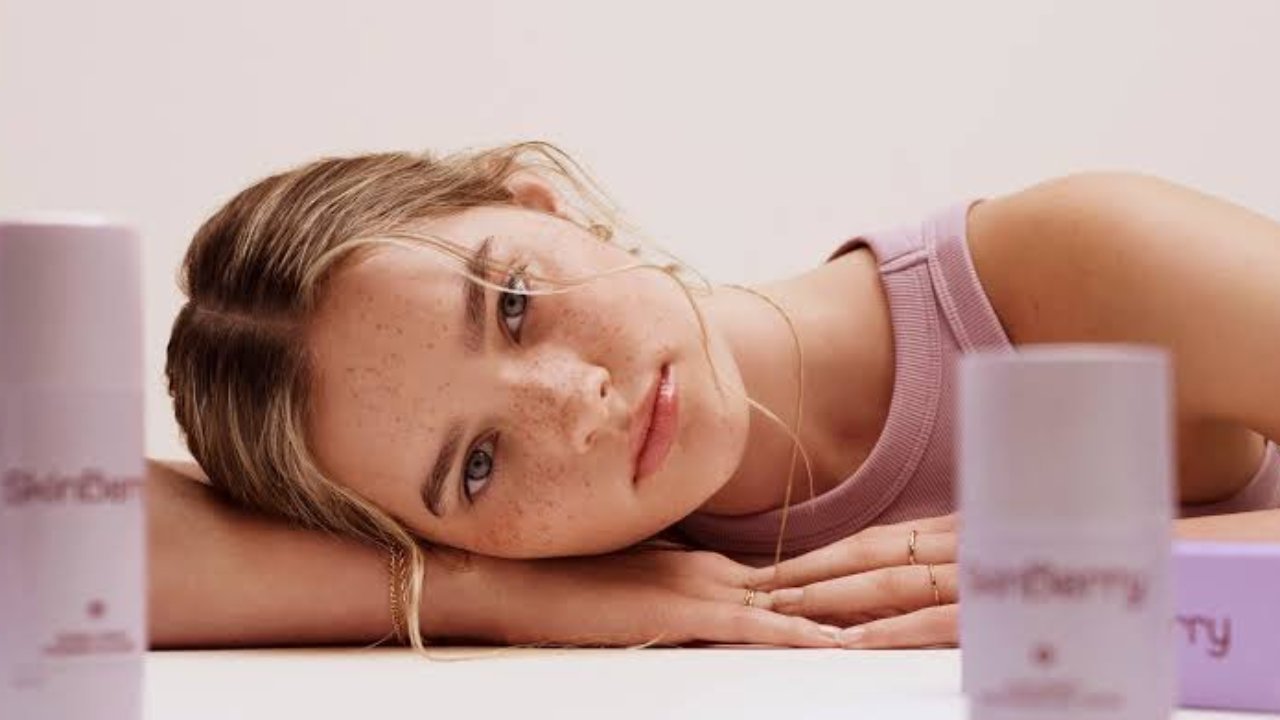
Teen skincare spending in the U.S. rose 5% year-over-year according to Piper Sandler's most recent Taking Stock With Teens survey of 9,000 respondents, a data point that understates the structural opportunity. The global youth skincare market is tracking toward $9.7B by 2028, driven by a generation that treats skincare as social currency, not functional hygiene. Sarah LaGreca, VP of Global Education and Artistry Development at Hourglass Cosmetics and a nine-year veteran of The Estée Lauder Companies across Origins, Clinique, Too Faced, and BeautyBank, has read that demand signal more precisely than most. Her brand, SkinBerry, launched in August targeting ages 8 to 18 with a three-SKU Glow Ritual priced between $23 and $29, and is currently closing a pre-seed round of more than $1M, expected to finalize in December.
The Whitespace Is Real, and the Distribution Architecture Is Unresolved
The "Sephora kids" phenomenon exposed a structural misalignment in prestige retail. Young consumers arrived at Sephora shelves and gravitated toward adult formulations from Drunk Elephant and Glow Recipe, brands with no pediatric testing, no age-appropriate positioning, and retail staff unprepared to redirect them. The category response has been fragmented. Brands including Sincerely Yours, Evereden, Saint Crewe, Btwn, and Yes Day have entered the space, but no single player has achieved the distribution scale or brand authority to consolidate the segment. SkinBerry's direct-to-consumer launch positions it as a prestige-adjacent entrant building equity before committing to a retail architecture, a sequencing strategy that mirrors early-stage prestige positioning decisions at several ELC incubated brands LaGreca would have observed firsthand.
Young consumers arrived at Sephora shelves and gravitated toward adult formulations from Drunk Elephant and Glow Recipe, brands with no pediatric testing, no age-appropriate positioning, and retail staff unprepared to redirect them.
Formulation Investment Signals Serious Retail Ambitions
LaGreca elected to develop SkinBerry's formulas from scratch through a California-based lab rather than sourcing white-label inventory, a decision that increased both development timelines and capital intensity. The brand's Signature Berry Blend combines Australian riberry with bilberry, elderberry, strawberry leaf, raspberry, and blackberry. Products are dermatologist- and pediatrician-tested, clinically tested on children ages 8 to 16, at least 90% naturally derived, and free of fragrance and dye. Some formulas went through five iterations across development cycles of one to two months each. That investment posture is not incidental. Credo Beauty, Sephora, and Ulta Beauty all apply elevated ingredient scrutiny for any brand targeting younger consumers, and a proprietary clinical testing record is increasingly the baseline requirement for prestige shelf placement rather than a differentiator.

Capital Stack and Advisory Board Reflect a Sophisticated Go-to-Market
Ben Zises, founder of SuperAngel.Fund and a backer of Create Wellness, Caraway, and Lalo, is among SkinBerry's confirmed investors. That association carries strategic weight: Zises has demonstrated pattern recognition in consumer brands with strong DTC fundamentals and retail upside. LaGreca's advisory board includes Esther Dong, former GM of Origins North America; Stephanie Kang, former VP of E-Commerce and Digital Performance at Skinbetter Science; and Moira Finocane, former CMO of Kudos. This is not a decorative advisory structure. Each advisor brings either channel expertise or prestige retail credibility that directly maps to the retail expansion SkinBerry is preparing to execute post-close.
This dual buyer dynamic compresses the brand's marketing surface area in ways that single-audience consumer brands do not face, and it creates a retail experience brief that most category merchants are not yet equipped to execute.
The Dual Buyer Problem Is the Defining Strategic Constraint
SkinBerry must convert two distinct purchase decision-makers simultaneously. The child drives demand through aspiration and peer influence: LaGreca designed the jelly mask with tactile play behavior in mind and selected packaging with light-catching finishes intended to feel premium at the price point. The parent controls the transaction and applies an ingredient lens shaped by clean beauty literacy and pediatric health concern. This dual buyer dynamic compresses the brand's marketing surface area in ways that single-audience consumer brands do not face, and it creates a retail experience brief that most category merchants are not yet equipped to execute. LaGreca's background developing training programs for beauty advisors at multiple ELC brands gives SkinBerry an unusual capability here: the ability to build associate education infrastructure that helps retail partners develop the category alongside the brand.
The M&A Horizon Sets the Strategic Clock
The youth skincare segment has not yet produced an acquisition target large enough to attract strategic interest from Unilever Prestige, LVMH Beauty, or the ELC portfolio team. That window will not stay open indefinitely. As Piper Sandler data continues to document teen beauty spending growth and as prestige retailers formalize their youth skincare strategies, the brands that establish clinical credibility, clean positioning, and retail distribution architecture first will command the most favorable M&A multiples. SkinBerry's current pre-seed capitalization is a starting position, not an endpoint. The more relevant question for investors and retail partners evaluating the brand now is whether its formulation rigor, advisor network, and founder pedigree are sufficient to achieve the distribution density that converts a promising DTC brand into an acquirable prestige asset within a three-to-five year horizon.
This article references and builds on original reporting by Claire McCormack for Beauty Independent. Read the original piece here: https://www.beautyindependent.com/estee-lauder-vet-launches-tween-skincare-brand-skinberry/. BeautyScale is a commercial agency; our editorial notes are commentary on industry reporting.
Martin Jacob
Beauty market analyst covering trends, brands, and distribution shifts.