Sephoria LA 2025: Why LVMH's $2B Experiential Investment Signals the Post-Digital Beauty Shift

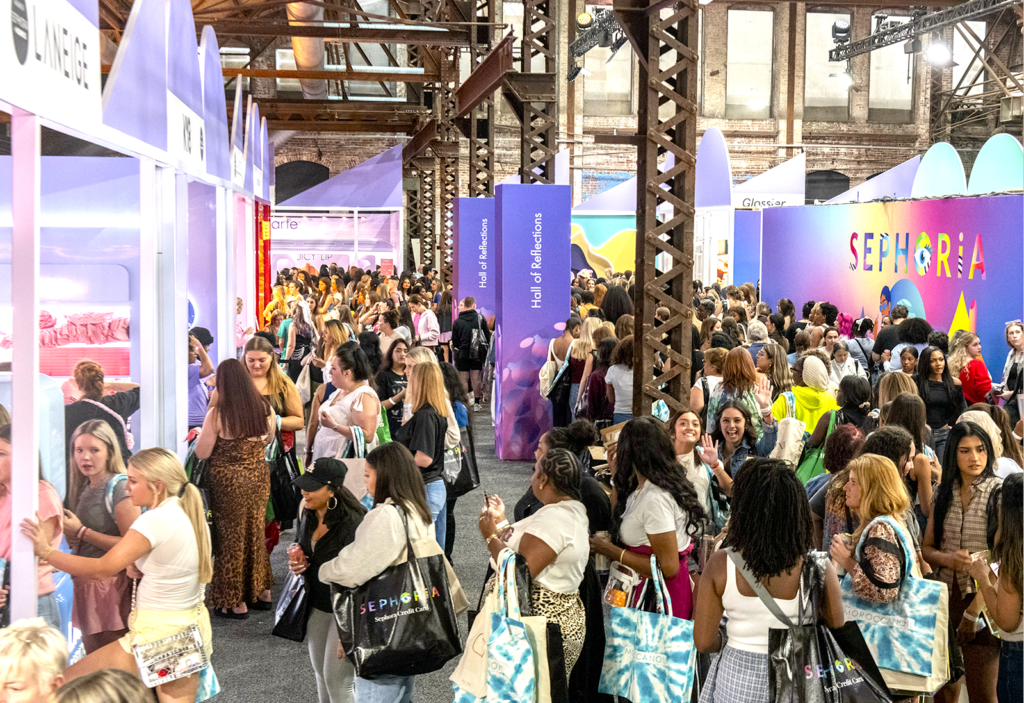
Sephoria's return carries strategic weight beyond consumer engagement metrics — the festival functions as portfolio curation at scale, concentrating brand access and trial velocity in a controlled environment that benefits Sephora's exclusive and emerging partnerships. The 2025 programming lineup includes masterclasses with 47 brands, a configuration that allows Sephora's merchant team to stress-test product positioning and measure conversion intent across demographic cohorts before committing shelf space or digital real estate. This model mirrors Ulta Beauty's decision to expand its Spark conference format and Bluemercury's atelier series, signaling industrywide recognition that experiential retail delivers proprietary consumer intelligence that third-party data providers cannot replicate. The $349 ticket threshold — up from $299 in 2019 — positions Sephoria as a premium access product rather than mass promotional event, aligning with LVMH's strategic elevation of Sephora beyond transactional retail toward lifestyle platform architecture.
Portfolio Amplification Through Scarcity Mechanics
Sephora leverages Sephoria's temporal scarcity to accelerate sell-through for emerging brands that require assisted discovery — categories including fragrance, haircare tools, and supplement-adjacent beauty where purchase consideration cycles typically extend beyond digital browsing sessions. The festival's product exclusives and limited-edition collaborations create urgency triggers that compress decision timelines, a tactic that proves particularly effective for brands operating without standalone DTC channels. Indie brands including Mented Cosmetics, Topicals, and Ami Colé have used prior Sephoria editions to achieve 200-300% week-over-week sales lifts, demonstrating the festival's function as a distribution accelerant for Sephora's emerging brand portfolio. This curation strategy allows Sephora to de-risk shelf expansion by validating consumer appetite through controlled experiential exposure before committing to permanent category adjacencies or endcap placements.
The Competitive Landscape for Beauty IRL
Sephoria's Los Angeles return positions the retailer in direct competition with a proliferated experiential beauty landscape that has expanded significantly since 2019 — Glossier's flagship expansions, Goop's wellness summits, and Revolve's festival activations all compete for the same discretionary experience spend from beauty's most engaged consumers. The key differentiation lies in Sephora's multi-brand curation advantage, which allows attendees to consolidate discovery across 47 brands rather than single-brand activations that require sequential event attendance. This aggregation model proves especially valuable as consumer attention fragmentation increases and willingness to travel for brand experiences contracts post-pandemic. Competitors including Ulta Beauty and SpaceNK monitor Sephoria's performance metrics closely as indicators of whether premium experiential formats can sustain profitability at scale or require subsidy as brand-building investments.
Forward Implications for Retail Distribution Architecture
Sephoria's economic viability at $349 per ticket establishes a precedent for prestige beauty retailers to monetize consumer access as a standalone revenue stream rather than viewing experiential marketing as pure cost-center activity. If LVMH achieves profitability on the event itself — ticket revenue, sponsorship fees, and incremental basket lift combined — expect accelerated rollout of similar festival formats across Sephora's international markets, particularly in APAC where experiential retail commands higher consumer enthusiasm than in saturated Western markets. The broader implication extends beyond Sephora: successful monetization of curated brand access signals that retailers can extract premiums for distribution itself, fundamentally resetting the power dynamics between brands and their retail partners in an era where shelf space scarcity has diminished but attention scarcity has intensified.
Nya Ravel
Beauty market analyst covering trends, brands, and distribution shifts.