Sarelly Projects $15M in Revenue as Mexico's First Brand to Crack U.S. National Distribution: A $7.5M Bet on Latina-First Architecture
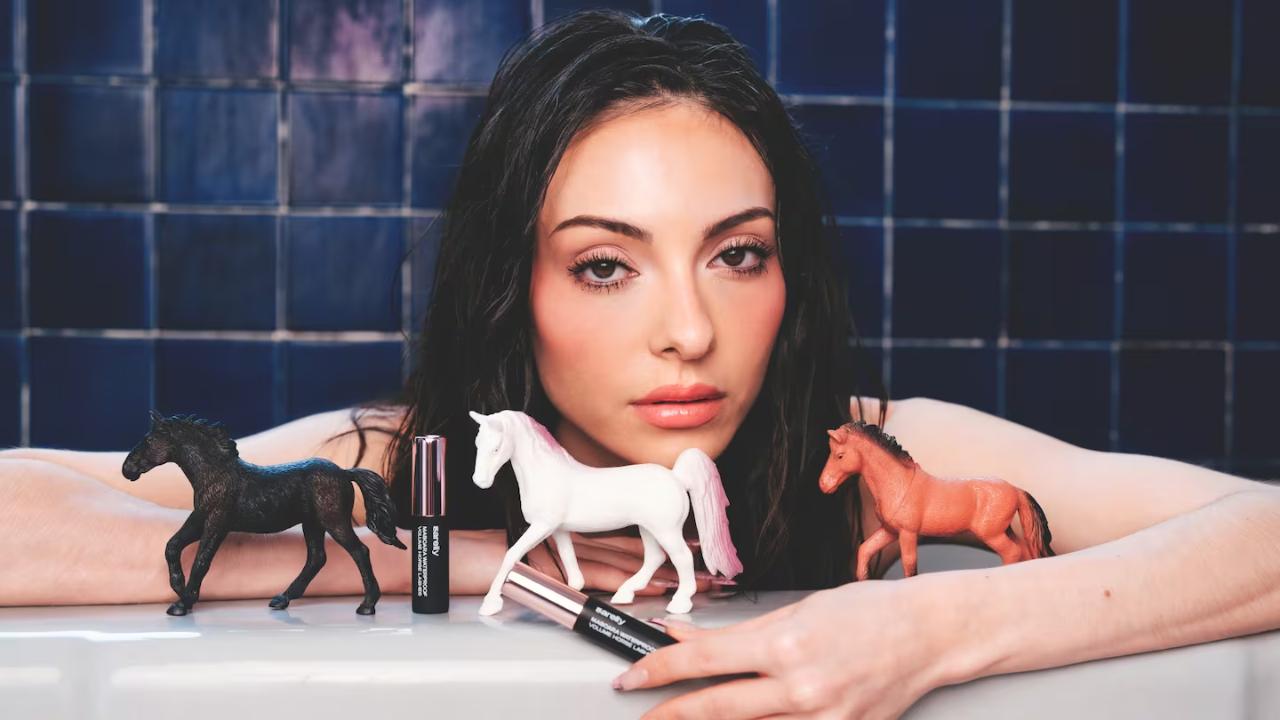
Latina consumers represent the fastest-growing beauty demographic in the Americas, a cohort that collectively drives an estimated $18 billion in annual U.S. beauty spending yet remains systematically underserved by major portfolio houses. Sarelly, the Mexico City-founded brand co-built by former LVMH, L'Oréal, and Coty executive Rémi Martini and beauty creator Anna Sarelly, is moving to close that gap with structural intention rather than multicultural marketing. Projecting $15 million in revenue for 2026, split between roughly $10 million in Mexico and $5 million in the U.S., the brand's September entry into more than 600 Target doors marks the first national-scale U.S. launch by a Mexican beauty brand. The milestone signals a reconfiguration of how emerging market brands access prestige-adjacent U.S. retail infrastructure, and it raises a strategic question that will interest brand acquirers and retail partners equally: is Sarelly building a category asset or a platform?
Distribution Architecture as the Core Strategic Thesis
Sarelly's retail sequencing is not accidental. The brand moved through Sephora Mexico and Ulta Beauty Mexico before approaching U.S. national retailers, using those partnerships to establish category credibility and sell-through data in a controlled environment. That staged distribution architecture allowed Martini to arrive at Target with proof of concept rather than a pitch deck. Target's VP of Beauty Kevin Wong and buying director for color cosmetics Mariam Kocharian were sufficiently convinced to position Sarelly's Cow Lashes Mascara as the leading SKU in Target Beauty Studio, a meaningful vote of confidence from a retailer whose beauty category generates substantial traffic across income brackets.
The pattern is familiar across emerging beauty brands facing large-format retail: purchase order volume outpaces available capital, forcing founders toward equity financing when inventory financing would be more appropriate.
The channel selection carries strategic weight. Target occupies a masstige position that allows Sarelly to operate at accessible price points without sacrificing the brand narrative equity it built in prestige-leaning Mexican retail. That positioning flexibility, the ability to move credibly between specialty prestige and mass-plus formats, is a distribution asset that acquirers in the color cosmetics segment actively seek.
Fundraising Structure Reveals the Scaling Gap for Emerging Market Brands
Sarelly has raised $7.5 million in total across a pre-seed, a $3 million seed round closed in 2025, and a bridge round in 2026 that brought in Silas Capital (whose portfolio includes Glossier, Makeup by Mario, and Ilia), alongside Siddhi Capital and Pentland Ventures. The bridge round was structured primarily as working capital to finance production for Target's purchase orders, a capital deployment model Martini himself acknowledges is equity-dilutive at scale.

The pattern is familiar across emerging beauty brands facing large-format retail: purchase order volume outpaces available capital, forcing founders toward equity financing when inventory financing would be more appropriate. Target has since moved to extend inventory financing directly to Sarelly, a structural correction that improves unit economics and signals the retailer's commitment to the brand's longevity on shelf. For investors evaluating the cap table, the shift from equity rounds to trade-facilitated financing improves the pathway to an eventual exit at a defensible multiple.
Sarelly's co-creation model, in which product development is driven directly by community feedback gathered through TikTok Shop and Instagram, produces a consumer feedback loop that functions as proprietary market research.
Portfolio Reset Potential in the Latina Beauty Segment
The broader context for Sarelly's ascent is a portfolio reset underway across major beauty conglomerates. Estée Lauder Companies, Coty, and L'Oréal have each made acquisitions or incubation investments aimed at demographic premiumization, capturing consumer segments whose purchasing power is rising faster than the brands historically designed to serve them. Latina consumers in the U.S. index above average for beauty spending relative to household income, yet the pipeline of authentic Latina-founded brands with national retail distribution remains thin.
Sarelly's co-creation model, in which product development is driven directly by community feedback gathered through TikTok Shop and Instagram, produces a consumer feedback loop that functions as proprietary market research. The Cow Lashes Mascara, engineered specifically for lash types common among Latina consumers, achieved the number one mascara position across Sephora Mexico, Ulta Beauty Mexico, Costco, and TikTok Shop before its U.S. rollout. That organic category dominance in-market is the kind of velocity data that strategic acquirers use to underwrite prestige positioning arguments in M&A processes.
The Forward Equation: Category Expansion and Geographic Leverage
Sarelly's $15 million projection for 2026 is only the first data point that matters to institutional observers. The more consequential metric will be Target door productivity at the 12-month mark, specifically whether the brand can sustain velocity without promotional dependency. If Cow Lashes Mascara performs at or above category average on a per-door basis, the case for a broader U.S. retail expansion, additional Target SKU placement, or an entry into APAC markets where Latina aesthetics carry aspirational crossover appeal, becomes materially stronger. Martini has spent over a decade inside the architecture of global beauty conglomerates. The brand he is building looks less like a founder story and more like a strategic asset in formation.
This article references and builds on original reporting by Polly Blitzer for Beauty Independent. Read the original piece here: https://www.beautyindependent.com/sarelly-projects-15m-sales-this-year-goes-mexico-world/. BeautyScale is a commercial agency; our editorial notes are commentary on industry reporting.
Rayane Mahmoud
Beauty market analyst covering trends, brands, and distribution shifts.