Remedy's $20M Series A: Prestige Distribution Model for Clinical Skincare at Masstige Valuations

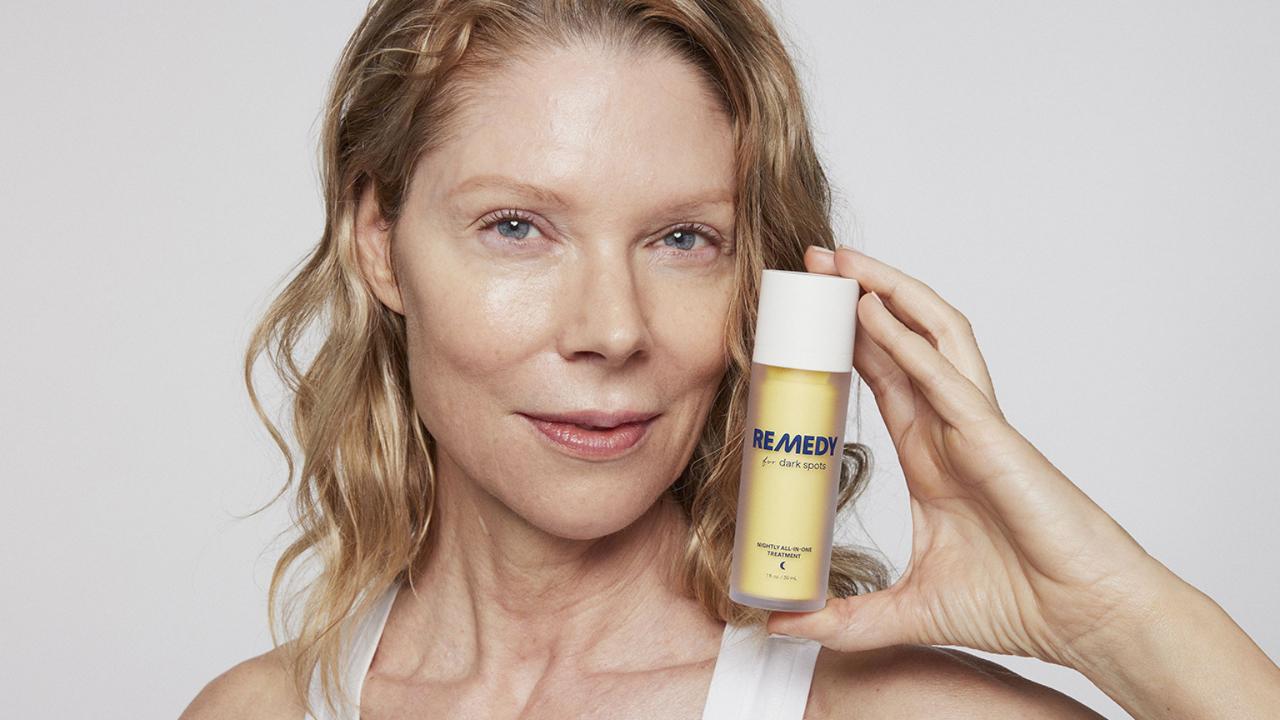
Science-backed skincare brands have traded at 5x to 6x revenue multiples over the past five years, roughly 20% above non-clinical peers, according to XRC Ventures data. Against that valuation backdrop, dermatologist and content creator Dr. Muneeb Shah has closed a $20 million Series A for Remedy, led by L Catterton and joined by Norwest Venture Partners and Sonoma Brands. The brand is on track to generate $50 million in net revenue this year, profitable from its first year of operation, and distributed nationally through Target. That combination of clinical credibility, mass-channel velocity, and first-year profitability represents a structurally distinct bet in a market where most doctor-founded brands have historically skewed toward prestige positioning and specialty retail.
The Masstige Thesis Is Becoming a Capital Allocation Priority
Remedy's raise does not exist in isolation. It lands inside a broader wave of strategic consolidation targeting clinically positioned brands: Bridgepoint's $460 million acquisition of Obagi Medical, L'Oréal's approximately $1.1 billion purchase of Medik8, Estée Lauder's minority investment in 111Skin. Each of those transactions targeted prestige or professional-channel assets. Remedy's $20M round represents something architecturally different, a deliberate pivot by institutional capital toward the masstige segment, where clinical authority meets mass retail accessibility.
Brands like Byoma and Good Molecules, backed by Bansk Group and Aria Growth Partners respectively, established early proof of concept. E.l.f. Beauty's acquisition of Naturium then provided the clearest strategic signal: prestige-adjacent efficacy claims, priced for Target and Ulta, carry durable margin profiles when portfolio and scale are managed correctly. Remedy's investors are underwriting a version of that same hypothesis, with one significant amplifier. Dr. Shah commands over 21 million combined followers across TikTok, Instagram, and YouTube, a distribution architecture that compresses customer acquisition costs at a rate no traditional media budget can replicate.
Channel Mix Reveals the Brand's Real Strategic Logic
Remedy's current distribution spans Target, Amazon, and TikTok Shop, with direct-to-consumer still accounting for the majority of revenue. That channel hierarchy is noteworthy. Target provides the mass-retail credibility and shelf authority required for category dominance in the clinical skincare segment. Amazon captures intent-driven repurchase. TikTok Shop functions primarily as a discovery and halo engine rather than a contribution-margin driver, a distinction Dr. Shah has stated explicitly.
The TikTok Shop profitability challenge is not unique to Remedy. First-order economics on the platform remain structurally difficult for brands operating at a $25 to $35 price point, where affiliate commission structures and fulfillment costs compress margins severely. Remedy's approach, treating TikTok Shop as a top-of-funnel awareness vehicle rather than a revenue center, reflects a more sophisticated unit-economics framework than most brands at a comparable stage have applied to the channel. The brand has moved over 200,000 units on TikTok Shop to date, enough to generate meaningful halo lift across its full distribution footprint.
L Catterton's Portfolio Density Creates a Strategic Premium Positioning Test
L Catterton's existing skincare holdings, including Irene Forte, YISE Beauty, and Eighth Day, occupy meaningfully different price tiers from Remedy. That portfolio density raises a legitimate strategic question about exit sequencing and valuation compression if multiple clinical skincare assets approach liquidity windows simultaneously. L Catterton partner Tehmina Haider has publicly positioned Remedy as a defining brand in the dermocosmetics category, which signals an intent to differentiate it from the firm's prestige-tier holdings on channel strategy and consumer access rather than efficacy credentials alone.
The brand has also made a deliberate decision to avoid the professional channel, declining to enter dermatology offices despite physician demand, citing adverse unit economics at mass-market price points. That constraint actually reinforces the brand's strategic clarity. Remedy uses dermatologist relationships, including its 2026 presence at the American Academy of Dermatology annual meeting, as an earned-media and sampling channel, converting professional endorsement into consumer credibility without the margin structure that professional distribution would require.
The Forward View: Premiumization Pressure Will Define Remedy's Next Phase
With fresh capital allocated toward clinical research, product development, and organizational buildout, the critical strategic question for Remedy in its next 24 months is whether it can expand its category footprint into sun care and adjacent segments while maintaining the pricing discipline that has defined its mass-channel resonance. Premiumization pressure will intensify as the brand scales. L Catterton's institutional experience suggests a measured approach to any upward price repositioning. Brands that have navigated masstige expansion most successfully, Naturium post-acquisition being the clearest recent precedent, have treated channel expansion as a deliberate portfolio reset rather than a reactive response to margin pressure. Remedy's architecture, clinical authority priced for mass retail, is not just a funding story. It is a structural hypothesis about where the next $500 million in clinical skincare market share will be captured.
Rami Al Ariss
Beauty market analyst covering trends, brands, and distribution shifts.