Fragrance's $68B Inflection: How Non-Fashion Brands Won Distribution Wars

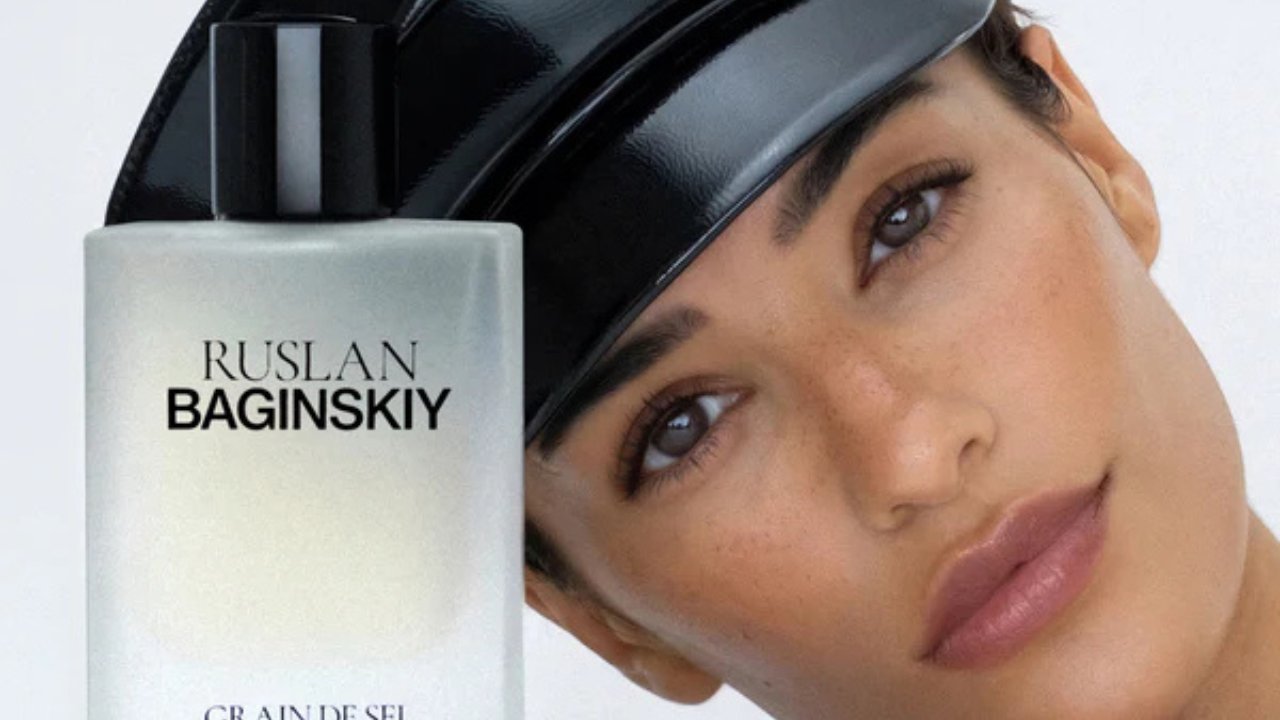
The global prestige fragrance market crossed $68 billion in 2024 and is tracking toward a 6.2% CAGR through 2030, according to Euromonitor International, with fashion-adjacent brands capturing an increasingly disproportionate share of new entrants. Ruslan Baginskiy, the Ukrainian milliner whose ANDAM-winning accessories portfolio has dressed Beyoncé Knowles-Carter, members of the British royal family, and virtually every major cultural moment of the past five years, is the latest designer to convert brand equity into olfactory real estate. His debut fragrance, Grain de Sel, a unisex eau de parfum retailing at €160 through the brand's direct-to-consumer channel, is not a vanity launch. It is a calculated prestige positioning move with compounding strategic implications for distribution architecture, portfolio breadth, and long-term brand valuation.
The timing is precise. Baginskiy laid the groundwork in 2024 with a Grain de Sel candle, a scented entry point that allowed the brand to test consumer appetite for sensory extensions without committing to the cost structure of a full fragrance line. That sequencing matters to investors and retail buyers evaluating the brand's category discipline.
From Millinery to Sensory Platform: The Portfolio Reset Logic
Baginskiy launched his hat brand in 2015 and spent a decade building a visual identity rigorous enough to command cultural placement across Netflix's Emily in Paris, HBO's The White Lotus, and Beyoncé's Renaissance and Cowboy Carter tour wardrobes. The brand did not rush into adjacent categories. That restraint is now its leverage. Grain de Sel the fragrance arrives not as a distraction but as a portfolio reset, repositioning the label from a single-category accessory house into a multi-sensory lifestyle brand, a transition that historically compresses the discount-to-acquisition multiple when M&A conversations begin.
The fragrance itself, blended and bottled with a specialist perfumery in Kharkiv, carries head notes of ripe pear and apple, a heart of lily-of-the-valley and violet, and a base of woody myrrh, labdanum, musk, and tonka bean. The production decision to anchor manufacturing in Ukraine rather than Grasse carries its own narrative weight, one that differentiates provenance in a market where consumers and wholesale buyers are increasingly attentive to sourcing transparency.
Distribution Architecture: DTC First, Wholesale Optionality Preserved
Launching exclusively via e-commerce is the correct first-mover decision for a brand operating at Baginskiy's current retail footprint. DTC provides margin protection at the €160 price point, which sits comfortably within niche prestige fragrance territory and above the masstige threshold that would commoditize the launch. It also preserves wholesale optionality. Specialty fragrance retailers including Nose Paris, Osswald NYC, and Harrods' niche fragrance hall represent the logical next tier, with independent boutiques in GCC markets offering a particularly high-value secondary channel given regional appetite for prestige unisex fragrances and narrative-driven niche houses.
A GCC wholesale rollout would require distribution partners with existing niche fragrance infrastructure, but the cultural resonance of Baginskiy's client roster, which includes figures with significant followings in MENA, provides pre-existing brand recognition that most niche fragrance launches cannot claim at inception.
Premiumization as Brand Defense
The €160 price point is not arbitrary. It positions Grain de Sel above the accessible luxury fragrance tier (typically €80 to €120) while remaining below the ultra-niche segment (€300 and above) where margin compression on unit volume becomes a structural challenge for small-scale launches. This is premiumization executed with category intelligence. The brand is not chasing volume. It is building perceived scarcity, a posture consistent with its limited accessory drops and custom commission strategy.
For retail buyers, the fragrance also functions as a traffic-driving SKU. Accessories brands with strong visual identities historically generate outsized fragrance interest in multi-brand retail environments because the consumer already carries a positive brand association into the fragrance aisle.
Forward Trajectory: Category Expansion as Acquisition Signal
The Grain de Sel fragrance launch is a structural signal, not a standalone product event. Brands that execute a deliberate candle-to-fragrance sequencing, anchor at prestige price points, and maintain distribution discipline are consistently more attractive to strategic acquirers, whether luxury conglomerates or private equity platforms building multi-brand portfolios in the accessories-to-lifestyle segment. As LVMH, Kering, and independent beauty holding companies continue scanning for brands with demonstrable cultural traction and expandable category architecture, Baginskiy's methodical sensory buildout positions the label as a credible strategic asset. The fragrance is the missing piece, as Baginskiy himself frames it. For the investment community, it may also be the opening bid.
Rami Al Ariss
Beauty market analyst covering trends, brands, and distribution shifts.