Refill or Retreat: How L'Oréal's 34% Sales Surge Is Redrawing the $650B Beauty Distribution Map
Forty-two percent of global beauty buyers do not know refillable products exist. For the world's largest beauty conglomerate, that figure is not a crisis of consumer education. It is a distribution architecture problem, and L'Oréal is treating it as one.
The group's expanded #JoinTheRefillMovement campaign, timed to World Refill Day and now spanning 28 products across 18 brands in all four divisions, is drawing attention as a sustainability initiative. The more consequential read, for brand managers, buyers, and investors tracking portfolio strategy, is what the 34% growth in refill sales in 2025 signals about where prestige and masstige positioning converge on shelf.
Refillability as Distribution Strategy, Not Just Sustainability Optics
L'Oréal Chief Operations Officer Antoine Vanlaeys framed the initiative in supply chain terms, describing the need to "offer to all our brands the right refill formats" across the full value chain. That language is deliberate. When a company moving more than 7 billion units annually redesigns packaging architecture around refillability, the downstream implications for retail planogramming, SKU rationalization, and channel economics are substantial.
For buyers and category managers, that gap between demonstrated consumer intent and available shelf architecture represents lost revenue per square foot, a metric that frames the refill conversation in commercial terms retailers respond to.
The 250-ml refill pouch developed for L'Oréal Paris Elvive, the number-one hair care brand by global volume, carries 60% less packaging material than its primary equivalent. At mass-market velocity, that reduction compounds across logistics costs, retail footprint, and margin per unit shipped. The packaging is 100% post-consumer recycled, and the primary vessel itself came in 20% lighter. These are not sustainability footnotes. They are inputs to gross margin modeling.
Prestige Positioning Holds When the Refill Doesn't Compromise the Object
The more strategically demanding challenge sits at the top of the portfolio. Chief Corporate Affairs and Engagement Officer Blanca Juti noted that refillable product references have grown 3.7 times since 2019, a period that encompasses L'Oréal's heaviest investment in prestige and ultra-prestige acquisitions. Maintaining desirability through a refill architecture is where brand strategy and industrial engineering intersect most visibly.
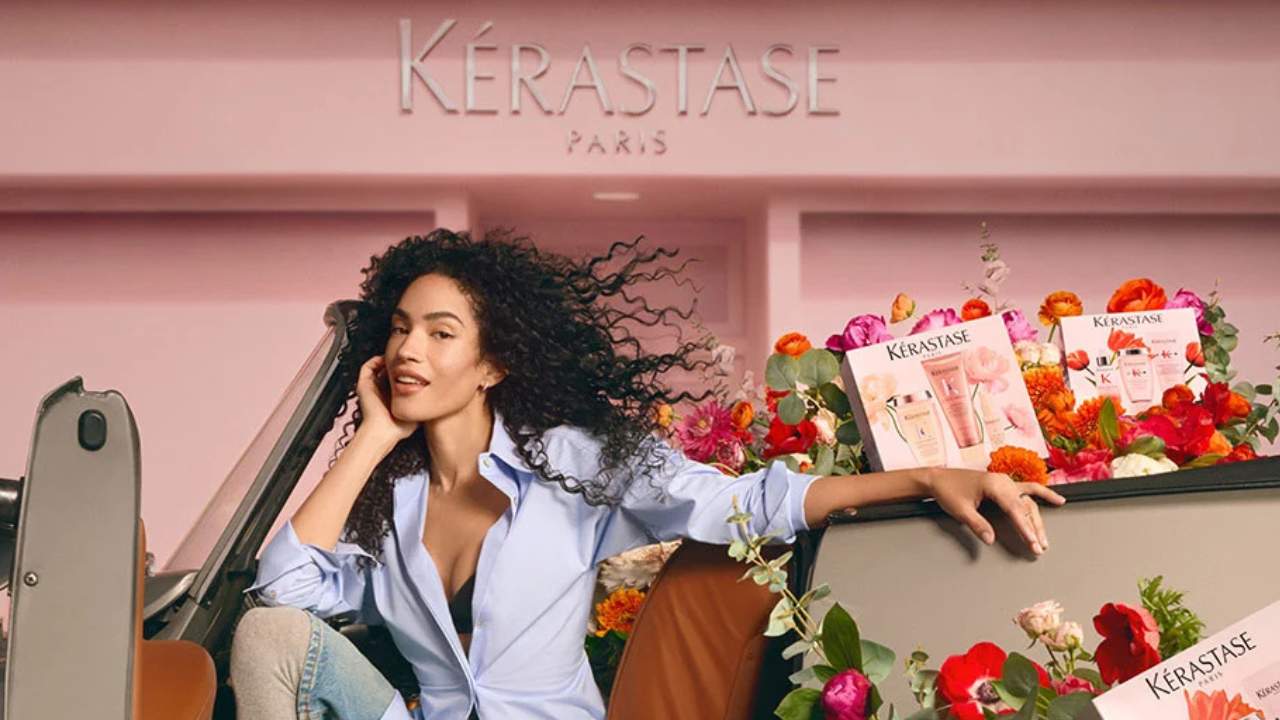
Vanlaeys used Kérastase's Elixir Ultime as the benchmark case: a glass-primary, refillable construct that preserves the tactile and visual language of a luxury object while enabling circular use. Lancôme Absolue Longevity MD cream and Prada lipstick operate on the same principle. The product experience is not altered. The packaging lifecycle is. For prestige brands where the primary vessel is itself a brand signal, this represents a significant R&D investment in maintaining equity through format transition.
YSL Libre eau de parfum quantifies the material economics precisely: moving from two 50-ml units to a single 100-ml refill yields 58% savings on glass, 100% on metal, 59% on plastic, and 42% on cardboard. Across fragrance, where L'Oréal has confirmed all major ranges are now refillable, that aggregated reduction in material cost per equivalent unit sold carries meaningful margin implications for the Luxe division.
L'Oréal's six-year build toward a scalable refill infrastructure, with refillable references growing nearly fourfold since 2019, has created a moat that smaller indie brands and recent acquisition targets cannot easily replicate.
Retail Activation as the Conversion Bottleneck
The campaign's multichannel architecture, spanning ambassadors, employees, and retail partners across digital and brick-and-mortar touchpoints, reflects a recognition that awareness is not the only conversion barrier. Juti specifically called out shelf availability as a structural constraint. The 42% awareness gap is partly a retail placement failure. If refill formats are not stocked at parity with primaries, no amount of social activation closes the conversion loop.
The 7x spike in social engagement during last year's campaign run is operationally significant beyond brand metrics. It indicates category-level demand generation that retail partners are not yet fully capturing. For buyers and category managers, that gap between demonstrated consumer intent and available shelf architecture represents lost revenue per square foot, a metric that frames the refill conversation in commercial terms retailers respond to.
The M&A and Portfolio Reset Implications Looking Forward
L'Oréal's six-year build toward a scalable refill infrastructure, with refillable references growing nearly fourfold since 2019, has created a moat that smaller indie brands and recent acquisition targets cannot easily replicate. For any brand entering acquisition conversations with a strategic acquirer operating at this scale, refill-readiness in packaging design is increasingly a due diligence variable, not an afterthought.
As premiumization continues to drive CAGR in the prestige and masstige segments globally, the brands that have pre-engineered circular formats into their product architecture will carry stronger long-term margin profiles and lower regulatory exposure as extended producer responsibility frameworks tighten across the EU and APAC. L'Oréal has effectively set the distribution and design standard. The rest of the industry is now pricing the cost of catching up.