Prestige Beauty's $14B Talent Shuffle: How C-Suite Moves Signal Portfolio Reset Strategy
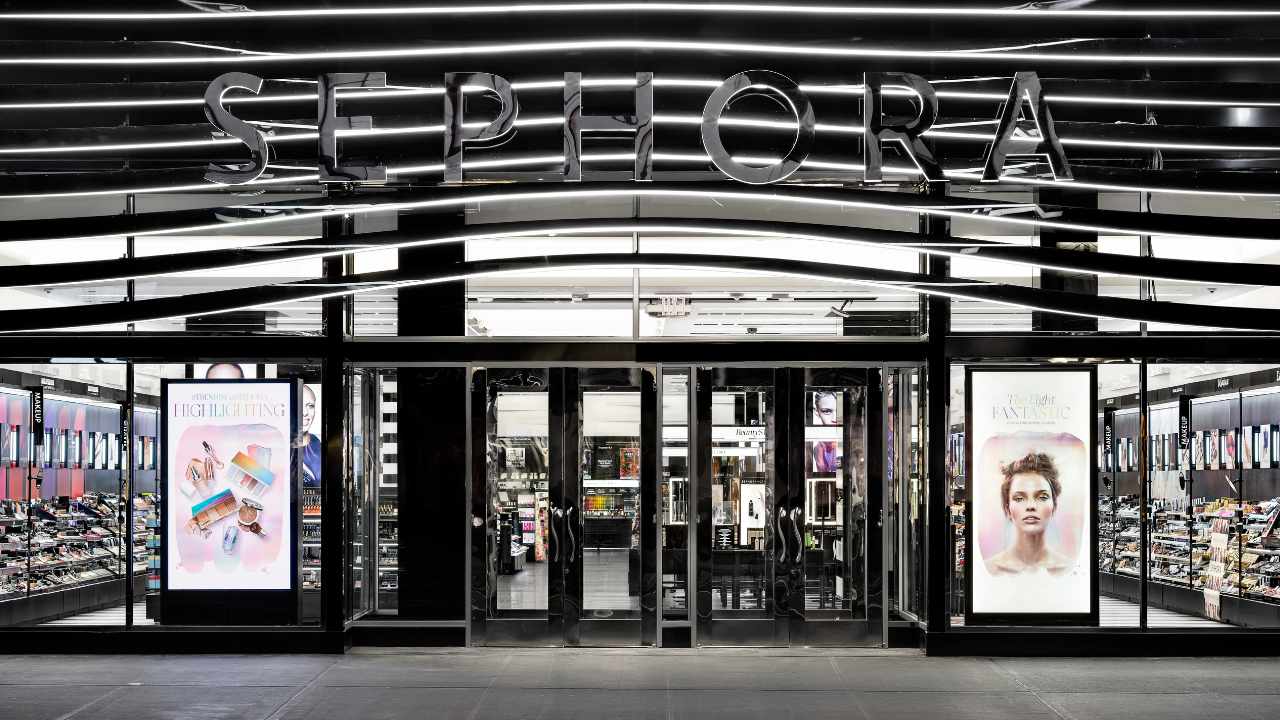
The global prestige beauty market is tracking toward $97 billion by 2027, according to Euromonitor International, and the executive appointments landing across Sephora, L'Oréal Groupe, and emerging wellness brands in Q2 2025 are not routine HR rotations. They are structural signals. Each hire maps directly onto a distribution architecture decision, a portfolio reset in progress, or a premiumization thesis being stress-tested against real retail conditions. Read together, these moves outline an industry in active reorganization, where talent placement is inseparable from brand strategy.
Private Label Gets a Prestige Mandate
Sephora Collection's appointment of Sylvia Tournery as president is the most consequential move in this cycle. Tournery arrives from Lancôme, where she served as global deputy general manager, bringing a prestige brand operating framework to what has historically functioned as a masstige play inside Sephora's retail ecosystem. The strategic implication is direct: LVMH is preparing to reposition Sephora Collection as a genuine prestige private label, rather than a margin-optimization vehicle.
Private label penetration in specialty beauty retail sits at roughly 12 to 15 percent in mature markets, well below the 25 to 30 percent benchmarks seen in European grocery. Tournery's mandate appears designed to close that gap through product architecture and consumer perception, not price compression. For competing retailers, including Ulta Beauty and Douglas in EMEA, the move raises the competitive baseline on owned-brand prestige positioning.
Dermo-Cosmetics Doubles Down on U.S. Distribution
La Roche-Posay's appointment of Grace Riggenbach as U.S. general manager carries equal strategic weight, though in a different register. Riggenbach is a P&G Beauty veteran with operational depth across the Korean and Japanese markets, two of the highest-velocity dermo-cosmetic environments globally. Her placement into the U.S. role signals that L'Oréal Active Cosmetics Division is treating the American dermo-cosmetic channel as an expansion opportunity requiring APAC-calibrated execution intensity.
The U.S. dermo-cosmetic category grew at approximately 11 percent CAGR between 2020 and 2024, outpacing both mass and prestige skincare. Riggenbach's cross-market fluency positions La Roche-Posay to accelerate pharmacy channel penetration while simultaneously defending shelf in the fast-growing dermatology office and telehealth adjacency. This is a distribution architecture play as much as a leadership appointment.
Supplement and Wellness Brands Build Institutional Infrastructure
Two appointments in the supplement vertical reveal a sector graduating from founder-led operations to institutional brand management. Seed's decision to hire Anisha Raghavan as its first chief marketing officer, drawing from Heyday, Walgreens, and Rodan + Fields, reflects a deliberate effort to bridge clinical positioning with scalable retail distribution. First CMO appointments at Series B and Series C stage companies typically precede a wholesale channel expansion or a retail partnership announcement by six to eighteen months.
Cymbiotika's internal restructuring follows a different but complementary logic. Cofounder Durana Elmi's transition into a combined chief creative officer and chief experiential officer role, while stepping back from chief operating officer responsibilities, reflects a portfolio reset designed to separate brand-building from operational scale. As Cymbiotika pursues retail placement beyond direct-to-consumer, separating the creative and experiential functions from operations reduces execution friction and positions the brand for partnership conversations with specialty retailers.
Board Placements Signal M&A Adjacency
Carol Hamilton's post-retirement board activity warrants close attention from investors monitoring M&A activity in the sub-$100 million brand tier. Hamilton's 40-year tenure at L'Oréal USA included the acquisition and integration of SkinCeuticals, Urban Decay, and IT Cosmetics, among others. Her current advisory roles at Kayali, Patrick Ta Beauty, and now Smalls, a direct-to-consumer pet nutrition brand, outline a portfolio of strategically acquirable assets across beauty and lifestyle adjacencies.
Board and advisory mandates from operators with Hamilton's M&A track record are often a leading indicator of institutional interest. For beauty investors, her presence on a cap table functions as a signal of exit readiness and strategic positioning, not merely governance support.
The Talent Layer as a Strategic Instrument
The pattern across these appointments is consistent: companies deploying capital into prestige repositioning, distribution architecture expansion, or category premiumization are matching that investment with executive talent calibrated to the specific execution challenge. Sephora is not hiring a merchant, it is hiring a prestige architect. La Roche-Posay is not hiring a domestic generalist, it is hiring a high-velocity market operator.
As beauty M&A activity accelerates through 2025, with strategic consolidation pressure mounting on both the conglomerate and independent brand tiers, talent placement will continue to function as one of the most readable leading indicators available to brand strategists and investors alike.
Ruth Estabillo
Beauty market analyst covering trends, brands, and distribution shifts.