53% of Beauty Sales Are Now Online — And TikTok Shop Is Just Getting Started

The shift to online has been gradual but relentless. In 2019, online beauty represented 31% of global sales. By 2023, it reached 44%. In 2025, it crossed 50%. Now, in early 2026, it's solidified above 53%, with continued accelerating growth expected.
This isn't simply a pandemic-driven trend that's reverting. Post-pandemic, many expected consumers would return to in-store beauty shopping. The opposite occurred. Beauty consumers have fundamentally reconceptualized how they discover and purchase products: digitally. In-store beauty has become a confirmation channel, not a discovery channel. Consumers research online, read reviews, watch tutorials, and make purchase decisions before entering a physical store.
The geographic distribution is uneven. In North America, online beauty represents 58% of sales. In Europe, 54%. In Asia-Pacific (excluding China), 62%. China's online penetration exceeds 68%, driven by Tmall, Little Red Book, and emerging platforms. Globally, in-store beauty is increasingly a discretionary luxury—convenient for speed purchasing but losing share to digital-first alternatives.
Amazon's Dominance and Vulnerability
Amazon has captured approximately 32% of online beauty sales globally, generating an estimated $24.3B in annual beauty GMV (gross merchandise value). The platform's strength is indisputable: unmatched selection, fast shipping, reliable returns, and integrated Prime membership.
However, Amazon has structural vulnerabilities in beauty categories. First, discovery on Amazon is algorithm-driven and incentivized toward established brands with high review volumes. Emerging and indie brands struggle to break through cluttered search results. Second, Amazon's fulfillment and logistics are optimized for bulk commodities, not specialty beauty with high return rates. Beauty return rates on Amazon exceed 18%, versus 6-8% on specialized retailers like Sephora.
Third, Amazon's price-compression dynamics erode brand margin. Brands competing on Amazon are forced to accept lower ASPs and higher seller fees (15-45% commission), compressing profitability to 15-20% of revenue. By contrast, Sephora's margin structure allows brands 35-45% gross margins after all costs.
"Amazon is eating beauty distribution. But the margins are so poor that profitable brands don't want to scale there."
— Beauty brand executive, confidential, January 2026The company is also leveraging AI and personalization—recommendation engines, virtual try-on technology, and predictive product suggestions—to enhance conversion and increase average order value.
Sephora's Resilience and Digital-First Evolution
Sephora has managed the transition to online remarkably well. The retailer generates approximately 48% of its sales online (up from 35% in 2021), balancing in-store discovery experiences with digital convenience. Sephora's strategy is omnichannel by design: in-store experiences drive digital conversion, and digital content drives in-store traffic.
Sephora's ecosystem includes: Sephora.com (ecommerce flagship), Sephora Inside JCPenney (1,500+ locations providing geographic density), Beauty Insider (loyalty program with 35M members driving repeat purchase), and emerging channels like TikTok Shop integration and social commerce pilots.
The company is also leveraging AI and personalization—recommendation engines, virtual try-on technology, and predictive product suggestions—to enhance conversion and increase average order value. Sephora's conversion rate on owned digital is 4.2%, nearly double Amazon's beauty average of 2.1%.
TikTok Shop: The Disruptor
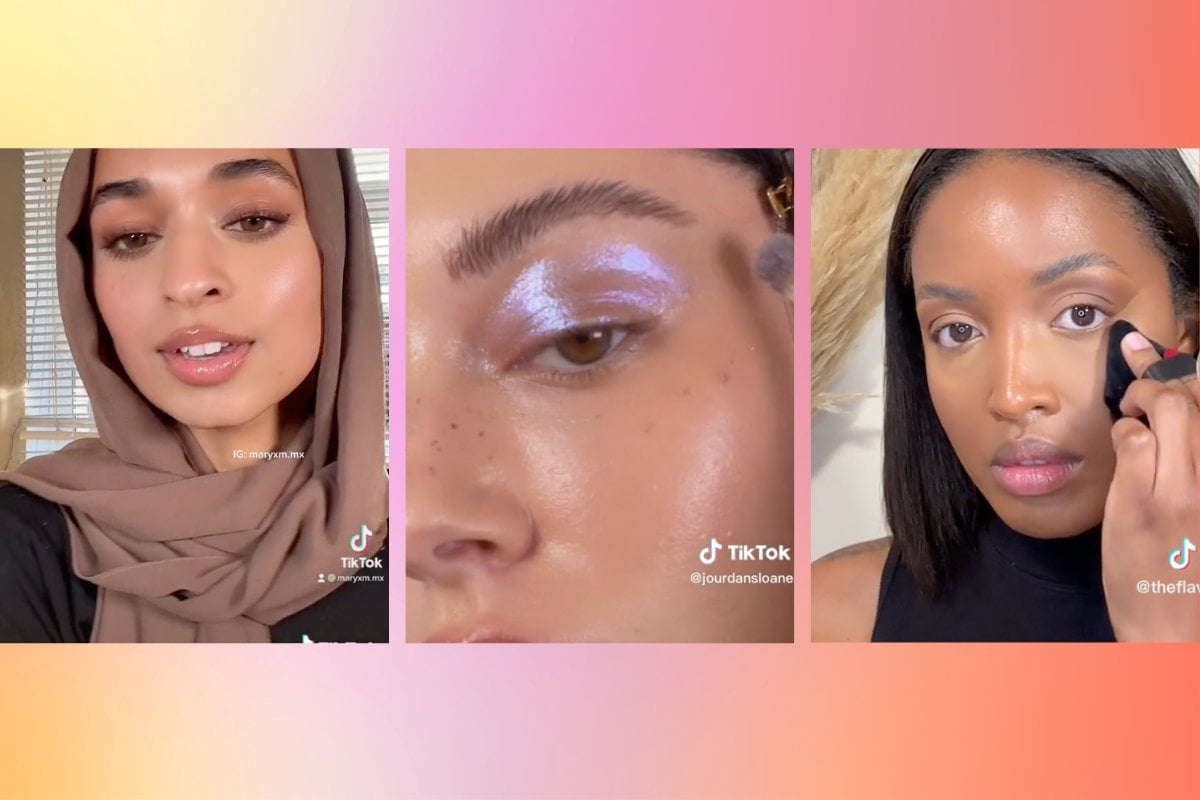
TikTok Shop is emerging as the fastest-growing beauty platform. The social commerce marketplace integrates TikTok's native content, creator partnerships, and one-tap checkout into a seamless purchasing experience. Brands and creators can showcase beauty products within video content, enabling immediate purchasing without platform-switching friction.
TikTok Shop's beauty GMV is estimated at $3.2B globally in 2025, but the growth trajectory is explosive: 186% YoY growth. The platform is capturing share from both Amazon (via convenience) and Sephora (via creator influence).
What makes TikTok Shop formidable: creators can monetize content while simultaneously selling products. A beauty creator producing a 30-second makeup tutorial can integrate TikTok Shop directly into the video, allowing viewers to purchase featured products with one tap. This collapses the typical journey (content creation → discoverability → website navigation → checkout) into a frictionless experience.
For brands, TikTok Shop offers unique inventory flexibility. Brands can test limited-edition products, run flash sales, and create exclusive creator collaborations without committing to traditional retail. A brand can launch a limited-edition product on TikTok Shop, generate viral demand, and then decide whether to distribute to Sephora or Amazon based on performance signals.
The Discovery Crisis and Impulse Purchasing
A critical competitive dimension: impulse purchasing. In-store retail thrives on impulse buys—grabbing a lip balm at checkout, discovering a new product while browsing aisles. Online retail has historically struggled to replicate this behavior, relying instead on algorithmic recommendations and search.
TikTok Shop is uniquely positioned to drive impulse purchasing at digital scale. A user scrolling TikTok encounters a creator's makeup tutorial, immediately sees the featured product in TikTok Shop, and can purchase in seconds without leaving the platform. The impulse buy rate on TikTok Shop (estimated at 34% of transactions) far exceeds Amazon (8%) and matches Sephora in-store (36%).
By 2028, online beauty sales will reach 58-62% of global market, driven by TikTok Shop expansion, Amazon marketplace optimization, and emerging platforms (Instagram Shopping, Pinterest Commerce).
This has profound implications: brands need exclusive, limited-edition, and time-sensitive product launches on TikTok Shop to drive impulse purchasing. A brand that only sells evergreen products on TikTok Shop will underperform; a brand running weekly flash sales and exclusive drops will capture disproportionate share.
"TikTok Shop isn't replacing Sephora. It's creating a parallel universe where impulse beauty purchasing happens at mobile velocity."
— Social commerce analyst, Jungle Scout, January 2026The In-Store Redemption: Experiential Retail
While 53% of beauty sales are online, in-store retail is evolving rather than disappearing. The smartest retailers are shifting in-store experiences toward high-touch, high-experience models that can't be replicated digitally.
Sephora's recent store redesigns emphasize makeup application services, skin consultation, and beauty education—experiences that drive emotional connection and justify in-store visits. MAC is investing in artist-led in-store workshops and beauty classes. Niche fragrance retailers are emphasizing scent consultation and olfactory education.
The implication: in-store beauty is bifurcating. Commodity beauty (mass market, low-price-point) is moving entirely online. Prestige and specialty beauty are migrating toward experiential in-store models, positioning retail as a destination rather than a transaction channel.
The Path Forward
By 2028, online beauty sales will reach 58-62% of global market, driven by TikTok Shop expansion, Amazon marketplace optimization, and emerging platforms (Instagram Shopping, Pinterest Commerce). In-store beauty will stabilize at 38-42%, concentrated in prestige, experiential, and specialty segments.
For brands, this requires a new omnichannel strategy: (1) Maintain Sephora presence for brand authority and retail placement, (2) Optimize Amazon for reach and convenience, (3) Aggressively expand TikTok Shop for discovery and impulse purchasing, (4) Develop DTC capabilities for brand control and data ownership, (5) Activate in-store retail for high-touch, experiential engagement.
The brands that thrive will be those that treat each channel as a strategic asset with distinct mechanics, economics, and consumer behaviors. The era of channel-agnostic distribution is over. Digital-savvy brands will capture 2026's growth; generalists will fade.
Yann Fagniez
Beauty market analyst covering trends, brands, and distribution shifts.