Octavia Morgan: Reformulating Prestige Fragrance for the Hypoallergenic Premium Market

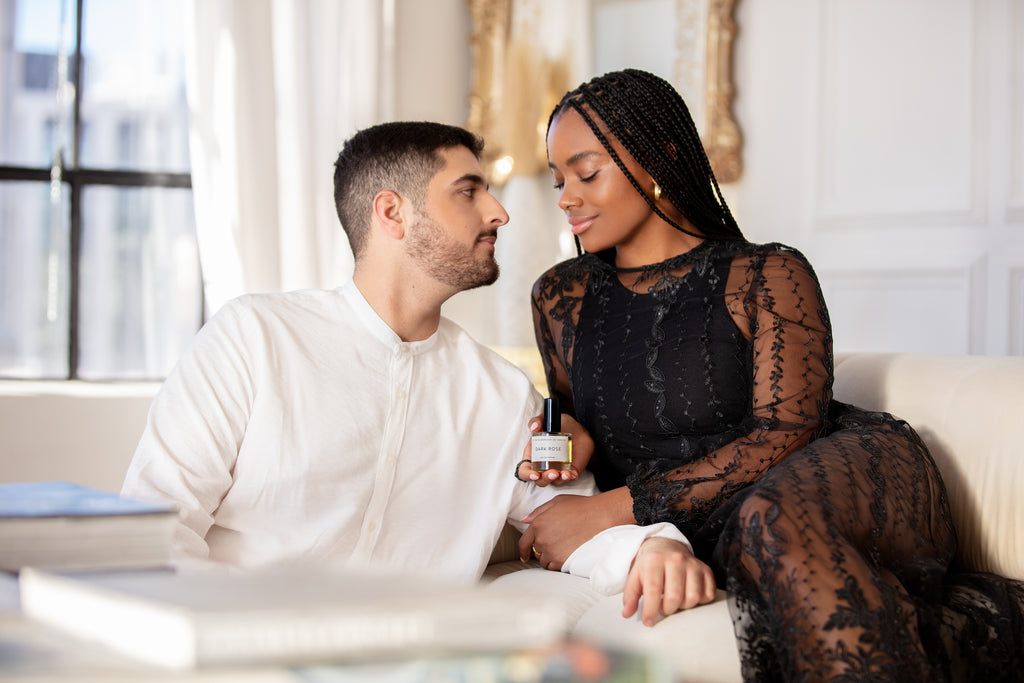
Octavia Morgan's formulation strategy removes 26 of the most common fragrance allergens identified by the EU's Scientific Committee on Consumer Safety, including linalool, limonene, and geraniol, while maintaining ingredient transparency that extends beyond standard IFRA compliance. The brand's proprietary molecule library, developed in partnership with Swiss fragrance house Givaudan, replaces traditional naturals with synthetics engineered for hypoallergenic performance — a reversal of the clean beauty movement's natural-first doctrine that dominated indie fragrance from 2018 to 2022. This technical repositioning allows Octavia Morgan to compete in prestige distribution channels where legacy brands like Chanel and Dior command average retail prices of $180-$240 per 50ml, establishing hypoallergenic not as a value compromise but as a premium attribute.
The brand's retail footprint — currently 42 doors including Nordstrom, Neiman Marcus, and Net-a-Porter — validates consumer appetite for dermatologically vetted luxury fragrance. According to Chen, Octavia Morgan's customer base skews 62% female, aged 32-54, with household income exceeding $150K, mirroring the demographic profile of traditional prestige fragrance buyers but with clinically diagnosed sensitivities or self-identified reactive skin concerns.
As established conglomerates like LVMH and Estée Lauder Companies assess portfolio gaps in allergen-conscious prestige, independent brands demonstrating viable business models in this intersection become strategic acquisition targets.
Distribution Strategy Targets Fragrance-Adjacent Categories
Octavia Morgan's expansion plan prioritizes beauty retailers with established clean beauty assortments rather than traditional fragrance specialty, recognizing that scent-sensitive consumers discover products through skincare and cosmetics adjacencies rather than dedicated perfumeries. The brand secured placement in Credo Beauty's 15 locations in Q3 2024, marking its first clean beauty specialty partnership and signaling a distribution architecture that bridges prestige department stores and specialty clean — a hybrid approach that reflects broader industry blurring between channel categories. Sephora remains the primary target for 2025 expansion, with negotiations underway for a 200-door rollout that would position Octavia Morgan alongside established prestige fragrance portfolios while benefiting from Sephora's Clean at Sephora program visibility.
This dual-channel strategy addresses a structural gap in fragrance distribution: legacy prestige brands dominate department store fragrance counters but lack hypoallergenic formulation credentials, while clean beauty indies offer allergen-free options but rarely achieve the olfactive sophistication or prestige price points that appeal to traditional fragrance consumers. Octavia Morgan's $165 price point sits deliberately above mass prestige ($60-$90) and below ultra-prestige ($200+), occupying the masstige-premium threshold where brands like Le Labo and Byredo established market traction between 2010 and 2018.
The brand's retail footprint — currently 42 doors including Nordstrom, Neiman Marcus, and Net-a-Porter — validates consumer appetite for dermatologically vetted luxury fragrance.
Ingredient Transparency as Competitive Differentiation
The brand publishes full ingredient lists on primary packaging and maintains a digital ingredient glossary with CAS registry numbers — a transparency standard uncommon in prestige fragrance, where proprietary formulations historically obscure specific molecules. This disclosure strategy responds to increasing regulatory pressure in the EU and mounting consumer demand for ingredient-level visibility, particularly among younger demographics who expect beauty products to meet pharmaceutical-grade transparency standards. Octavia Morgan's approach anticipates potential regulatory expansion of allergen labeling requirements, positioning the brand ahead of compliance curves that could necessitate costly reformulation for competitors operating with traditional fragrance bases.
Industry Implications: Prestige Fragrance Confronts Clean Reformulation
Octavia Morgan's growth trajectory — the brand projects $12 million in retail sales for 2025, representing 140% year-over-year growth — suggests that hypoallergenic fragrance represents an addressable premium market rather than a niche compromise category. As established conglomerates like LVMH and Estée Lauder Companies assess portfolio gaps in allergen-conscious prestige, independent brands demonstrating viable business models in this intersection become strategic acquisition targets. The prestige fragrance category, long insulated from clean beauty disruption due to formulation complexity, now confronts consumer demand for both olfactive sophistication and dermatological safety — a dual mandate that will require either internal R&D investment or strategic M&A to access reformulation expertise that legacy houses have historically outsourced to fragrance suppliers.
Rayane Mahmoud
Beauty market analyst covering trends, brands, and distribution shifts.