MBR's $21.7M Play: Ultra-Prestige Skincare Escapes APAC Margin Squeeze at 9.2% CAGR

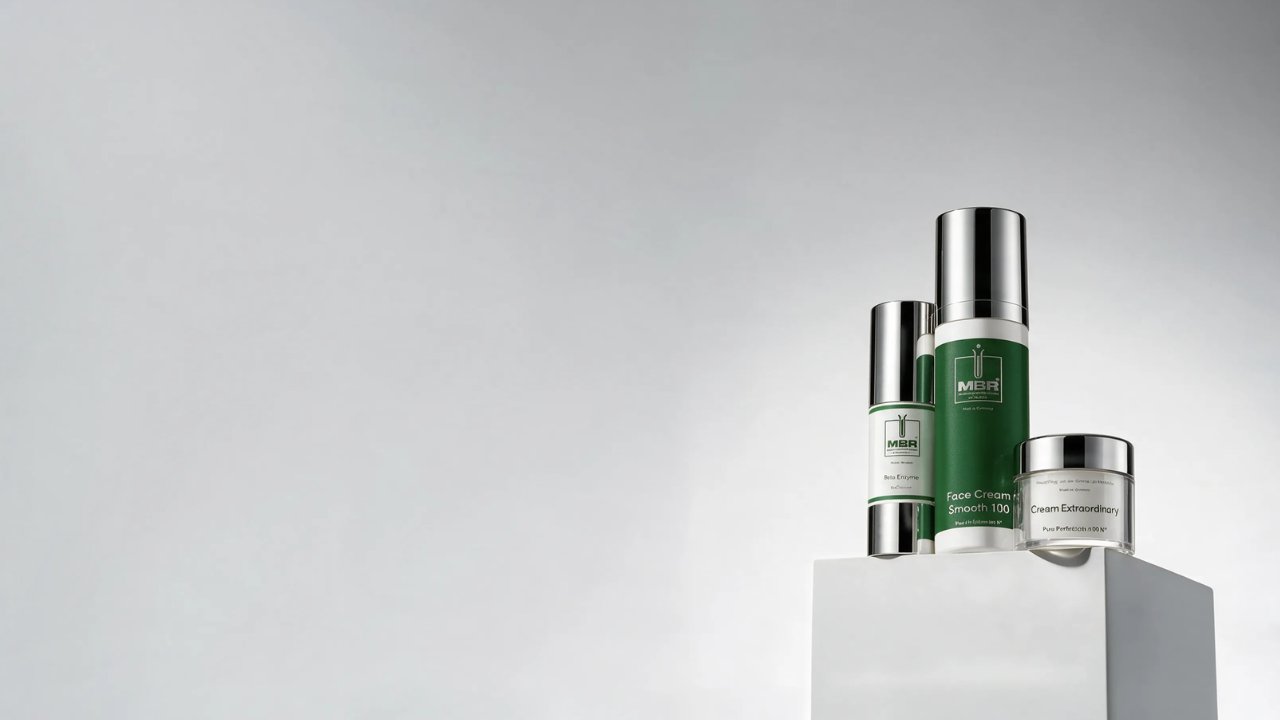
The ultra-prestige skincare segment in China retains a compound annual growth rate projected at 9.2 percent through 2027, even as mass and masstige tiers absorb margin compression across the broader APAC market. MBR, the German medical beauty brand whose product portfolio sits firmly above the €300 average unit price threshold, has committed approximately €20 million (roughly $21.7 million at current exchange) to a structured China localization program. The move is not simply a market entry play. It is a deliberate distribution architecture decision, one that signals how legacy European prestige houses are rethinking their Asia-Pacific presence at a moment when flagship retail alone no longer sustains brand equity or revenue velocity.
Localization Is Now a Distribution Decision, Not a Marketing One
For years, international prestige brands entering China treated localization as a campaign-level investment: translated packaging, adapted digital creative, Lunar New Year activations. MBR's €20 million allocation operates on a different logic entirely. When a brand commits capital at this scale to in-market infrastructure, it is effectively reconfiguring its distribution architecture from the ground up, shifting from an export-and-distribute model toward a locally embedded operating model with dedicated supply chain nodes, regulatory pre-clearance pipelines, and domestic partnership structures.
This matters commercially because NMPA registration timelines for skincare in China can extend 12 to 18 months for novel ingredients. A brand that invests in localized formulation compliance upstream compresses that timeline and gains a structural advantage over competitors still operating through cross-border e-commerce channels, where regulatory exposure remains elevated. MBR's investment signals it is building for durable market access, not short-cycle revenue extraction.
Prestige Positioning Requires Controlled Channel Architecture
MBR's price architecture places it in a rarified tier alongside La Mer, Augustinus Bader, and select Swiss medico-aesthetic brands. Maintaining that positioning in China demands absolute channel discipline. The critical risk in APAC prestige distribution is unauthorized resale through daigou networks and grey-market platforms, which erodes the perception premium that justifies triple-digit price points.
A €20 million localization commitment almost certainly includes investment in authorized retail infrastructure, whether through Tmall Luxury Pavilion, curated standalone clinic retail, or selective department store concessions in Tier 1 and emerging Tier 2 cities. Each channel decision is simultaneously a brand equity decision. Brands that allow distribution to outpace brand-building in China frequently find themselves in a portfolio reset position within 36 months, pulling back SKUs and renegotiating retailer terms at significant cost.

The M&A Signal Embedded in This Move
Strategic capital allocation at the $21.7 million level in a single geography carries implications beyond operational expansion. For private equity-backed beauty groups and strategic acquirers currently surveying the European ultra-prestige segment, MBR's China infrastructure build materially improves its acquisition profile. APAC revenue contribution, particularly from China, remains a primary valuation multiplier in beauty M&A. Brands with proven in-market localization capability and established regulatory standing command a premium in transaction conversations, often 2 to 3 turns of EBITDA above comparable brands without that footprint.
This positions MBR's investment not only as a market development exercise but as a balance-sheet-strengthening move in anticipation of potential strategic consolidation activity. European medico-aesthetic and ultra-prestige brands have attracted sustained M&A interest from both LVMH's beauty division and L'Oreal's Luxe portfolio in recent cycles. Demonstrating China operational depth is now table stakes for brands seeking premium acquisition multiples.
Premiumization Pressure Is Rewriting the Localization Calculus
The broader market context sharpens MBR's strategic rationale considerably. Chinese consumers in the post-2023 recovery cycle have bifurcated sharply: trading down in masstige categories while maintaining or accelerating spend in verifiable ultra-prestige. Brands positioned between those poles are experiencing the steepest margin erosion. MBR's investment affirms confidence in the upper stratum of that bifurcation, a consumer segment prioritizing clinical efficacy, German provenance, and medical-aesthetic credibility over accessible prestige branding.
Critically, the MENA and GCC markets are tracking a parallel premiumization curve, with compound annual growth in prestige skincare exceeding 11 percent in Saudi Arabia specifically. Brands that build scalable localization infrastructure in China often find the operational playbook transfers with modification to GCC market entry. MBR's current investment may therefore function as a template for a broader multi-market premiumization strategy rather than a China-specific initiative.
The forward implication is clear: distribution architecture is now the primary competitive variable in ultra-prestige beauty, outranking product innovation cycles and influencer reach as a determinant of sustained market penetration. Brands that treat localization as a fixed cost rather than a strategic capability will find themselves priced out of the markets they most need to own.
This article references and builds on original reporting by BeautyMatter Business for BeautyMatter. Read the original piece here: https://beautymatter.com/articles/mbr-puts-china-first-with-euro-20-million-joint-venture. BeautyScale is a commercial agency; our editorial notes are commentary on industry reporting.
Martin Jacob
Beauty market analyst covering trends, brands, and distribution shifts.