L'Oréal's €35.34 Billion Nine-Month Run: What the Growth Architecture Tells Investors About the Next Phase of Prestige Beauty

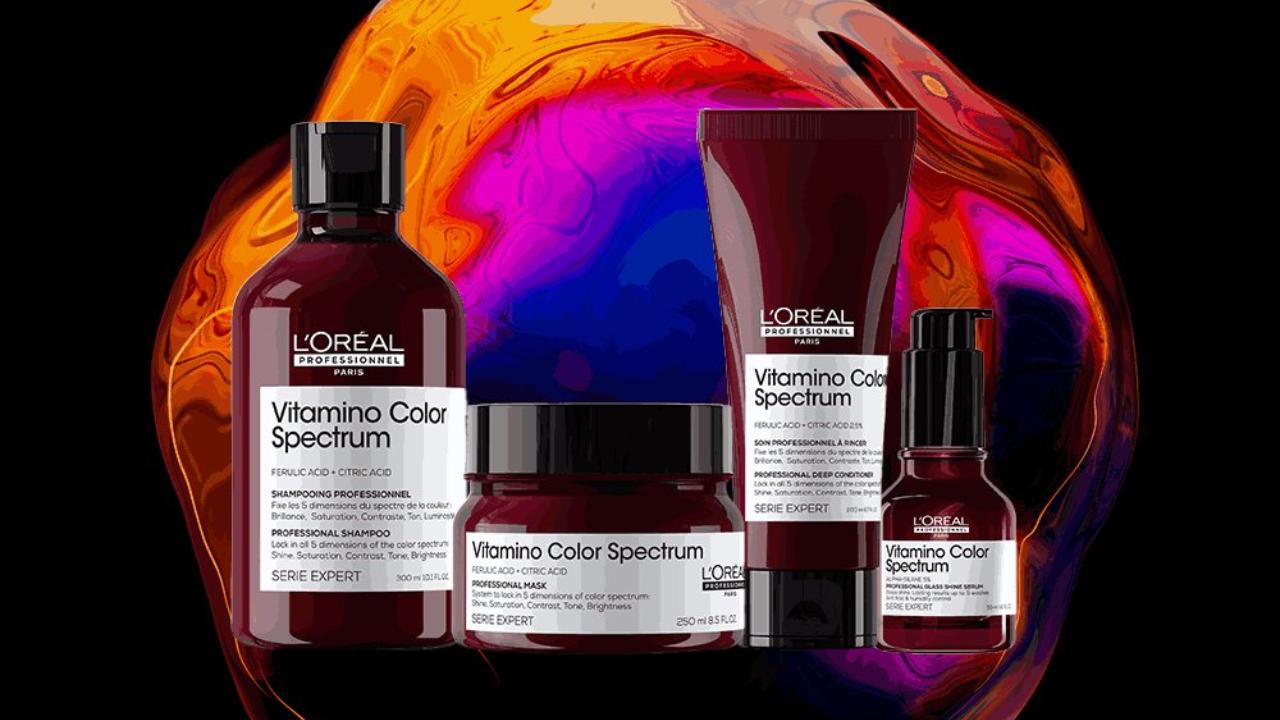
L'Oréal's first nine months of 2026 generated €35.34 billion in net sales, a figure that carries more strategic intelligence than the headline growth rate alone. Like-for-like expansion of 6.9% across the period, accelerating to 7.7% in Q3, signals not a single-division story but a coordinated lift across distribution tiers that most conglomerate peers have failed to execute simultaneously. CEO Nicolas Hieronimus confirmed the group is now "outperforming the market in the all-important skincare category," a statement that reframes L'Oréal's competitive positioning from haircare-and-fragrance specialist to full-spectrum prestige operator. The strategic implications for retail partners, brand investors, and category competitors are substantial.
Divisional Velocity Reveals a Premiumization Playbook Running at Scale
Professional Products and Dermatological Beauty each posted 13.9% quarterly growth, a convergence that is not coincidental. Both divisions operate through selective distribution architectures, salon networks and pharmacy channels respectively, that insulate margin and reinforce clinical authority. Kérastase's double-digit performance within Professional Products confirms that the trade-up from mass haircare into professional retail continues to compound, a trend BeautyScale has tracked across the GCC and APAC region where prestige haircare penetration is still in early innings.
Dermatological Beauty's 11.6% nine-month growth, driven by La Roche-Posay, CeraVe, and SkinCeuticals, demonstrates what a disciplined derma-positioning strategy produces at scale. Sun care emerged as the division's highest-velocity subcategory, with La Roche-Posay Anthelios and CeraVe Sun accelerating sequentially. For retail buyers assessing shelf allocation heading into 2027, that subcategory trajectory warrants a structural reconsideration of sun care's placement within the broader skincare fixture rather than its traditional seasonal slot.
For retail buyers assessing shelf allocation heading into 2027, that subcategory trajectory warrants a structural reconsideration of sun care's placement within the broader skincare fixture rather than its traditional seasonal slot.
The Luxe Portfolio Reset: Fragrance as the Margin Engine
L'Oréal Luxe's 5.8% nine-month growth, with acceleration through each successive quarter, reflects a portfolio reset still working through its full effect. Fragrance is doing the structural lifting. Yves Saint Laurent's Libre and MYSLF both posted double-digit gains, and Creed, integrated via the €4 billion Kering Beauté acquisition, is already contributing meaningfully to divisional performance. That €4 billion price point for the Kering Beauté asset portfolio now looks defensible given fragrance's compound outperformance across the prestige tier globally.
The Creed integration is a case study in M&A-driven distribution expansion. The brand enters L'Oréal's global retail infrastructure with immediate access to prestige door counts the independent Creed operation could not have reached organically at comparable speed. For fragrance category watchers, the more important signal is what Creed's performance inside L'Oréal's network suggests about pricing power in the ultra-prestige segment, where average unit retail continues to climb regardless of broader consumer softness in masstige price bands.
SAPMENA's 19.5% Q3 Surge Resets the Geographic Priority Stack
SAPMENA delivered 19.5% growth in Q3 and 15.8% across the nine-month period, making it the group's fastest-growing region by a material margin. This is not a market-condition story alone. It reflects deliberate distribution architecture decisions, including the majority stake acquisition in Innovist, a digital-first Indian personal care business, and the BOLD venture fund's partnership with Nykaa to seed minority positions in high-growth Indian beauty and wellness brands.
Brands and retail partners calibrating their prestige positioning strategy for 2027 should treat L'Oréal's divisional architecture not as a competitor benchmark but as a directional map for where category power is consolidating.
The Nykaa partnership is structurally significant beyond the capital deployment. It gives L'Oréal an intelligence position inside India's fastest-scaling beauty e-commerce ecosystem, with optionality on brand acquisition targets before they reach Series C valuations. That approach mirrors the early-stage scouting frameworks that have driven competitive advantage in APAC region markets for Amorepacific and Shiseido, and it suggests L'Oréal is building a regional M&A pipeline rather than executing one-off deals.
The Cosmax MOU, targeting next-generation beauty innovation through Korea's most sophisticated contract development and manufacturing network, further anchors L'Oréal's APAC region strategy in technology access rather than distribution alone.
Forward Position: The Skincare Outperformance Signal Has Structural Legs
Hieronimus's declaration of skincare market outperformance, if sustained through Q4 and into fiscal 2027, repositions L'Oréal from a company managing a multi-divisional portfolio to one executing a unified premiumization thesis across every consumer touchpoint. The convergence of derma-channel authority, fragrance momentum, professional retail expansion, and a SAPMENA distribution build creates compounding leverage that single-category specialists cannot replicate. Brands and retail partners calibrating their prestige positioning strategy for 2027 should treat L'Oréal's divisional architecture not as a competitor benchmark but as a directional map for where category power is consolidating.
This article references and builds on original reporting by Sophie Smith for The Industry Beauty. Read the original piece here: https://theindustry.beauty/loreal-third-quarter-sales-hit-e11-56-billion-as-growth-accelerates/. BeautyScale is a commercial agency; our editorial notes are commentary on industry reporting.
Josette Assaf
Beauty market analyst covering trends, brands, and distribution shifts.