Kreyol Essence at $58B Scalp Care: How Heritage Brands Outpace Conglomerate Scale

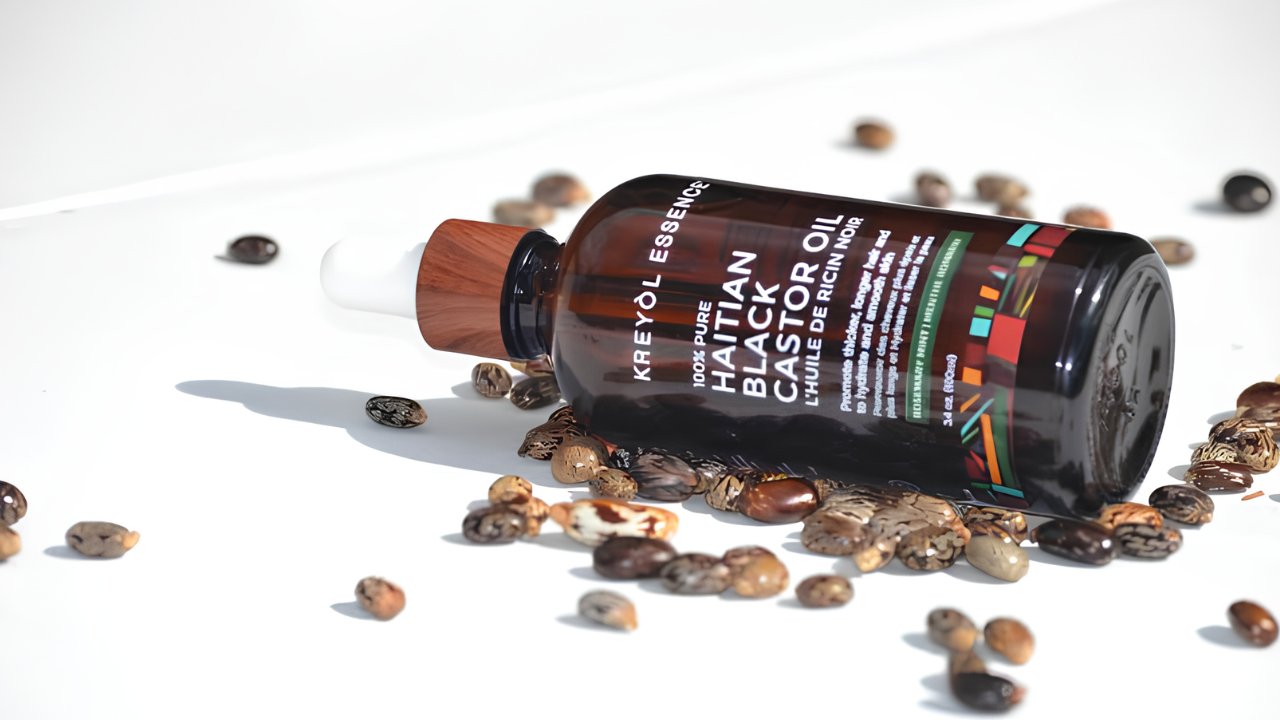
The global scalp care market is forecast to reach $58.3 billion by 2030, compounding at a CAGR of 6.8 percent, and the brands capturing outsized share are not the legacy conglomerates scaling synthetic formulas. They are founder-led, ingredient-authenticated, and built on supply chain narratives that resonate across both prestige retail and institutional capital. Kreyol Essence, the Haitian botanical hair and scalp brand co-founded by Board Chair Yve-Car Momperousse, surfaced at the Wharton Africa Business Forum this season as a case study in precisely that convergence. The forum, hosted at the Wharton School of the University of Pennsylvania, draws founders and executives whose companies are reshaping commerce across Africa and the diaspora. Momperousse's appearance signals something more consequential than a speaking engagement: it marks a brand operating with deliberate strategic intent, speaking the language of institutional audiences.
Ingredient Provenance Is Becoming a Distribution Architecture Argument
Kreyol Essence has built its core equity around Haitian black castor oil and a portfolio of ancestral botanical ingredients validated through clinical testing. That combination, provenance plus clinical substantiation, is increasingly the prerequisite for entry into prestige and masstige retail tiers where buyers demand both storytelling credibility and efficacy documentation. The brand's ability to articulate a dual mandate, delivering clinically tested plant-powered solutions while sustaining agricultural livelihoods for farmers and women in Haiti, translates directly into the kind of ESG-aligned sourcing narrative that moves retail committee conversations from consideration to commitment.
Distribution architecture decisions at this stage of a brand's growth often determine whether a company scales toward an M&A outcome or plateaus inside a single channel. Kreyol Essence's current positioning suggests the former trajectory is under active construction.
Brands that have navigated this sequencing most successfully, Ceremonia, Sienna Naturals, and Buttah Skin among recent comparables, have typically used retail milestone announcements to compress timelines toward term sheets.
Prestige Positioning Without Prestige Pricing: The Masstige Opportunity
The scalp health category has fractured into distinct value tiers faster than most adjacent personal care segments. At the premium end, clinical-grade brands command $45 to $120 per unit with dermatologist endorsements and clean-room manufacturing credentials. At the masstige tier, consumers are paying $18 to $38 for products that deliver against a specific functional claim, particularly hair loss and thinning, with an ingredient origin story attached. Kreyol Essence operates with strategic coherence inside that masstige corridor while holding credibility assets, clinical testing, ethical sourcing, diaspora authenticity, that could support a prestige portfolio reset if the brand chooses to tier upward.
That flexibility is architecturally significant. Brands that can credibly migrate between masstige and prestige positioning without compromising core equity are precisely the acquisition targets that strategic acquirers inside LVMH Beauty, Unilever Prestige, and Shiseido's investment portfolio have been evaluating through 2023 and into 2024.

Diaspora Commerce as an Institutional Investment Thesis
Momperousse's presence at the Wharton Africa Business Forum is itself a signal worth parsing. The forum's audience is not composed of consumer media or lifestyle press. It is composed of investors, founders, and operators building scalable enterprises with geographic reach across Africa, MENA, and diaspora markets in North America and Europe. Speaking to that room positions Kreyol Essence inside a conversation about cross-border commerce infrastructure, diaspora purchasing power, and the premiumization of Afro-descended beauty categories.
Brands with authenticated ingredient sourcing from Haiti, the Caribbean, or the African continent carry a geographic and cultural specificity that generalist beauty conglomerates cannot replicate through acquisition alone.
The commercial logic is straightforward. The U.S. Black haircare market alone is valued at approximately $3.8 billion annually, and multicultural beauty broadly is growing at nearly double the rate of the general market. Brands with authenticated ingredient sourcing from Haiti, the Caribbean, or the African continent carry a geographic and cultural specificity that generalist beauty conglomerates cannot replicate through acquisition alone. That inimitability has a valuation premium attached to it.
The Strategic Play Ahead: Retail Expansion or Strategic Consolidation
The forward-looking question for Kreyol Essence is not whether the brand has institutional-grade assets. It demonstrably does. The question is sequencing: does the leadership team pursue retail expansion into Sephora, Bluemercury, or international doors in GCC and APAC markets ahead of a capital raise or M&A conversation, or does a strategic minority investment accelerate distribution architecture decisions first?
Brands that have navigated this sequencing most successfully, Ceremonia, Sienna Naturals, and Buttah Skin among recent comparables, have typically used retail milestone announcements to compress timelines toward term sheets. For Kreyol Essence, the Wharton platform appearance is a credentialing moment that belongs in that same strategic sequence.
The global beauty industry's appetite for founder-led, ingredient-authentic brands with traceable supply chains and clinical substantiation is not a trend. It is a structural reorientation of how prestige and masstige retail buyers evaluate range additions, and how M&A teams model brand durability. Kreyol Essence has built the foundation. The distribution and capital decisions made in the next 24 months will determine the ceiling.
This article references and builds on original reporting by Kreyòl Essence for kreyolessence.com. Read the original piece here: https://kreyolessence.com/blogs/founders-corner/wharton-africa-business-forum-yve-car-momperousse-co-founder-and-board-chair. BeautyScale is a commercial agency; our editorial notes are commentary on industry reporting.
Martin Jacob
Beauty market analyst covering trends, brands, and distribution shifts.