Juliette Has a Gun: How a $52B Niche Fragrance Market Is Rewriting the Rules of Prestige Positioning

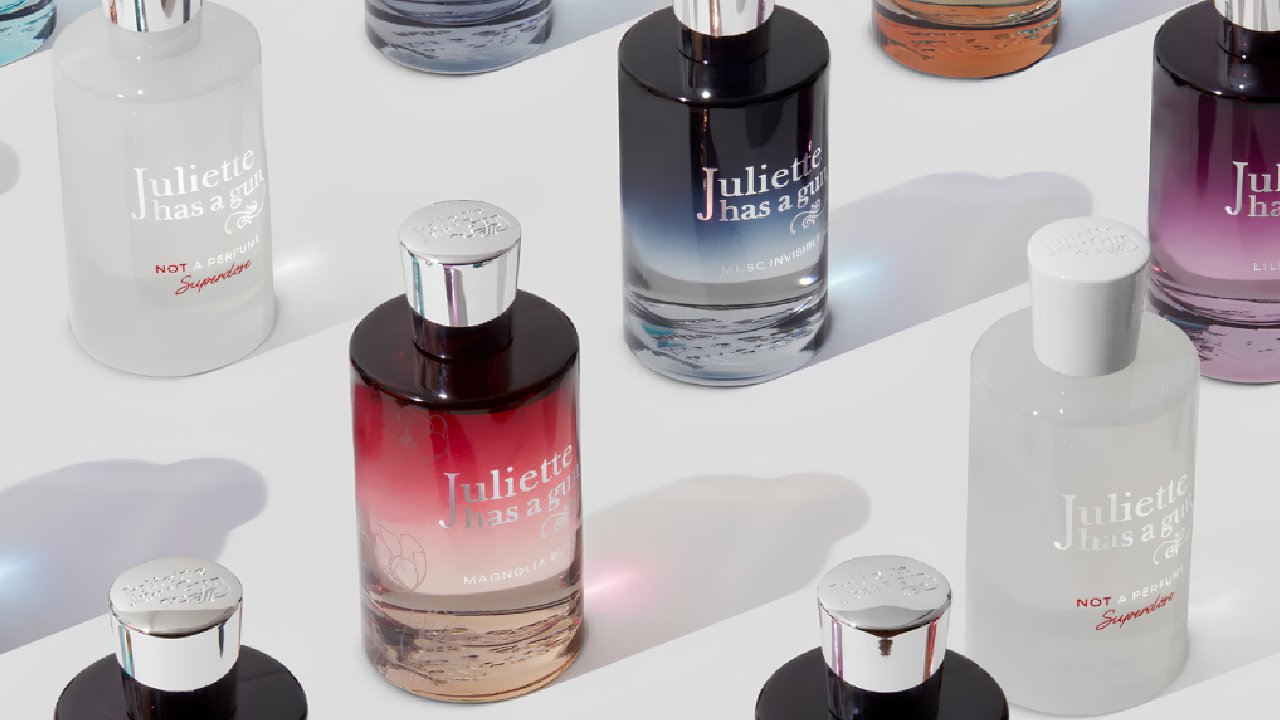
The global niche fragrance segment crossed $52 billion in 2023 and is tracking toward a 10.2% CAGR through 2030, according to Grand View Research, reshaping how brand managers and retail buyers evaluate portfolio architecture across APAC, MENA, and GCC channels. Within that expansion, founder-led houses with clearly codified creative identities are attracting disproportionate investor attention, precisely because they offer what conglomerate-owned labels structurally cannot: narrative singularity. Juliette Has a Gun, launched in Paris by Romano Ricci, great-grandson of Nina Ricci founder Robert Ricci, occupies a strategically compelling position inside that dynamic. The brand's distribution architecture, creative thesis, and prestige-to-masstige boundary management collectively make it one of the more instructive case studies in independent fragrance brand-building currently operating at scale.
Niche fragrance brands that expand beyond roughly 1,200 to 1,500 doors historically encounter a signal-to-noise problem, where broader distribution dilutes the discovery-driven purchase behavior that sustains premium average unit retail.
The Creative Identity as a Competitive Moat
Romano Ricci established Juliette Has a Gun in 2005 as a deliberate portfolio reset from the institutional gravity of the Nina Ricci legacy. Rather than leveraging lineage as a marketing asset, Ricci built the brand's equity around an anti-archetype: a Shakespearean heroine transposed into contemporary urban femininity, with fragrance positioned as a tool of self-definition rather than sensory decoration. That conceptual frame is not merely branding copy. It functions as a pricing and channel discipline mechanism, anchoring the house within niche positioning rather than allowing premiumization narratives to blur into the masstige tier. For brand strategists evaluating the landscape, the distinction matters. Houses that conflate prestige storytelling with accessible price architecture frequently erode the very scarcity equity that drives collector loyalty and specialty retail placement.
Distribution Architecture and the Niche Scaling Paradox
Juliette Has a Gun is stocked across approximately 1,000 doors globally, with meaningful density in European specialty retail, GCC travel retail, and select APAC department store formats. That footprint sits at a deliberate inflection point. Niche fragrance brands that expand beyond roughly 1,200 to 1,500 doors historically encounter a signal-to-noise problem, where broader distribution dilutes the discovery-driven purchase behavior that sustains premium average unit retail. The house manages three distinct collection tiers, an Iconics range, the Bold Collection, and the Not a Collection line, which provides internal portfolio architecture to stagger channel placement. That tiering strategy gives commercial directors a toolkit for managing retail exclusivity without restricting total market access.

9 billion in 2024, and ongoing consolidation across mid-market independents by Manzanita Capital and Walgreens Boots Alliance signal that institutional capital is aggressively pricing founder-built brand equity.
M&A Signals and the Independent House Premium
The current M&A environment for niche fragrance is active. L'Oreal's acquisition of Aesop for $2.5 billion in 2023, Puig's IPO valued at approximately $13.9 billion in 2024, and ongoing consolidation across mid-market independents by Manzanita Capital and Walgreens Boots Alliance signal that institutional capital is aggressively pricing founder-built brand equity. For a house like Juliette Has a Gun, the variables that most influence acquisition attractiveness include direct-to-consumer revenue proportion, gross margin per SKU (which niche fragrance houses typically carry at 65% to 75%), and the defensibility of creative direction post-acquisition. Romano Ricci's role as the singular creative and artistic voice presents the structural tension common to all founder-led negotiations: brand equity and human capital are not cleanly separable, which affects valuation multiples and earn-out structures in any strategic consolidation scenario.
Premiumization Ceiling and the Next Distribution Bet
Looking forward, the most consequential strategic question for Juliette Has a Gun is where it draws the premiumization ceiling. The GCC travel retail corridor remains underpenetrated for niche European fragrance houses relative to its purchasing power density. Dubai Duty Free alone moved over $2.1 billion in fragrance retail in 2023, and Gulf consumers index heavily toward bold, long-lasting oud-adjacent and floral oriental profiles that align with the house's bolder SKUs. A calibrated GCC distribution push, structured through curated travel retail partnerships rather than mass concession placement, would extend brand reach without compromising the specialty retail positioning that underpins pricing integrity. The broader industry trajectory suggests that niche fragrance houses with coherent creative DNA, disciplined distribution architecture, and defensible founder narratives will continue to command a structural premium in both retail negotiations and M&A conversations through the remainder of this decade. For Juliette Has a Gun, the question is not whether the brand has accumulated sufficient equity. The question is which distribution vector it activates next.
This article references and builds on original reporting by juliettehasagun.com. Read the original piece here: https://www.juliettehasagun.com/en/pages/marque-page. BeautyScale is a commercial agency; our editorial notes are commentary on industry reporting.
Rayane Mahmoud
Beauty market analyst covering trends, brands, and distribution shifts.