Kiko Milano x Stabilo: A £12.99 Lip Tint and the $4.2B Cross-Category Collaboration Playbook

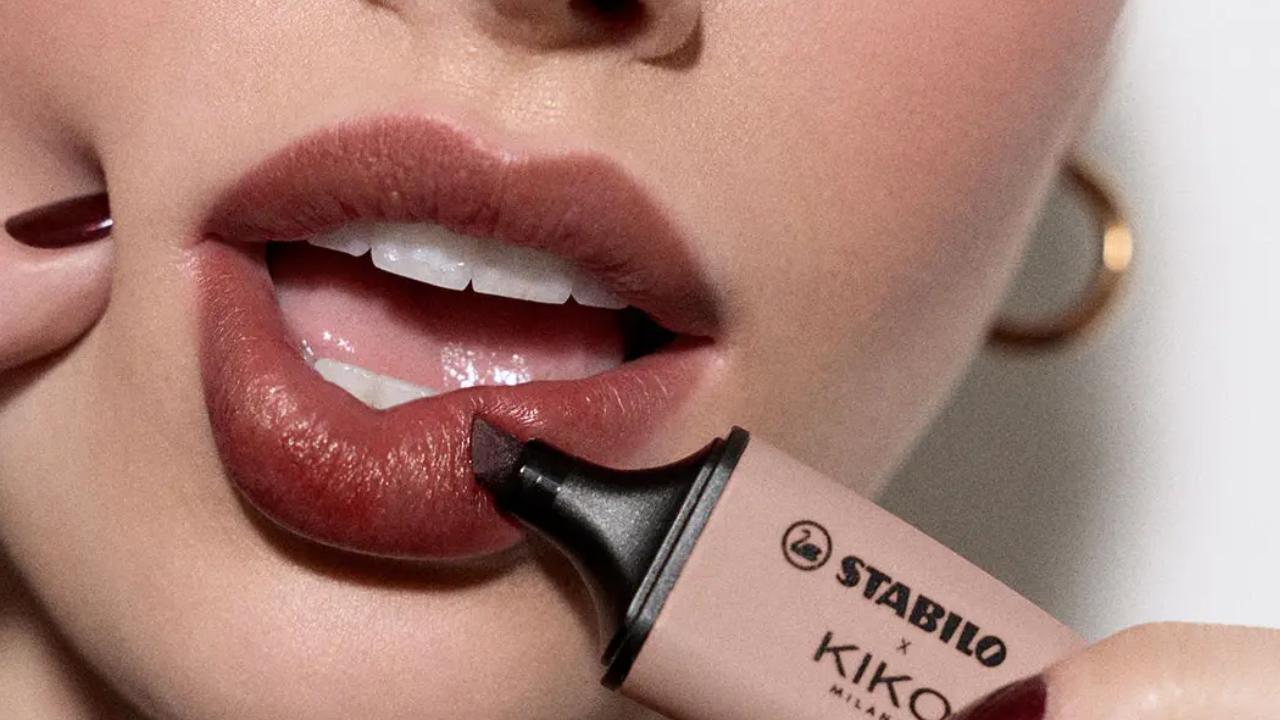
The global branded collaboration market in beauty generated an estimated $4.2 billion in incremental retail value in 2025, according to aggregated licensing and co-branding transaction data, with limited-edition drops accounting for the fastest-growing segment of that figure at a 19.3% CAGR. Kiko Milano's partnership with Stabilo International GmbH, the flagship writing instruments brand under the Heroldsberg-based Schwan-Stabilo Group, is not simply a product launch. It is a case study in cross-category distribution architecture, executed at accessible price points with prestige creative positioning. At £12.99 per unit in the UK, the Lip Mark(er) sits squarely in the masstige corridor, priced to convert new traffic while reinforcing Kiko Milano's standing as a credible innovator in accessible colour cosmetics.
Masstige Mechanics Driving the Collaboration Model
Kiko Milano CEO Simone Dominici framed the Stabilo partnership as an extension of the brand's creative community philosophy, but the structural rationale is equally commercial. Collaborations at this price tier serve a dual function: they drive basket conversion among existing loyalists and they lower the acquisition cost for first-time buyers who arrive through the partner brand's equity. Stabilo carries generational recognition across Europe and MENA markets, with particularly strong brand recall among consumers aged 18 to 34, precisely the demographic Kiko Milano's commercial strategy targets. Margaret Mitchell, Executive Vice President for North and Central Europe and Global Commercial Strategy at Kiko Milano, addressed this acquisition dynamic at TheIndustry.beauty Summit in October 2026, citing accessible retail environments as a core mechanism for encouraging new shoppers into the make-up category.
Distribution Architecture as Competitive Signal
The collection's initial rollout spans five direct markets, Italy, France, Spain, Germany, and the UK, with broader European and Middle East coverage delivered through Kiko Milano's directly operated e-commerce platforms. That architecture is deliberate. By anchoring the launch in directly operated channels rather than third-party wholesale, Kiko Milano retains margin, controls the brand narrative, and captures first-party customer data that feeds directly into its refreshed Kiko Me loyalty programme, relaunched in October 2026 with four tiered reward structures. The loyalty programme update and the Stabilo collaboration are not independent initiatives. Together, they represent a coordinated portfolio reset, designed to build repeat purchase frequency alongside headline-generating acquisition moments.
Cross-Category Licensing and the Stationery-to-Beauty Vector
Stabilo's strategic rationale for the partnership carries its own financial logic. Schwan-Stabilo Group, a privately held conglomerate with significant exposure to declining traditional stationery volumes in Western European markets, has an acute interest in extending brand equity into higher-growth lifestyle categories. The global beauty and personal care market is forecast to reach $758 billion by 2027, according to Statista projections, while the global stationery market is projected to grow at a comparatively modest 3.1% CAGR through 2030. Michele Molon, CEO of Schwan-Stabilo and Stabilo International GmbH, described the collaboration as taking the brand's self-expression philosophy "beyond the page." That language signals active exploration of licensing and co-branding as a revenue diversification strategy, a pattern increasingly common among heritage non-beauty brands navigating category maturity.

For beauty investors and brand strategists monitoring M&A and licensing pipelines, this transaction type warrants attention. Cross-category collaborations at the masstige tier are functioning as low-capital market entry vehicles, allowing non-endemic brands to test consumer appetite in adjacent categories before committing to full portfolio development or acquisition. Schwan-Stabilo's move mirrors earlier playbooks executed by brands including Moleskine and select sportswear houses, each of which used limited beauty collaborations to gauge licensing scalability before deeper strategic commitments.
Premiumization Through Creative Positioning at Accessible Price Points
The five-shade Lip Mark(er) range, with shades named Fine Print, Afterthought, Don't Quote Me, On My Radar, and Pink(er), demonstrates a premiumization strategy that operates through narrative rather than price elevation. At £12.99, the product does not compete in prestige. It competes in the perception of specialness, a differentiator that mass-tier players increasingly deploy to defend share against both high-end trading-down and drugstore trading-up. The angled applicator design, borrowed directly from the Stabilo Boss Mini highlighter form factor, is functional packaging innovation that justifies the narrative without requiring additional cost architecture.
As cross-category collaborations become a standard tool in the beauty brand-building arsenal, the question for brand managers and retail buyers is not whether to engage this model but how to structure the distribution and loyalty mechanics to maximise long-term customer lifetime value from the short-term attention spike. Kiko Milano's integrated approach, pairing a culturally resonant drop with a concurrent loyalty programme refresh and a channel-controlled distribution strategy, sets a replicable framework that will increasingly define how mid-market colour cosmetics brands compete for relevance in saturated European and GCC retail environments through 2027 and beyond.
This article references and builds on original reporting by Sophie Smith for The Industry Beauty. Read the original piece here: https://theindustry.beauty/kiko-milano-transforms-stabilo-highlighter-into-limited-edition-lip-tint/. BeautyScale is a commercial agency; our editorial notes are commentary on industry reporting.
Nya Ravel
Beauty market analyst covering trends, brands, and distribution shifts.