Dae's $30 Cream: How Indies Captured Sephora's Hair Throne Without Paid Media

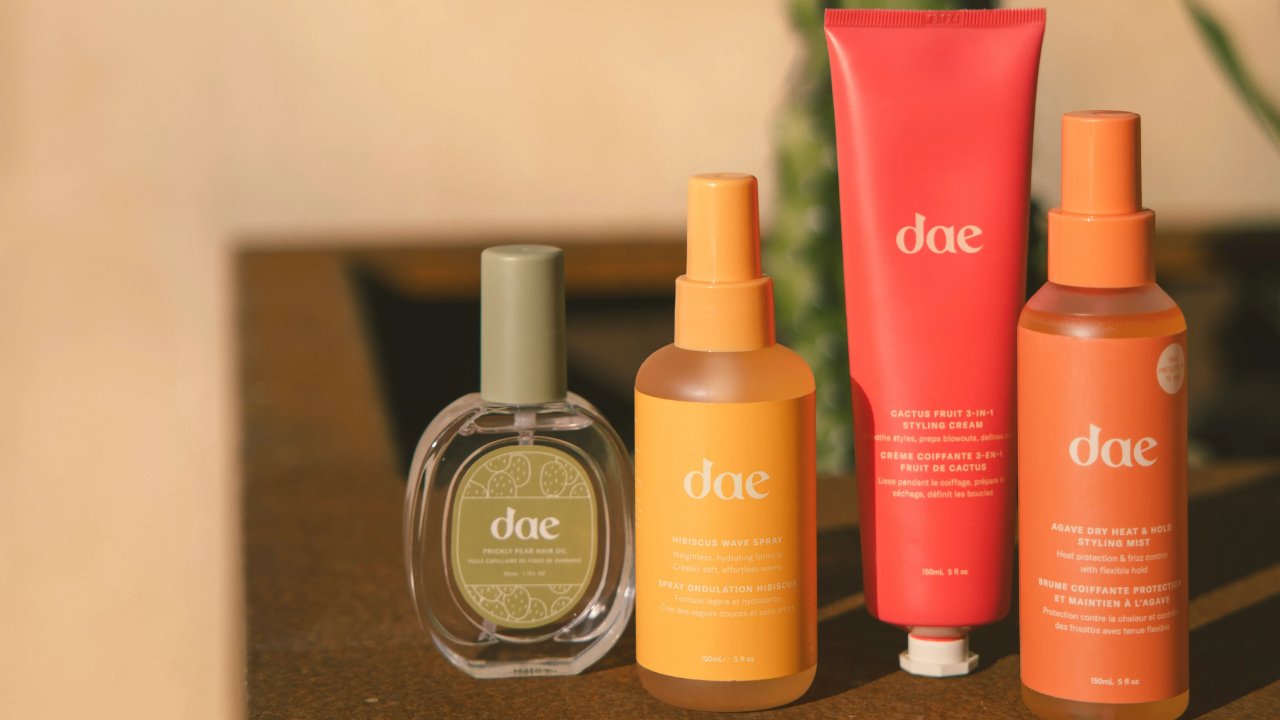
Sephora's top-ranked hair styling line by 2025 unit sales is not a legacy conglomerate brand. It is a six-year-old independent, moving one unit of a single $30 styling cream every 15 seconds, without a single major paid campaign behind it until now. Dae's decision to anchor its largest integrated marketing investment to date around the Cactus Fruit 3-in-1 Styling Cream is not simply a brand moment. It is a strategic signal about where prestige hair is heading, and which operators are best positioned to capture margin as the category matures. For brand investors and retail partners tracking distribution architecture in specialty beauty, the implications extend well beyond one product's TikTok velocity.
The Organic Demand Proof Point Changes the M&A Calculus
Before a dollar of paid media ran against Cactus Fruit at scale, the product had already claimed Sephora's number-one position in both the styling and overall hair segments by unit volume. That sequencing matters enormously for investors conducting due diligence on independent hair brands. Organic traction at that velocity, sustained over multiple retail cycles, signals genuine category pull rather than manufactured demand propped up by promotional spend. It also compresses customer acquisition cost assumptions in any discounted cash flow model applied to the business.
The Dae case reinforces a pattern increasingly visible across prestige hair: brands that achieve hero SKU dominance before scaling paid distribution tend to carry stronger gross margin profiles and more defensible retail shelf positioning. That combination makes them attractive acquisition targets for strategic consolidators, including LVMH Beauty, Puig, or the mid-market portfolio operators that have been actively scanning independent hair for the past 24 months.
Distribution Architecture Precedes the Campaign, Not the Other Way Around
Dae's campaign architecture, spanning paid social, connected television, YouTube, podcast partnerships, over 500 creator activations, and 200-plus out-of-home placements in New York City, is calibrated to close a specific gap. Consumer awareness of Cactus Fruit as a product consistently outpaces awareness of Dae as a brand. That disconnect is a distribution architecture problem as much as a marketing one. Consumers who repurchase through Sephora.com or daehair.com without a strong brand association are churn risks the moment a competitor deploys a similar formulation at a comparable price point.
The campaign's true function is brand equity construction at the portfolio level, not SKU promotion. Kelley Martin, Head of Marketing at Dae, confirmed as much in commentary accompanying the launch, noting the goal is to ensure consumers "know Cactus Fruit and, ultimately, know Dae." That framing reflects a brand operating at the threshold between cult independent and scaled prestige player, a transition point where distribution agreements, retail terms, and wholesale margin structures all require renegotiation.

Premiumization Without Portfolio Reset
At $30, Cactus Fruit occupies the masstige corridor that has proven most resilient to consumer trade-down pressure across the 2024 to 2025 inflationary cycle. It is priced above mass-channel staples but accessible enough to drive the trial velocity that specialty retail requires to maintain category rank. Dae has not pursued premiumization through price architecture alone. It has pursued it through formulation versatility and community validation, a considerably more durable positioning strategy.
This approach stands in contrast to brands that have pursued prestige positioning through aggressive portfolio resets, launching higher price-point SKUs to signal elevation while legacy products stagnate at shelf. Dae's bet is the inverse: concentrate investment in the proven unit, deepen brand equity at the existing price point, and let distribution breadth create the revenue scale that justifies a future portfolio expansion.
The Forward Signal for Specialty Hair Investment
Dae's campaign architecture will generate measurable data across connected television attribution, creator-driven conversion, and out-of-home awareness lift in a primary urban market. That dataset, accumulated against a SKU with an already-established baseline, will produce a performance benchmark that rivals and retail partners will study closely.
For investors, the more consequential question is what comes after the campaign. A brand holding Sephora's top hair position with demonstrated organic demand, a defensible hero SKU, and newly scaled brand awareness is precisely the asset profile that attracts term sheets. The global prestige hair market is projected to exceed $22 billion by 2028 at a CAGR above 6 percent, and strategic consolidators are still building their positions. Dae has just made itself considerably easier to value.
This article references and builds on original reporting by Kylie Richardson for thetease.com. Read the original piece here: https://www.thetease.com/dae-is-betting-big-on-the-product-that-made-it-famous/. BeautyScale is a commercial agency; our editorial notes are commentary on industry reporting.
Rami Al Ariss
Beauty market analyst covering trends, brands, and distribution shifts.