K-Beauty Haircare Hits $2.8 Billion: Dr. Forhair's Sephora Entry Redraws the U.S. Scalp Care Map

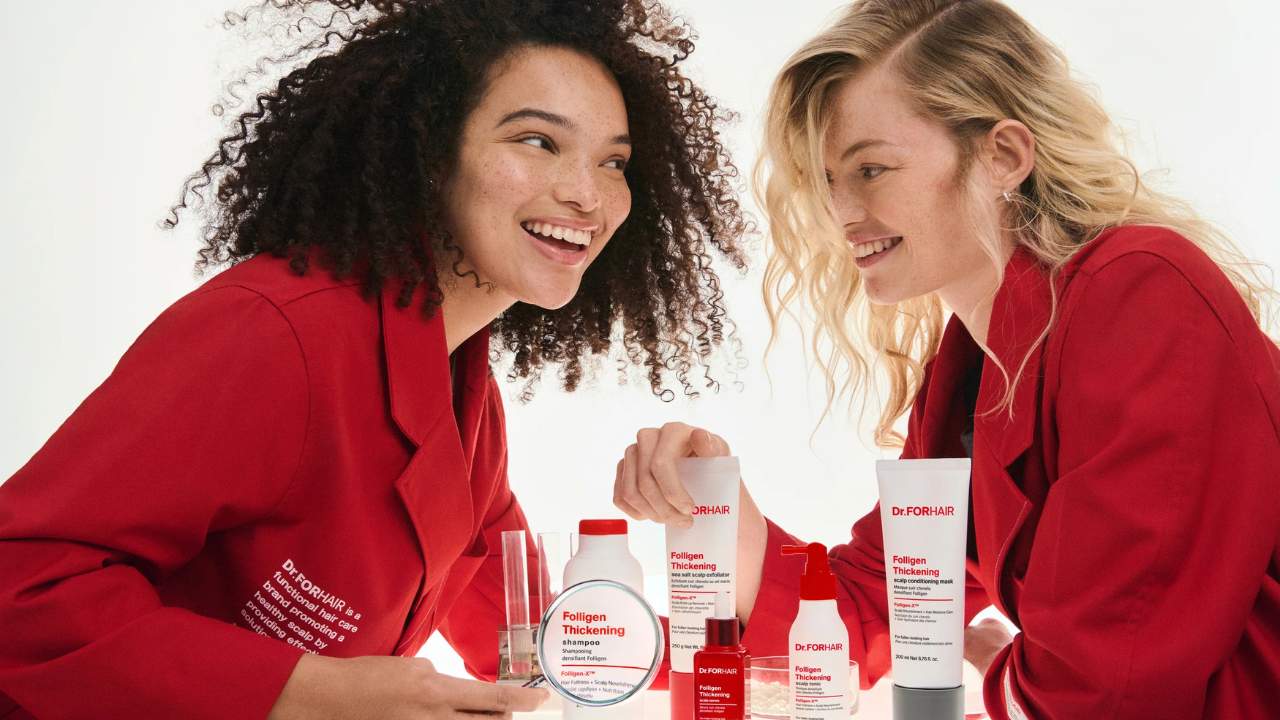
K-beauty's U.S. retail footprint generated $2.8 billion in the 52 weeks ended March 21, 2026, according to NielsenIQ data, nearly doubling from $1.3 billion just two years prior. That 48% year-over-year surge is no longer confined to skincare adjacencies. It is migrating aggressively into haircare, and Sephora's distribution architecture is the primary vehicle carrying it there. The August 2026 launch of South Korean scalp health brand Dr. Forhair into more than 200 Sephora doors, anchored by the $24 Folligen Thickening Shampoo, signals something more consequential than a single brand placement. It marks the formal institutionalization of K-hair as a prestige retail category in the U.S. market.
Sephora's K-Beauty Buildout Is a Calculated Portfolio Reset
Sephora's accumulation of approximately 20 K-beauty skincare brands in recent months, paired with its structured CJ Olive Young partnership spanning 19 brands across 500-plus U.S. doors, reflects a deliberate portfolio reset rather than opportunistic trend-chasing. The retailer is building a defensible category position in Korean beauty before mass and drug channels can credibly replicate the curation. Dr. Forhair's placement alongside fellow Wyatt Corp. property Unove, which entered Sephora in February, and scalp care competitor Dr. Groot, which launched in May, reveals a tiered assortment strategy that gives Sephora meaningful depth in a single emerging white space. That clustering of Korean haircare brands within a single prestige channel is a structural play designed to own the category narrative at the point of sale.
Wyatt Corp.'s Multi-Brand Architecture Compresses the Risk Curve
The Wyatt Corp. angle deserves close attention from investors and brand strategists. The South Korean holding company controls both Dr. Forhair and Unove inside Sephora simultaneously, creating a multi-brand distribution architecture that reduces dependence on any single SKU's performance while maximizing shelf presence within a constrained retail assortment. Wyatt's Series C round, which closed at roughly $41 million led by Korea Investment Partners in 2021 and valued the group at approximately $300 million, was explicitly earmarked for international expansion. That capital is now visibly deployed across a coordinated U.S. retail strategy spanning prestige (Sephora) and mass-club (Costco, where Dr. Forhair entered 50 doors in October 2023) simultaneously. The dual-channel approach reduces premiumization risk by anchoring brand awareness in high-velocity club retail while building margin and brand equity at the prestige tier.
Clinical Heritage Provides the Prestige Positioning That Mass K-Beauty Often Lacks
Dr. Forhair's differentiation from trend-driven K-beauty exports lies in its clinical origin story. The brand traces its formulation lineage to Forhair Clinics, founded by follicular unit extraction pioneer Dr. John P. Cole, which have operated in South Korea since 2012 with a staff of more than 35 trichologists. Over 33 million units of the Folligen Thickening Shampoo have been sold globally, with the company reporting one unit purchased every five seconds. Folligen Thickening Scalp Serum reached the number one scalp product ranking on Amazon for eight consecutive weeks post-launch. That combination of clinical credibility and demonstrated commercial velocity gives the brand a positioning foundation most masstige haircare entrants cannot replicate quickly. Sephora's retail model rewards exactly this kind of story: a technical authority narrative that justifies a prestige price point without requiring luxury-tier price positioning.
The Forward View: Scalp Care as the Next Premiumization Frontier
The structural conditions for scalp care's premiumization are firmly in place. Consumer awareness of the scalp-to-strand health connection is accelerating, driven partly by diagnostic retail experiences like Dr. Forhair's scalp scanner technology, currently accessible at CJ Olive Young's Los Angeles location and the brand's New York City clinic. That experiential layer converts a commodity-adjacent product category into a consultative wellness purchase, raising both conversion rates and repurchase intent. As Sephora deepens its K-hair assortment and competing retailers including Target and Ulta Beauty respond with their own Korean haircare expansion programs, brands with clinical positioning and proven global velocity will attract disproportionate strategic and M&A interest from multinational beauty conglomerates seeking entry into the scalp care segment. Dr. Forhair's Sephora placement is, in that context, less a retail milestone and more an opening bid in a consolidation cycle that the broader industry has not yet fully priced in.
This article references and builds on original reporting by Claire McCormack for Beauty Independent. Read the original piece here: https://www.beautyindependent.com/dr-forhair-sephora-k-beauty-haircare/. BeautyScale is a commercial agency; our editorial notes are commentary on industry reporting.
Rami Al Ariss
Beauty market analyst covering trends, brands, and distribution shifts.