J-Beauty's $6.1B Opportunity: How Deau Skin Is Positioning Against K-Beauty Fatigue

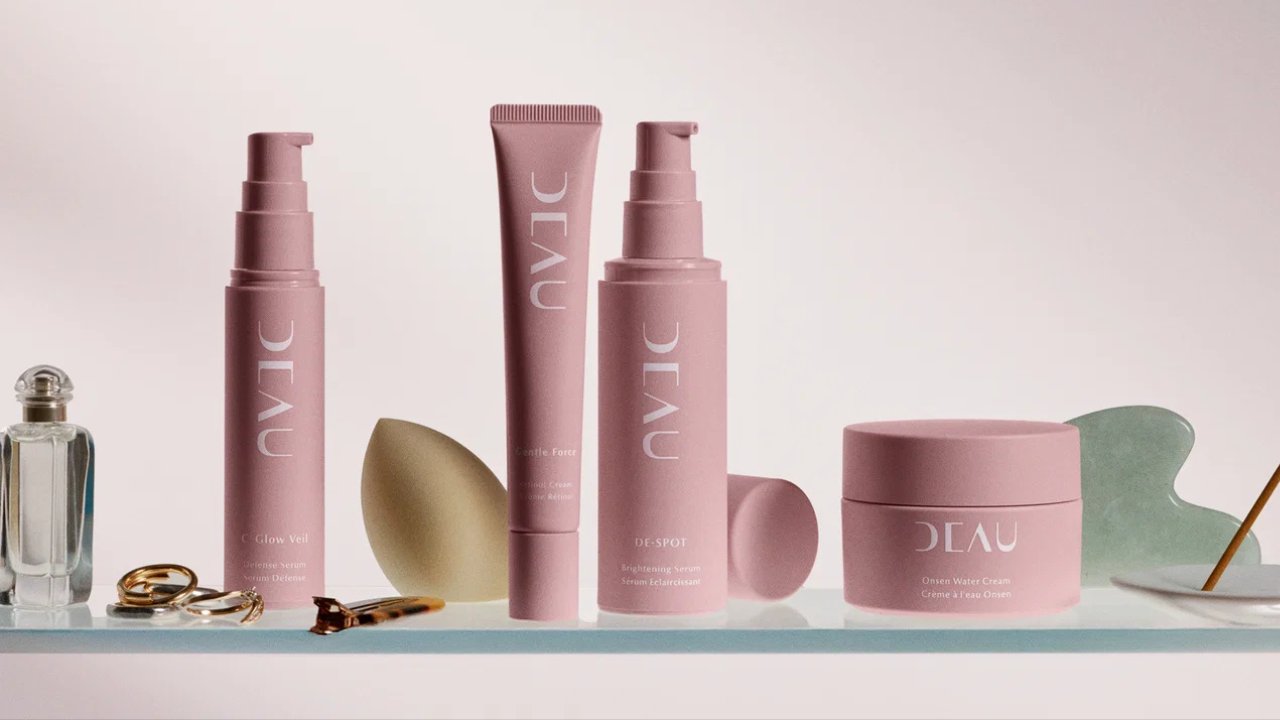
The global Japanese beauty market is projected to reach $6.1 billion by 2027, growing at a CAGR of 4.8 percent, yet it commands a fraction of the U.S. shelf space and investor attention that Korean beauty has captured over the past decade. That disparity is precisely the market gap Deau Skin founder Hina Mian is building toward. Launched direct-to-consumer in April 2025 with a four-SKU capsule collection priced between $55 and $120, Deau Skin is not chasing the K-beauty playbook. It is betting, with considerable strategic logic, that a maturing U.S. prestige consumer is ready for a slower, more restrained skincare philosophy rooted in Japanese ritual rather than Korean innovation cycles.
K-Beauty Saturation Is Creating a Structural Opening
K-beauty's dominance of the U.S. indie skincare conversation has been remarkable, but the category is showing classic signs of premiumization fatigue. The 10-step routine, once a viral acquisition engine for brands like COSRX and Laneige, is now a friction point for the 30-to-45-year-old consumer who entered the category early and is actively simplifying. This consumer cohort, educated, income-stable, and increasingly skeptical of novelty, represents the highest-value retention segment in prestige skincare. Deau Skin's positioning speaks directly to that behavioral shift, prioritizing efficacy and sensorial quality over routine complexity.
The brand's decision to manufacture in Japan, incorporate Onsen mineral water from the Shimane Prefecture, and collaborate with Tokyo-based product development consultants gives it a sourcing narrative that is both credible and defensible. In a market where ingredient storytelling increasingly functions as brand equity, geographic specificity, specifically the Izumo region's 1,300-year thermal bathing heritage, provides the kind of heritage depth that most indie entrants fabricate rather than inherit.
Distribution Architecture Signals a Methodical Retail Strategy
Deau Skin's debut at C.O. Bigelow in May 2025 is a precise opening move. Bigelow's customer profile skews toward the informed, urban prestige buyer who treats skincare as a considered purchase rather than a trend response. For a brand at Deau Skin's current stage, entering a highly curated specialty retailer ahead of broader rollout is a sound distribution architecture decision. It preserves brand equity, enables sensorial trial (critical for a line where texture is a core differentiator), and creates the kind of retailer endorsement signal that influences subsequent wholesale conversations.
Mian's stated focus on indie beauty retail over mass or department store channels in the near term reflects a prestige positioning discipline that many DTC-born brands abandon too early in pursuit of volume. The brand's appearance at Beauty Independent's BITE show positions it to build a wholesale pipeline through buyers who specialize in exactly the customer segment Deau Skin is targeting. This is category-aware sequencing, not cautious thinking.
The M&A Case Is Already Taking Shape
From a strategic consolidation standpoint, Deau Skin presents an early-stage thesis that acquirers in the prestige and masstige space should be tracking. Japanese beauty remains dramatically undercapitalized relative to K-beauty in Western retail portfolios. Conglomerates including Shiseido's investment arm, as well as Western holding groups like Unilever Prestige and LVMH Beauty, have signaled ongoing interest in heritage-adjacent indie brands that carry genuine geographic specificity and a clean DTC conversion record.
Deau Skin's four-SKU architecture, a deliberate capsule model rather than a sprawling portfolio, makes it an efficient acquisition target. A lean SKU count reduces integration complexity and allows a parent company to execute a portfolio reset by layering Deau Skin's positioning beneath existing J-beauty or Asian heritage assets without channel conflict. The $55 to $120 price ladder also maps cleanly onto the masstige-to-prestige corridor that most strategic buyers are actively trying to fill.
Forward Outlook: Sunscreen Will Be the Category Proof Point
The brand's planned SPF addition, timed around newly approved UV filter access in the U.S., could be its most consequential product decision. Japanese sunscreens have become a category obsession for the exact consumer Deau Skin is courting, and a domestically compliant J-beauty SPF that meets Japanese formulation standards would be a significant distribution catalyst. Sephora and Credo both carry meaningful SPF assortments with room for a prestige J-beauty entrant that has clinical credibility and a coherent brand architecture behind it.
If Mian executes the SPF launch with the same sourcing discipline and channel specificity she applied to the core collection, Deau Skin will have the full portfolio logic that moves a brand from indie radar to acquisition conversation. The J-beauty window is open. The question is which brand scales fast enough to define the category before the conglomerates decide to build rather than buy.
This article references and builds on original reporting by Taylor Bryant for Beauty Independent. Read the original piece here: https://www.beautyindependent.com/japanese-inspired-deau-skin-is-betting-consumers-are-ready-to-graduate-from-k-beauty/. BeautyScale is a commercial agency; our editorial notes are commentary on industry reporting.
Nya Ravel
Beauty market analyst covering trends, brands, and distribution shifts.