Isotretinoin's $3.5B Market: Telehealth Rewrites Regulatory Distribution

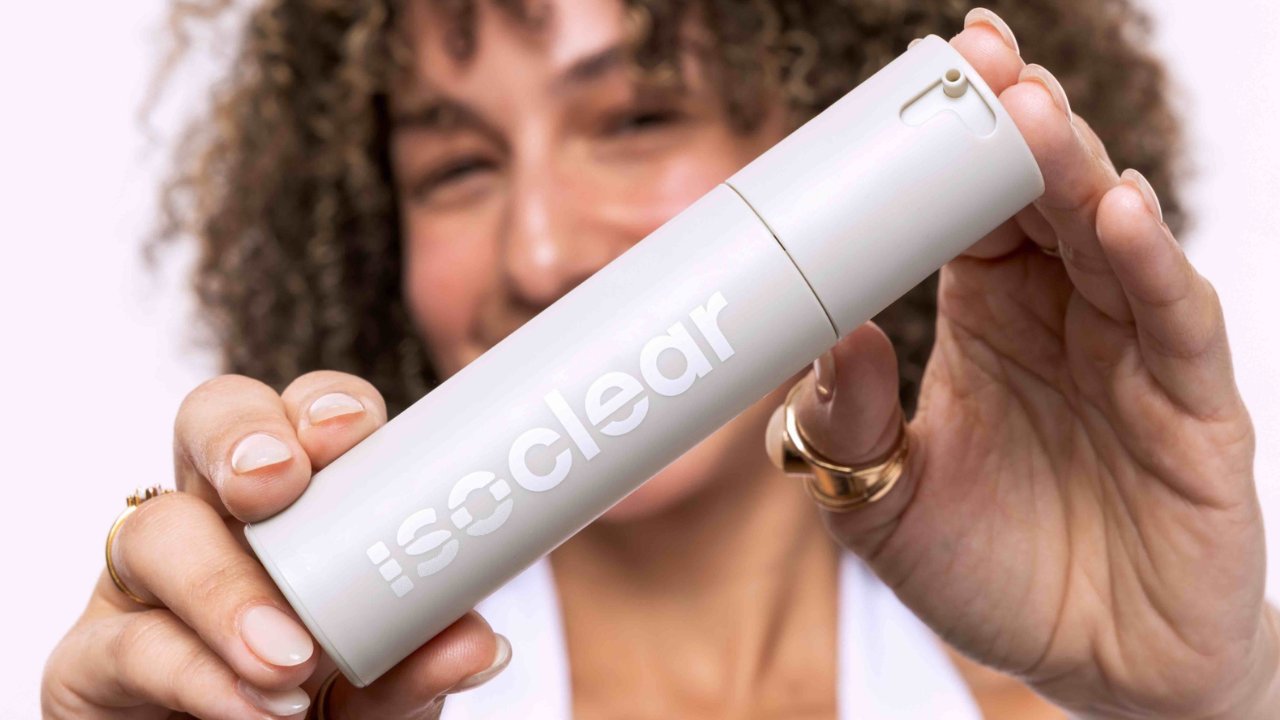
The U.S. prescription acne treatment market generated approximately $3.5 billion in 2025, yet the structural ceiling on isotretinoin's addressable patient base has remained largely unchanged for decades, constrained not by clinical efficacy but by regulatory friction. Clear Health is attempting to redraw that ceiling. The company's newly launched Isoclear regimen, priced at $40 per month or $480 annually, introduces topical isotretinoin to U.S. consumers for the first time as a commercially available prescription product, bypassing the FDA's iPLEDGE monitoring program that governs oral isotretinoin. The strategic logic extends well beyond dermatology. Isoclear is, at its core, a distribution architecture decision designed to expand Clear Health's total addressable market from an estimated 5 to 10 million severe acne sufferers to the 50 million Americans affected by acne in some form.
iPLEDGE Compliance Was Never a Clinical Problem, It Was a Funnel Problem
The oral isotretinoin market has long operated under a consent-and-monitoring framework that effectively filters out a significant share of otherwise eligible patients. iPLEDGE requires regular pregnancy testing for patients who can become pregnant, a requirement that functions as a conversion barrier regardless of clinical need. Clear Health CEO and co-founder Michael Chang has identified this compliance layer as the defining acquisition bottleneck for isotretinoin-based telehealth platforms, including his own. The platform's median patient age of 29 to 30, split evenly between male and female users, maps directly onto the demographic most likely to encounter iPLEDGE hesitancy, whether due to reproductive planning, privacy concerns, or simple friction aversion. Isoclear eliminates that barrier at the prescription stage while retaining the clinical authority of a dermatologist-guided protocol.
The $40 Price Point Is a Patient Lifetime Value Calculation
The $480 annual price point for Isoclear is not positioned against competitor topical retinoids. It is positioned against patient churn. Clear Health is structuring Isoclear as a graduated entry into its broader treatment ecosystem, one that culminates, for a subset of users, in transition to oral isotretinoin. The company's guarantee that patients completing four months of Isoclear without satisfactory results qualify for a covered oral consultation and first month of medication is a customer lifetime value mechanism. It converts an otherwise terminal non-response into a continuing clinical relationship. For investors including Mana Ventures, Republic Capital, and XRC Ventures, this architecture suggests a patient retention model built around treatment progression rather than single-episode prescribing, a meaningful distinction in a telehealth sector where acquisition costs remain elevated and differentiation by prescription formulary alone is increasingly difficult to sustain.
Formulation Stability Was the Barrier That Kept This Category Dormant
Topical isotretinoin is not a novel concept in global markets. Formulations have been commercially available outside the U.S. for years, and prior attempts to establish the category domestically were hampered by two converging factors: instability in the active compound under standard cosmetic formulation conditions, and the entrenched clinical position of tretinoin as the default topical retinoid. Chang argues that advances in encapsulation and formulation technology have now resolved the stability challenge, and that isotretinoin's tolerability profile, notably its reduced association with the surface irritation that tretinoin produces, gives topical isotretinoin a legitimate clinical differentiation argument rather than a purely regulatory one. If that claim holds under real-world dermatologist and patient scrutiny, it opens a category that has effectively been dormant in the U.S. market for a generation.
Brand Architecture, Not IP, Is the Defensibility Play in Telehealth Dermatology
The telehealth dermatology sector is approaching an inflection point in competitive consolidation. Platforms with undifferentiated prescription fulfillment models face margin compression as GLP-1 telehealth operators extend into adjacent categories and well-capitalized incumbents invest in proprietary formulation pipelines. Clear Health's public position, articulated directly by Chang, is that brand affinity rather than intellectual property defensibility will determine which platforms survive strategic consolidation. That thesis has M&A implications. A platform with an owned branded regimen, proprietary distribution architecture, and a demonstrated patient retention loop across multiple treatment modalities carries a materially different acquisition profile than a prescription relay service. XRC Ventures' Diana Melencio frames Isoclear as infrastructure for long-term patient engagement, language that maps cleanly onto the kind of recurring revenue narrative that attracts strategic acquirers. As MENA and APAC telehealth operators begin evaluating U.S. market entry or partnership targets, Clear Health's evolving portfolio reset positions it as a platform asset rather than a single-category prescriber. The acne category has been waiting for a company to architect its way out of the iPLEDGE bottleneck. Isoclear is the first credible attempt.
Rayane Mahmoud
Beauty market analyst covering trends, brands, and distribution shifts.