Hung Vanngo Rewires Complexion Category Logic For Premium Beauty at Sephora

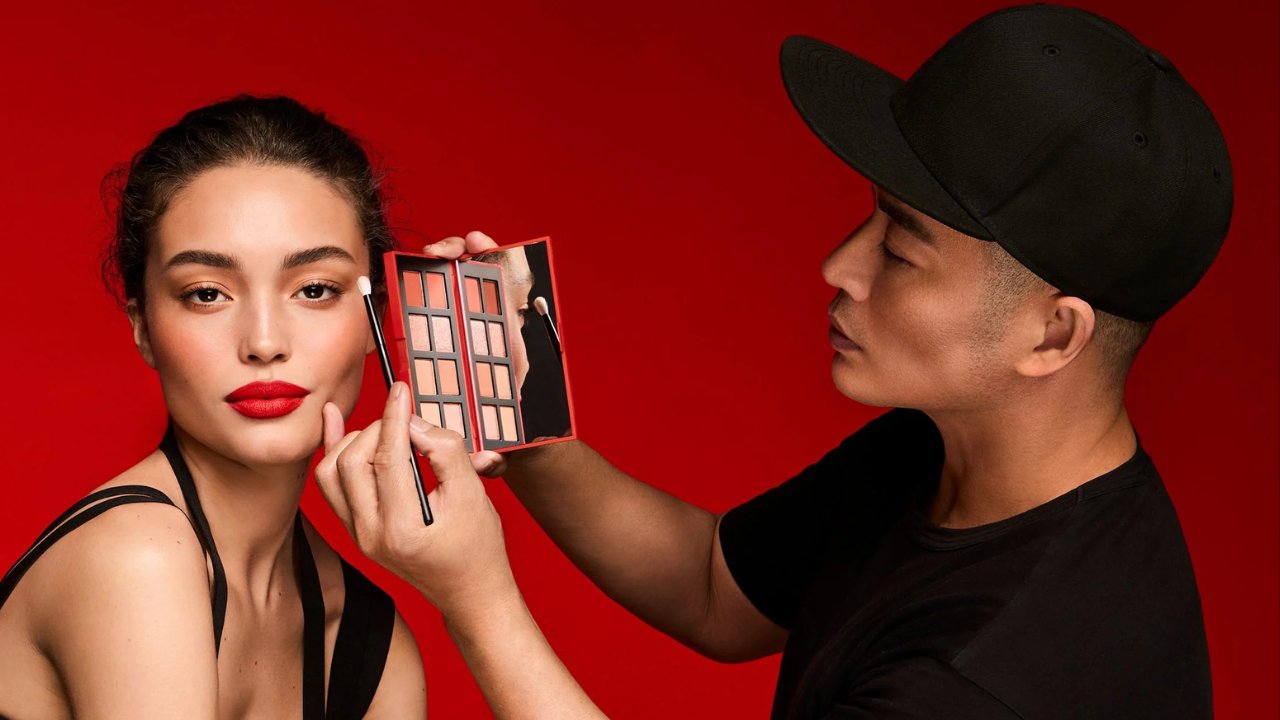
The global foundation market is projected to exceed $14.5 billion by 2028, yet the category's core friction point, undertone navigation, has remained structurally unsolved for decades. Hung Vanngo Beauty's July 13 launch of the Red Carpet Skin Luminous Foundation in 38 shades signals something more consequential than a product debut. It represents a deliberate portfolio architecture decision, a distribution timing strategy, and a category entry thesis that brand managers and prestige retail buyers should be reading carefully. Priced at $46 for the foundation and $36 for the accompanying Evolving Face Brush, the brand is entering complexion at a price point that sits squarely in the masstige-to-prestige corridor where Sephora's fastest-moving complexion SKUs compete.
The Undertone Problem as a Commercial Opportunity
Hung Vanngo Beauty CEO Samantha Kitain, a veteran of more than eleven years at Tarte Cosmetics and nearly five years across Vichy and SkinCeuticals at L'Oréal Group, has framed this launch around a specific consumer failure mode: the undertone selection error. Brand founder and celebrity makeup artist Hung Vanngo's position is that undertone mismatches, not shade depth errors, account for the majority of foundation returns and consumer dissatisfaction. The brand's response is architectural: reduce the selection variable to depth alone, eliminating undertone as a required input for the shopper.
This is not a small editorial choice. It is a direct challenge to the number-letter coding systems that Fenty Beauty, NARS, and MAC have normalized across prestige complexion. If Hung Vanngo Beauty's depth-only system demonstrates lower return rates and higher repurchase velocity at Sephora, expect competing brand managers to commission internal audits of their own shade architecture. The commercial implications for shelf productivity metrics are material.
For brand strategists and retail buyers tracking premiumization trends in complexion, Hung Vanngo Beauty's depth-only shade architecture, $46 price point, and Sephora distribution scale deserve close monitoring through Q3 2026.
Distribution Timing as Strategic Signal
Kitain's decision to hold the foundation launch until year two of the brand's Sephora and DTC rollout reflects a distribution discipline that is increasingly rare in the current celebrity-founder cycle. Hung Vanngo Beauty launched in September 2025 with lip, cheek, and eye color, building audience and retail data before committing to the capital intensity of 38 SKUs in a single complexion product. Foundation manufacturing at that shade count, sourced here from a Japanese contract manufacturer with demonstrated quality benchmarks, requires inventory commitment and retail floor space negotiation well in advance.
The sequencing mirrors the playbook that drove early prestige positioning for brands like Merit and Westman Atelier: establish hero categories, prove velocity, then expand into complexion with the retail leverage earned from initial performance. At Sephora, shelf adjacency and promotional priority are not guaranteed at launch. They are earned through turns data. Kitain understood this. The foundation is not an afterthought. By her own framing, if foundation is not the brand's biggest launch of the year, the brand is not executing correctly.
Investor Positioning and the M&A Context
Hung Vanngo Beauty carries backing from Unilever Ventures and True Beauty Ventures, a capital structure that positions the brand for either an accelerated growth trajectory or an eventual strategic consolidation event. Unilever Ventures has a demonstrated pattern of seeding prestige-adjacent brands ahead of broader Unilever portfolio integration decisions. True Beauty Ventures, co-founded by Connie Lo and Cristina Nuñez, brings a track record of backing founder-driven brands with strong community infrastructure, a profile that aligns with Vanngo's 4 million Instagram followers and 600,000 YouTube subscribers.
Hung Vanngo Beauty carries backing from Unilever Ventures and True Beauty Ventures, a capital structure that positions the brand for either an accelerated growth trajectory or an eventual strategic consolidation event.
The foundation launch expands the brand's total addressable market at retail and increases its revenue ceiling, two variables that matter significantly in any M&A diligence process. A brand that can demonstrate Sephora velocity across both color and complexion categories is a materially stronger acquisition target than one anchored to lip SKUs alone. The Japanese manufacturer relationship, confirmed to be producing additional launches through the balance of 2025, suggests the supply chain infrastructure is already scaling ahead of demand.
The Maximalist Shift and What It Means for Category Investment
Kitain's forecast of a cultural turn toward maximalism with restraint is not simply an aesthetic observation. It is a portfolio signal. Brands positioned around bold color payoff and high-impact finish, exactly where Hung Vanngo Beauty's hero products already sit, are likely to benefit from any consumer rotation away from the quiet luxury minimalism that dominated prestige beauty through 2023 and 2024.
For brand strategists and retail buyers tracking premiumization trends in complexion, Hung Vanngo Beauty's depth-only shade architecture, $46 price point, and Sephora distribution scale deserve close monitoring through Q3 2026. The next 90 days of sell-through data will determine whether this system reset has category-reshaping potential or remains a brand-level point of differentiation.
This article references and builds on original reporting by Lexy Lebsack for Glossy. Read the original piece here: https://www.glossy.co/beauty/exclusive-hung-vanngo-beauty-is-rethinking-shade-matching-with-first-foundation-launch/?utm_campaign=glossydis&utm_medium=rss&utm_source=general-rss. BeautyScale is a commercial agency; our editorial notes are commentary on industry reporting.
Rami Al Ariss
Beauty market analyst covering trends, brands, and distribution shifts.