Fragrance's $18B Realignment: How Indies Fracture Prestige Distribution Networks
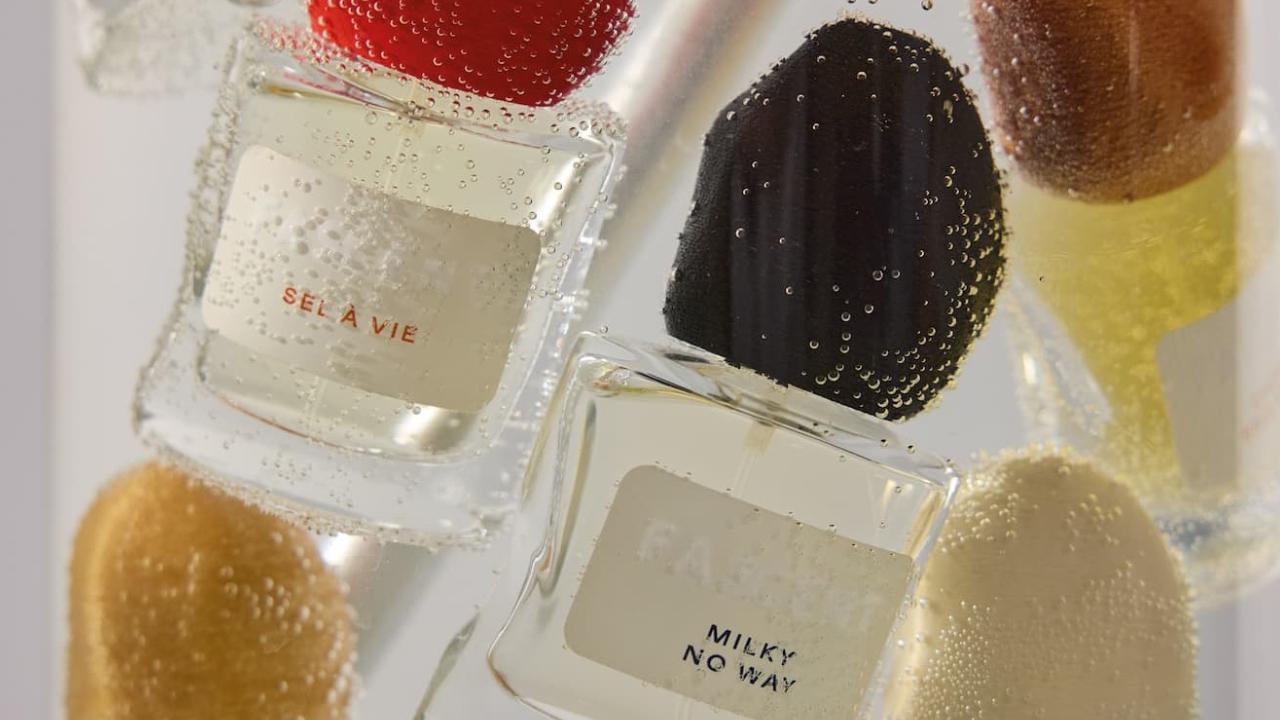
Prestige fragrance posted 7% category growth in Q1 2026, according to Circana, and the capital flowing toward independent fragrance labels continues to validate what category managers and M&A desks have quietly understood for two years: the fragrance segment is structurally outperforming the broader beauty market. Into that environment steps Fascent, the Paris-founded indie fragrance brand that has closed a 1.3 million euro angel round (approximately $1.5 million) as it tracks toward $2.3 million in annual sales. The raise is the brand's first institutional-facing capital event, and its structure reveals as much about current founder strategy as it does about fragrance's continued investor appeal.
The Angel Thesis: Expertise Over Institutional Capital
Fascent co-founders Fanny Descamps and Edwina Réthoré built their operating credibility inside some of the industry's most rigorous houses, including Diptyque, Guerlain, Firmenich, and CPL Aromas under the LVMH orbit. That pedigree informed a deliberate financing choice: the pair declined a term sheet from a traditional investment fund, ultimately assembling 14 angel investors drawn from the executive ranks of Coty, Jacquemus, Firmenich, and Elle International.
This is a structurally significant decision. At sub-$5M revenue scale, founder-facing angels with functional fragrance or retail expertise can accelerate retail conversations, supply chain access, and press relationships in ways that generalist growth funds simply cannot. Descamps and Réthoré are optimizing for velocity and alignment, not just capital efficiency, and the 300% year-over-year growth figure suggests the approach is yielding commercial results.
Distribution Architecture: The U.S. Buildout Logic
Fascent's current U.S. retail presence spans Revolve, Credo, Luckyscent, and Arielle Shoshana, with Anthropologie and Ministry of Scent entering this summer. Across all markets, the brand operates across nearly 400 doors in 30 countries, a footprint that represents meaningful global exposure for a label only three years old.
The planned U.S. warehouse investment is the critical infrastructure play here. Building domestic logistics capacity before a major account breakthrough, rather than after, is the operational discipline that separates brands capable of absorbing a Sephora or Ulta onboarding from those that implode under order volume. Descamps has named Sephora explicitly as a priority retail target. Given Sephora's current fragrance merchant strategy, which continues to prioritize prestige accessibility and storytelling-led assortment, Fascent's positioning at $78 per 30ml sits precisely in the masstige corridor that Sephora's buyers are actively curating.
The incoming 10ml format, slated for late 2026, is a textbook premiumization ladder move. Smaller entry-price SKUs lower the consumer acquisition cost on shelf while protecting the brand's unit economics at full size. Paired with the planned 80ml rollout in 2027, Fascent is constructing a portfolio architecture designed for tiered retail environments rather than single-channel dependency.
Competitive Set and Category Positioning
The fragrance funding cohort now includes Perfumer H, Orebella, Elorea, and Henry Rose, each pursuing distinct positioning within a crowded prestige-to-masstige spectrum. Fascent's differentiator is a combination of sustainability-forward materials (recycled glass, FSC-certified packaging, bioplastic caps), a French-heritage story with deliberate cultural playfulness, and price positioning accessible enough to attract a Revolve consumer while retaining the olfactory credibility of a Credo placement.
The launch of Corn Star, formulated with the U.S. gourmand consumer as explicit muse, signals commercial intelligence about the American fragrance palate without compromising the brand's European sensibility. That calibration matters for any brand seeking to expand its retail network from specialty into broader mid-tier accounts without triggering brand equity erosion. The balance is difficult to maintain at scale, and how Fascent manages it through the next distribution phase will define its long-term prestige positioning ceiling.
What the Next 18 Months Will Determine
Fascent now holds the capital, the operational infrastructure roadmap, and a retail trajectory that positions it as a plausible acquisition target for a mid-tier fragrance portfolio operator within a two-to-three year window. Strategic consolidation in the independent fragrance space is accelerating, with larger houses seeking incubated labels that carry both community equity and proven multi-market distribution.
The brand's next inflection point will arrive not from the angel round itself, but from whether the Anthropologie entry converts to a meaningful scale-up and whether the U.S. warehouse investment is executed before the Sephora conversation materializes rather than after. Brands that solve distribution architecture before prestige positioning create the durable operational foundation that acquirers actually pay a premium to own.
This article references and builds on original reporting by Taylor Bryant for Beauty Independent. Read the original piece here: https://www.beautyindependent.com/french-fragrance-brand-fascent-raises-fuel-growth/. BeautyScale is a commercial agency; our editorial notes are commentary on industry reporting.