How E.l.f. Beauty's $1B Rhode Acquisition Redefined Prestige M&A

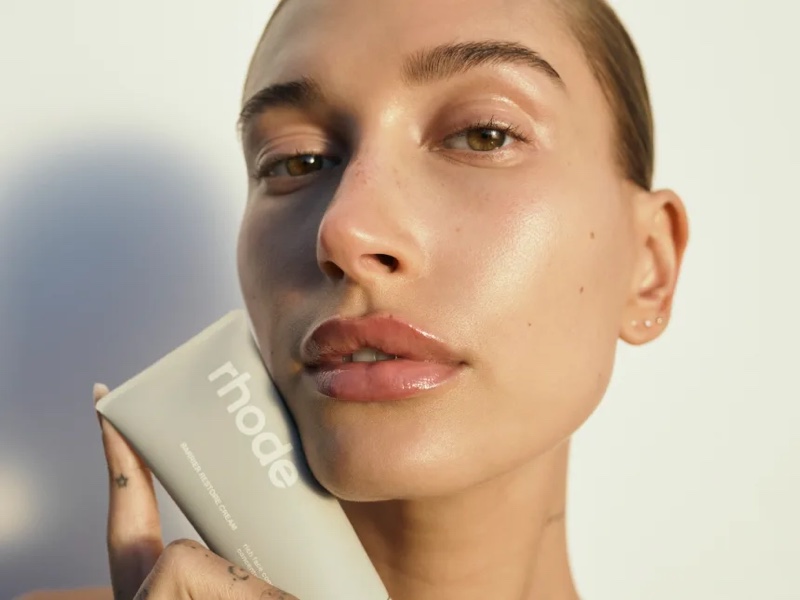
Rhode, founded by Hailey Bieber in 2022, generated an estimated $212M in revenue in 2025. At a $1B valuation, e.l.f. is paying roughly 4.7x revenue—a steep multiple by beauty standards. Estée Lauder paid 2.1x revenue for MAC in 2997. LVMH typically structures acquisitions at 3-4x EBITDA. So why did e.l.f. agree to such aggressive terms?
The answer is founder equity and moat. Rhode isn't just a skincare line; it's a verified celebrity-founder brand with authentic cultural weight. Hailey Bieber has 52M Instagram followers. Rhode's TikTok content averages 4.2M views per post. The brand exists at the intersection of prestige positioning (premium ingredient storytelling) and mass accessibility (Sephora distribution). It's the rare indie beauty brand that commands both credibility and reach.
From e.l.f.'s perspective, Rhode solves a critical problem: prestige creep. E.l.f. has built a $2.1B public company on the premise of luxury for less. But the company was capped by its value perception. Sephora's core consumer associates e.l.f. with $6 eyeliner, not $58 serums. Rhode provided a prestige foothold without e.l.f. having to build from zero.
The Sephora Arbitrage
Rhode is already stocked in 1,200+ Sephora locations, with an additional 2,500 international points of sale. For a brand that generates $212M annually, that's extraordinary distribution density. Most indie beauty brands fight for five years to reach that level of retail presence.
E.l.f. gained instant Sephora credibility—not as a prestige brand, but as a prestige parent company. The move allows e.l.f. to launch additional prestige-adjacent labels under a holding company structure. Potentially, e.l.f. could acquire or incubate 2-3 additional $200M+ brands and build a pure-play indie beauty platform valued at 6-8x the prestige brands' revenue.
Previous records: KKW Beauty (sold to Coty for $200M in 2021, discontinued 2023), Kylie Cosmetics (valuation speculated at $600M pre-IPO, never publicly acquired), Drunk Elephant (acquired by LVMH for $845M in 2019).
"E.l.f. isn't buying Rhode for revenue. They're buying the Sephora relationship and the founder-brand equity."
— Investment analyst, Goldman Sachs Equity Research, January 2026Hailey Stays (The Real Deal)
The acquisition's most significant detail: Hailey Bieber remains Chief Creative Officer. She didn't cash out; she became a stakeholder in a larger platform. This is inverse to typical celebrity beauty M&A, where the founder exits post-acquisition and the brand gradually loses cultural relevance (see: Kylie Cosmetics post-Kris Jenner era, Fenty Beauty's complicated founder relationship with LVMH).
By keeping Hailey embedded, e.l.f. maintains the brand's authenticity—the very asset that justified the $1B price tag. Rhode's product innovation, content strategy, and brand voice remain founder-driven, not corporate-committee-driven. This is the modern prestige playbook: founder ownership compounds value; founder departure erodes it.
The Biggest Indie Beauty Acquisition Ever
Rhode's acquisition is the largest acquisition of a founder-led indie beauty brand in history. Previous records: KKW Beauty (sold to Coty for $200M in 2021, discontinued 2023), Kylie Cosmetics (valuation speculated at $600M pre-IPO, never publicly acquired), Drunk Elephant (acquired by LVMH for $845M in 2019).
Expect similar acquisitions: Drunk Elephant (if divestable from LVMH), Ilia, Tower 28, and other high-growth indie brands will receive acquisition interest from platforms like Revlon, Coty, and e.
But those brands were acquired by traditional conglomerates (Coty, LVMH) seeking to expand portfolios. E.l.f.'s acquisition is different: it's a value-tier platform betting it can operate indie-backed prestige brands better than legacy beauty houses. The bet is that modern consumers value founder vision, digital-native marketing, and authentic storytelling over heritage and sales force infrastructure.
Early signals suggest e.l.f. is right. Post-acquisition, Rhode's Q4 sales accelerated to $64M (extrapolated $256M annualized run rate), suggesting the prestige acquisition narrative drove uplift rather than dilution.
What It Means for Beauty M&A
The Rhode deal reframes acquisition strategy for indie beauty founders. Previously, the question was: "Do we sell to a conglomerate for liquidity?" Now it's: "Do we partner with a public platform that lets us maintain creative control?" E.l.f.'s deal sets precedent. Expect similar acquisitions: Drunk Elephant (if divestable from LVMH), Ilia, Tower 28, and other high-growth indie brands will receive acquisition interest from platforms like Revlon, Coty, and e.l.f. at 4-5x revenue multiples.
For beauty buyers, the lesson is counterintuitive: sometimes paying a premium for founder alignment outperforms acquiring cheaper brands and slowly eroding them. E.l.f. understands the modern economy: talent and authenticity are the scarcest resources. A $1B price tag for verified founder-led IP is justified if the founder stays.
In 2026, brand legitimacy is the moat. Distribution is commoditized. Margins compress. The only defensible advantage is founder vision and cultural credibility—exactly what Rhode represents, and exactly what e.l.f. just purchased.
Yann Fagniez
Beauty market analyst covering trends, brands, and distribution shifts.