e.l.f. Beauty Acquires Rhode: $1.1B Deal Signals Prestige Portfolio Expansion

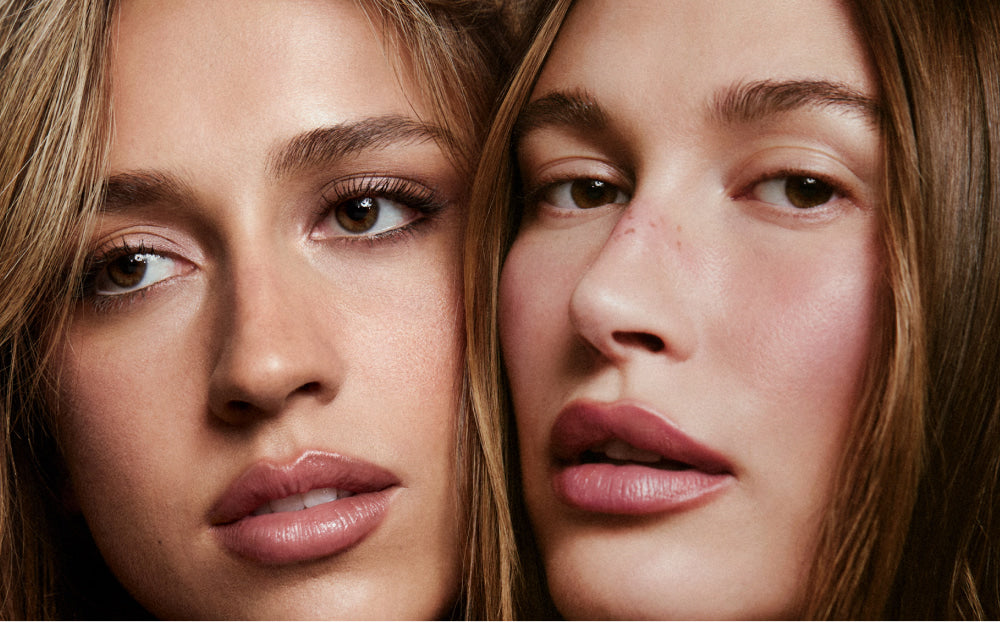
Rhode generated an estimated $180 million in net sales during its second full year of operations, driven primarily by its Peptide Glazing Fluid and Barrier Restore Cream — two hero SKUs that command $29 and $30 price points respectively and maintained consistent top-10 rankings in Sephora's skincare bestseller category throughout 2024. The brand's distribution footprint remains deliberately constrained to Sephora, Rhode's DTC channel, and select international partners including Mecca in Australia and Cult Beauty in the UK, a prestige positioning strategy that contrasts sharply with e.l.f.'s mass retail omnipresence. Tarang Amin stated in the acquisition announcement that Rhode's "founder authenticity, product efficacy, and proven ability to convert social engagement into sustained revenue growth" aligned with e.l.f.'s data-driven approach to brand building, though industry analysts note the deal primarily secures access to Hailey Bieber's 54 million Instagram followers and her demonstrated ability to drive product virality without traditional media spend.
Distribution Architecture Implications
The acquisition immediately grants e.l.f. entry into Sephora's prestige skincare assortment — a channel the company has pursued unsuccessfully for over a decade despite its color cosmetics momentum in mass retail. Rhode will continue operating as a standalone brand with existing leadership intact, including co-founder Hailey Bieber retaining a minority equity stake and serving as Chief Creative Officer, while reporting into e.l.f.'s newly created Prestige Division led by former Drunk Elephant executive Sarah Bryden-Brown. The deal structure mirrors Procter & Gamble's $1 billion Tula acquisition in 2022 and Estée Lauder's $1.45 billion DECIEM purchase, both of which sought to bolt digitally-native brands onto legacy portfolios struggling with organic growth deceleration. e.l.f.'s distribution architecture will now span Ulta Beauty, Target, Walmart, CVS, Amazon, and Sephora — creating unprecedented channel coverage for a single corporate parent and positioning the company to capture consumer trade-up behavior as discretionary spending patterns normalize post-inflation.
Valuation Concerns and International Expansion
The $1.1 billion valuation has drawn skepticism from equity analysts who note Rhode's limited SKU assortment (currently 12 products), nascent international presence, and uncertain brand equity trajectory beyond Bieber's personal involvement in creative direction and marketing. However, e.l.f.'s management emphasized Rhode's 43% repeat purchase rate among DTC customers and its 89% year-over-year growth in APAC markets through third-party distribution partnerships as evidence of scalable infrastructure beyond celebrity founder dependence. The acquisition provides e.l.f. with immediate scale in premium skincare as the category continues premiumization trends, with the global prestige skincare market projected to reach $42 billion by 2028 at a 9.2% CAGR according to Euromonitor International data.
Strategic Consolidation Accelerates
This transaction confirms that portfolio consolidation increasingly transcends traditional channel boundaries, with mass beauty operators acquiring prestige assets to capture full consumer lifetime value as channel distinctions erode and omnichannel distribution becomes table stakes. e.l.f.'s acquisition of Rhode positions the company to compete directly against Estée Lauder Companies, L'Oréal, and Unilever's prestige portfolios while maintaining its mass market leadership — a dual-channel strategy that will define beauty industry M&A activity through 2026 as independent brands face mounting pressure to either scale distribution or exit to strategic buyers with existing retail infrastructure.
Martin Jacob
Beauty market analyst covering trends, brands, and distribution shifts.