E.l.f. Brands Targets a $68B Market: What the e.l.f. POP Launch Signals for Masstige Distribution and Portfolio Architecture

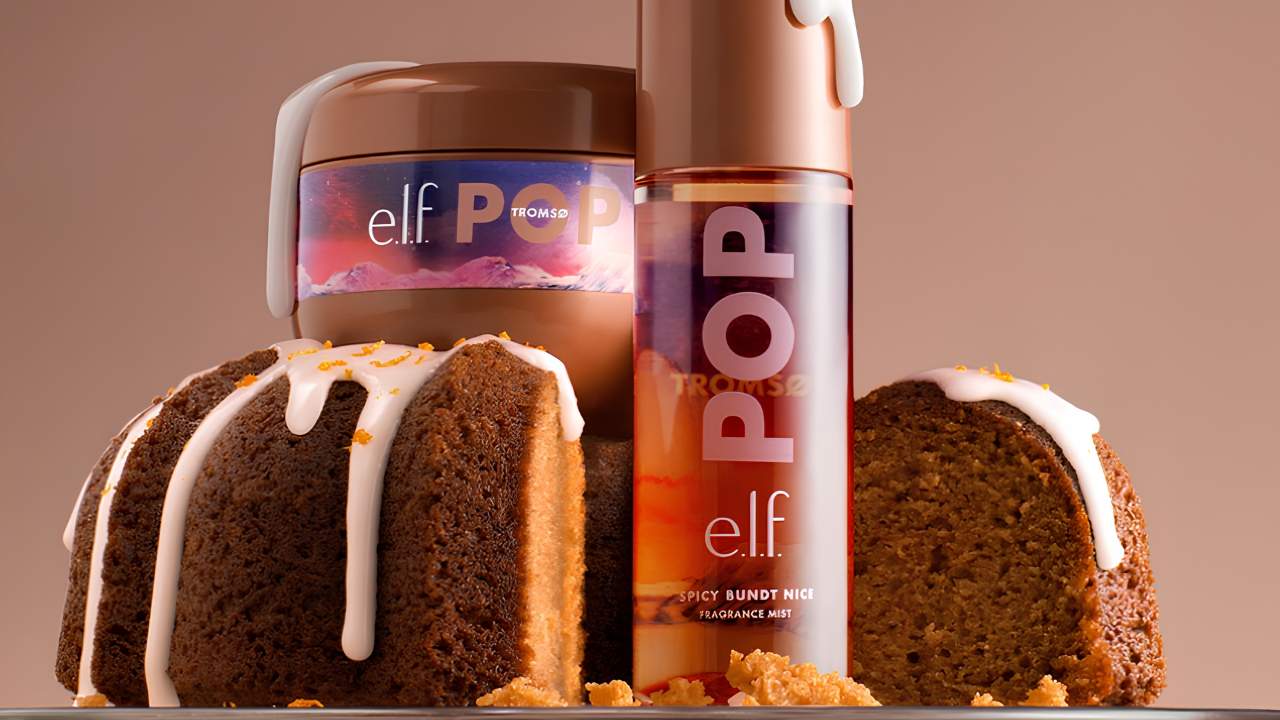
The global fragrance market is projected to reach $68 billion by 2028, expanding at a CAGR of approximately 5.9%, and the brands moving fastest into that space are not the legacy fragrance houses. E.l.f. Brands, which generated $1.04 billion in net sales for fiscal year 2024, has entered fragrance and body care under a new sub-brand, e.l.f. POP, debuting with a limited edition autumn/winter collection inspired by Tromsø, Norway. The launch is not a category experiment. It is a deliberate architecture decision, one that signals a portfolio reset with meaningful implications for distribution strategy, retail positioning, and the brand's long-term valuation trajectory. For beauty industry observers tracking masstige premiumization, e.l.f. POP deserves closer structural analysis than its sensorial marketing narrative suggests.
The H&M Collaboration Was a Distribution Proof Point, Not a One-Off
E.l.f. Brands' limited edition fragrance collaboration with H&M earlier in 2024 functioned less as a brand awareness play and more as a controlled test of consumer demand within a non-traditional beauty retail environment. The collaboration placed fragrance product in a fashion distribution architecture, reaching a consumer cohort that overlaps with e.l.f.'s core demographic but shops through apparel-first channels. The market response, described by Chief Marketing Officer Oshiya Savur as generating significant community excitement, provided the commercial signal the brand needed to justify category entry at scale. E.l.f. POP is the proprietary answer to that external validation.
This sequencing matters. Rather than entering fragrance through a licensed model or an M&A play, e.l.f. Brands is building category equity organically, retaining margin architecture and brand control. That approach aligns with the company's established playbook of high-quality, accessible formulations delivered without the royalty drag that encumbers many licensed fragrance programs at the masstige tier.
Fragrance and body care historically command higher average unit retail than color cosmetics at equivalent mass price points, which would improve category revenue per square foot if retail partners assign dedicated adjacency.
Prestige Positioning Through Geographic Storytelling
The Tromsø collection is not simply a product. It is a positioning instrument. By anchoring the debut fragrance line to a Nordic destination with strong prestige associations, e.l.f. POP is borrowing equity from a geographic aesthetic that connotes quality, restraint, and aspiration, without the price barrier that accompanies Maison Margiela or Byredo. This is textbook premiumization at the masstige tier: leveraging cultural signifiers that resonate with prestige consumers while maintaining the price accessibility that defines e.l.f.'s competitive advantage in mass-distributed beauty.
The limited edition launch structure further enforces scarcity mechanics associated with prestige rather than mass. Future Tromsø successors, presumably other international destinations, would create a franchise model capable of sustaining retail floor rotation, generating repeat engagement at point of sale, and delivering seasonal sell-through velocity that appeals to key account buyers at Target, Walmart, and Ulta Beauty.

Distribution Architecture Is the Strategic Variable to Watch
E.l.f. Cosmetics currently occupies one of the most efficient distribution architectures in U.S. mass beauty, with shelf presence across more than 60,000 doors domestically and growing penetration in APAC and MENA. The introduction of e.l.f. POP creates a portfolio segmentation question that category managers at retail will need to resolve quickly. Does the body care and fragrance line sit adjacent to e.l.f. Cosmetics in existing planogram space? Does it qualify for incremental shelf allocation in a different department? Does it open conversations with specialty beauty retailers where e.l.f. Skin has already established a foothold?
The addition of fragrance and body care to a portfolio that already spans color, skin, and hair moves the enterprise closer to the diversified brand architecture that supports premium valuation multiples in beauty M&A.
Each scenario carries different margin and velocity implications. Fragrance and body care historically command higher average unit retail than color cosmetics at equivalent mass price points, which would improve category revenue per square foot if retail partners assign dedicated adjacency. Investors tracking e.l.f. Beauty's stock, which has faced pressure following its fiscal year 2025 guidance revision, should note that category diversification of this kind carries long-term gross margin expansion potential that is not yet priced into near-term sentiment.
The Broader Implication: Category Expansion as Valuation Infrastructure
E.l.f. Brands is constructing a multi-category beauty company, not a cosmetics brand with extensions. The addition of fragrance and body care to a portfolio that already spans color, skin, and hair moves the enterprise closer to the diversified brand architecture that supports premium valuation multiples in beauty M&A. Comparable multi-category platforms at the masstige tier have attracted acquisition interest from strategic buyers including Unilever, Beiersdorf, and L'Oreal at multiples that single-category brands cannot command.
Whether e.l.f. Brands pursues independence or positions the expanded portfolio for strategic consolidation, the category build is creating optionality. E.l.f. POP's success or failure in fragrance over the next two to three retail cycles will determine how credibly that optionality can be exercised.
This article references and builds on original reporting by Cosmetics Business. Read the original piece here: https://cosmeticsbusiness.com/e-l-f-breaks-into-fragrance-and-body-care-with-elf-pop. BeautyScale is a commercial agency; our editorial notes are commentary on industry reporting.
Nya Ravel
Beauty market analyst covering trends, brands, and distribution shifts.