Curology x Dove Cameron: A $15M Launch Tests the Limits of Masstige Distribution in a Saturated Skincare Market

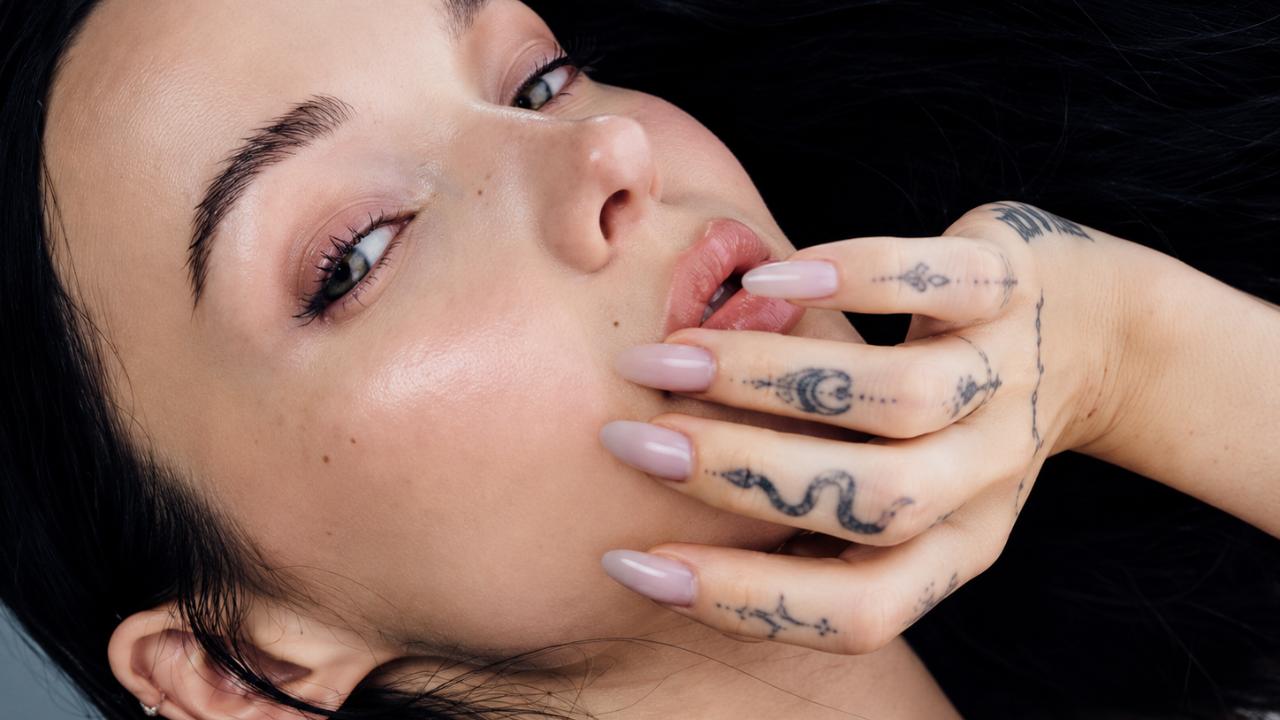
The U.S. prestige skincare market posted $8.2 billion in retail sales in 2023, yet the fastest commercial momentum is accumulating not at the luxury ceiling but in the masstige corridor, where clinical credibility meets accessible price architecture. Curology's collaboration with multiplatform artist Dove Cameron, projected by industry sources to generate $15 to $20 million in first-year revenue, is less a celebrity co-sign story and more a deliberate distribution and positioning play from a brand managing a consequential identity inflection point. With a three-drop product roadmap, a direct-to-consumer launch, and retail expansion signaled but unconfirmed, the strategic ambiguity here is as telling as the launch itself.
The Celebrity Partnership as Portfolio Reset Signal
Curology's decision to partner with Cameron marks its first collaboration with a non-clinician, a meaningful departure from a brand architecture built entirely around licensed dermatology providers and prescription-grade customization. Founded in 2014, the company built its core equity on more than 7,000 proprietary formulas addressing acne, dermatitis, alopecia, and fine lines, sold through a hybrid DTC and mass retail footprint spanning Target, Walmart, CVS Pharmacy, and Amazon. That distribution architecture positions Curology squarely in mass-accessible territory, yet its clinical heritage carries genuine prestige signaling. The Cameron partnership is designed to bridge those two identities without compromising either.
CEO Kathy Savitt characterized the collaboration as a response to ingredient and marketing commoditization across the skincare category. That diagnosis is accurate. The proliferation of ceramide, niacinamide, and peptide-forward messaging has created positioning fatigue at every price tier, and brands relying on functional ingredient storytelling alone are losing shelf differentiation at an accelerating rate. Curology's counter-move is to reframe its clinical positioning through the lens of accessible ritual rather than clinical complexity, using Cameron's documented engagement with skincare as a consumer-facing proof point rather than a manufactured endorsement.
Curology's decision to partner with Cameron marks its first collaboration with a non-clinician, a meaningful departure from a brand architecture built entirely around licensed dermatology providers and prescription-grade customization.
Premiumization Strategy Compressed Into a $12 to $50 Price Band
The Ethereal Glow collection, the first of three planned drops, opens at $12 per unit and tops out at $50 for the full set. That pricing architecture is deliberate and strategically constrained. It keeps the line accessible to the broadest consumer cohort while remaining above the commodity floor that defines mass-market private label and wholesale brands. The decision to resist premiumization to a higher price ceiling reflects a calculated judgment that volume velocity, not margin maximization, is the primary first-year objective.
That judgment carries distribution implications. The brand's existing retail partners, including Walmart and CVS Pharmacy, are optimized for exactly this price band and consumer profile. A pivot into Sephora or Ulta Beauty's prestige zones would require either repricing or a separate sub-brand strategy, neither of which Savitt's comments suggest is imminent. For investors watching Curology's trajectory, the retail expansion language without specifics is the live variable. Placement decisions in the next 12 months will signal whether the brand intends to defend its mass-accessible position or architect a bifurcated distribution model across distinct retail tiers.

Distribution Architecture as the Underreported Strategic Variable
The decision to launch Curology x Dove Cameron as a DTC-first collection before confirming retail placement is consistent with a broader industry pattern of using direct channels to validate product-market fit before committing to wholesale margin structures. That approach also preserves negotiating leverage with retail buyers. A first-year sellthrough rate above forecast gives Curology measurable data to bring to Target or Walmart for expanded shelf placement, or to initiate conversations with Ulta Beauty about a masstige adjacency.
Curology's collaboration strategy, combined with its existing clinical platform and expanded retail footprint, places it in a profile range that strategic acquirers in the prestige and masstige corridor are actively monitoring.
The three-drop roadmap introduces a further strategic consideration. Sequential drops with distinct identities allow the brand to test channel performance, consumer response, and price sensitivity across each release rather than committing to a single positioning statement at launch. Two additional collections scheduled for 2025 create a runway for distribution architecture refinement in real time.
What This Signals for M&A and Category Positioning
Curology's collaboration strategy, combined with its existing clinical platform and expanded retail footprint, places it in a profile range that strategic acquirers in the prestige and masstige corridor are actively monitoring. Companies including Unilever, L'Oreal Group, and Galderma have demonstrated appetite for DTC brands with clinical heritage and documented retail scalability. A brand achieving $15 to $20 million in incremental first-year revenue through a celebrity collaboration, while maintaining clinical differentiation, is precisely the asset profile that activates acquisition conversations in a consolidating market.
The more immediate question is whether Curology can convert the cultural visibility of the Cameron partnership into durable category positioning rather than a single-cycle revenue event. The three-drop architecture, if executed with consistent creative identity and supported by retail expansion, provides the structural conditions for the former. Execution will determine which outcome the market assigns.
This article references and builds on original reporting by Kaleigh Werner for WWD. Read the original piece here: https://wwd.com/beauty-industry-news/skin-care/dove-cameron-curology-skin-care-line-1239381828/. BeautyScale is a commercial agency; our editorial notes are commentary on industry reporting.
Rami Al Ariss
Beauty market analyst covering trends, brands, and distribution shifts.