Coty's Fragrance Club Signals a $58B Category Play: Community Infrastructure as Brand Strategy

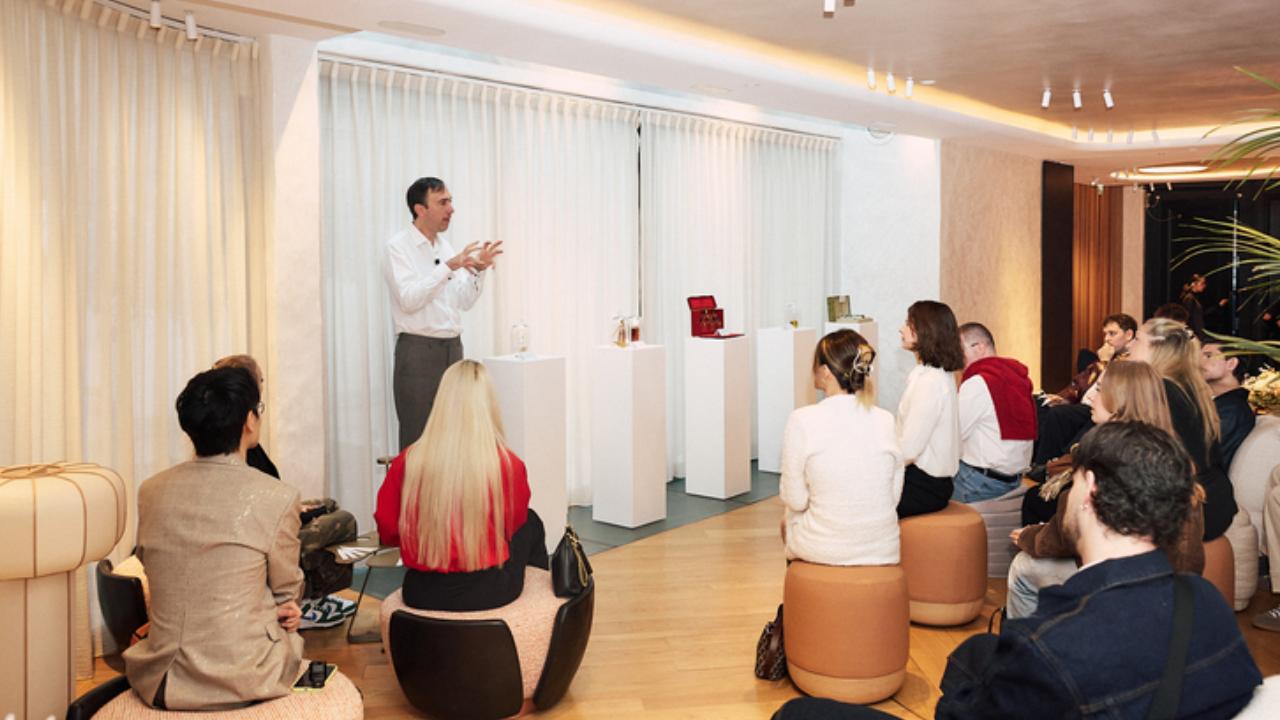
The global fragrance market is projected to reach $58.7 billion by 2027, compounding at a 5.4% CAGR as prestige positioning increasingly drives category growth ahead of color cosmetics and skincare. Against that backdrop, Coty's October 15 launch of the Coty Fragrance Club in Paris reads as considerably more than a community relations initiative. It represents a structural investment in consumer intelligence architecture at a moment when fragrance discovery has migrated decisively to digital channels, and when the brands that own those discovery pipelines will own the next decade of market share.
The move carries direct implications for Coty's distribution architecture, portfolio positioning, and competitive standing within a fragrance segment that generated approximately 40% of Coty Prestige's net revenue in fiscal 2025.
Discovery Disruption Is a Distribution Problem
TikTok now ranks as the primary fragrance discovery channel for Gen Z consumers globally, a shift that has fundamentally altered the purchase funnel for prestige and masstige product tiers alike. That transformation is not merely a marketing challenge. It is a distribution architecture challenge. When influence flows through creators and community educators rather than retail floor staff or editorial glossies, the traditional department store model of prestige fragrance loses its gatekeeping function.
Coty's fragrance business enters 2026 with licensing renewals, a premiumization mandate from investors, and a competitive set that includes LVMH, Puig, and Interparfums, all of whom are deploying capital aggressively into fragrance.
Coty, whose fragrance portfolio includes Gucci, Burberry, Marc Jacobs, and Calvin Klein licenses, operates across both prestige and mass distribution simultaneously. The Fragrance Club positions Coty's internal teams in direct, continuous dialogue with the external voices that now govern consumer discovery. Jean Holtzmann, Chief Brands Officer at Coty Prestige, framed it precisely: "New communities and voices are changing how people discover, understand and experience scent."
That is a candid acknowledgment that brand strategy can no longer be formulated exclusively inside the building.
Community as Competitive Intelligence Infrastructure
What distinguishes the Fragrance Club from conventional influencer marketing programs is its structural permanence and its deliberate inclusion of perfumers alongside creators. Participants at the Paris launch engaged directly with Nathalie Lorson, Fabrice Pellegrin, Amandine Clerc-Marie, and three additional master perfumers, pairing technical craft credibility with cultural fluency. That combination matters for Coty's premiumization agenda.

The beauty industry's most durable premiumization plays, Estee Lauder's fragrance vertical, L'Oreal's acquisition of Aesop, Puig's consolidation of Rabanne and Carolina Herrera, have all rested on protecting the perception of expertise while broadening cultural accessibility. Coty is attempting a structurally similar outcome through community infrastructure rather than M&A. At a company carrying approximately $4.2 billion in net debt as of its most recent fiscal year, organic intelligence-gathering programs carry a meaningfully lower capital cost than strategic consolidation.
The move carries direct implications for Coty's distribution architecture, portfolio positioning, and competitive standing within a fragrance segment that generated approximately 40% of Coty Prestige's net revenue in fiscal 2025.
Portfolio Reset Logic Embedded in the Launch
The club's inaugural geography (Europe, the UK, the US, and China) maps cleanly onto Coty's highest-revenue prestige fragrance markets and signals where the company is prioritizing portfolio reset activity. China's inclusion is particularly instructive. APAC fragrance premiumization is accelerating, with Chinese consumers demonstrating strong affinity for niche and artisanal positioning, a segment where Coty's current licensed portfolio has limited coverage.
Sustained dialogue with Chinese fragrance community leaders provides Coty with qualitative consumer intelligence that quantitative retail data cannot capture, particularly around olfactive preferences and cultural storytelling frameworks that diverge meaningfully from Western positioning. That intelligence pipeline could inform both product development and potential licensing or acquisition targets in the mid-premium tier, where the gap in Coty's portfolio is most visible.
What Comes Next Determines Whether This Is Strategy or Theater
The Fragrance Club's long-term value will be determined entirely by how Coty operationalizes the intelligence it generates. Community programs that feed directly into product briefs, distribution prioritization, and retail sell-in narratives create compounding competitive advantage. Those that function as brand visibility exercises produce press releases and little else.
Coty's fragrance business enters 2026 with licensing renewals, a premiumization mandate from investors, and a competitive set that includes LVMH, Puig, and Interparfums, all of whom are deploying capital aggressively into fragrance. The Fragrance Club gives Coty a differentiated mechanism for consumer and cultural intelligence, but only if the insights flow upstream into brand architecture decisions. The brands that will lead the next cycle of fragrance growth are those treating community not as a marketing channel, but as a strategic input into every layer of the business, from formulation to shelf placement to M&A thesis.
This article references and builds on original reporting by coty.com. Read the original piece here: https://www.coty.com/news/coty-launches-global-fragrance-club. BeautyScale is a commercial agency; our editorial notes are commentary on industry reporting.
Nya Ravel
Beauty market analyst covering trends, brands, and distribution shifts.