Clean Sun Care's $24B Inflection Point: Why Mineral-First Brands Like SNDY SKN Are Rewriting Australian SPF's Distribution Architecture

The global sun care market is on trajectory to reach $24.9 billion by 2030, compounding at a 5.3% CAGR, and the most consequential growth vector is not SPF innovation in isolation. It is the structural convergence of sun care and prestige skincare, a category collision that is quietly producing a new class of challenger brands positioned to capture both pharmacy shelf space and premium DTC margins simultaneously.
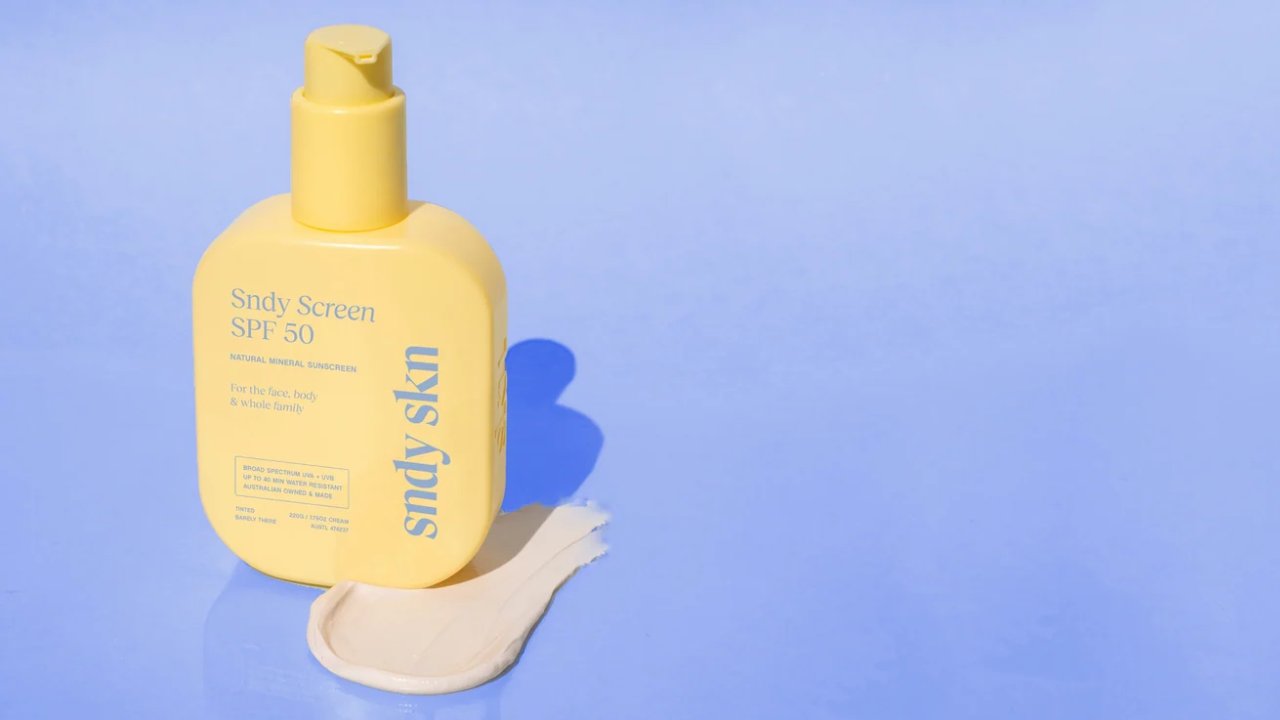
SNDY SKN, the Australian-made, female-founded mineral SPF label, is a precise expression of this shift. Built around 100% mineral UV filtration, non-nano zinc oxide, and a formulation philosophy that deliberately excludes the 12 synthetic actives commonly designated as the "dirty dozen," the brand occupies the intersection of clean beauty conviction and clinical credibility. That positioning carries significant commercial implications well beyond its current DTC footprint.
The Masstige Window Is Open, and Mineral SPF Owns It
Prestige positioning in sun care has historically been captured by legacy dermatological brands, EltaMD, La Roche-Posay, and Avène among them. What is shifting is the consumer demand for masstige entry points that do not require a trade-off between ingredient transparency and broad-spectrum efficacy. SNDY SKN's formulation architecture, zinc oxide as primary UV blocker paired with hyaluronic acid hydration and Kakadu Plum antioxidant complex, reflects exactly the kind of multi-benefit stacking that wholesale buyers at premium pharmacy groups and specialty beauty retailers are actively sourcing.
The brand's family-safe claim, validated for use from infants 6 months through pregnancy, extends its addressable SKU penetration across multiple retail fixture categories simultaneously. That horizontal reach is a meaningful conversation starter in distribution negotiations, particularly with grocery-pharmacy hybrid formats that are expanding their premium health and beauty allocations across APAC.
Distribution Architecture as the Next Strategic Variable
SNDY SKN is currently operating in a DTC-first configuration, standard for founder-led clean beauty labels at early growth stage. The strategic question for 2025 and beyond is sequencing: when and how the brand moves into retail distribution without diluting the prestige positioning it has built through controlled channel exclusivity.
The Australian premium pharmacy channel, led by Terry White Chemmart and Priceline's premium tier, represents the most logical first step in a phased distribution architecture. These retailers have demonstrated willingness to shelve SPF at $30 to $55 AUD price points when the clinical and clean credentials support it. International expansion into APAC markets, specifically Sephora SEA and the emerging Korean multi-brand retailers now stocking Australian native ingredient brands, represents a medium-term opportunity with meaningful margin upside.

The Kakadu Plum ingredient story is particularly exportable. As a native Australian botanical carrying the world's highest documented Vitamin C concentration, it functions as a geographic and heritage differentiator in APAC markets where Australian provenance carries strong consumer trust premiums.
The M&A Case: What Acquirers Are Pricing In
The clean mineral SPF segment is developing acquisition characteristics that strategic acquirers are beginning to price into their portfolio reset exercises. Beiersdorf's escalating investment in its Dermatology division, Shiseido's restructuring of its SPF portfolio across APAC, and L'Oreal's continued premiumization of La Roche-Posay all signal that sun care is graduating from commodity adjacency to core prestige pillar.
For a brand like SNDY SKN, the value proposition in an M&A scenario is not volume, it is the architecture. Clean formulation credentials, Australian-origin ingredient provenance, dermatologist validation, and a family-inclusive positioning that covers four distinct consumer sub-segments simultaneously represent the kind of portfolio diversification that larger groups cannot replicate through reformulation alone. They acquire it.
Female-founded, domestic manufacturing, and the emerging regulatory tailwinds around chemical UV filter restrictions in several APAC markets further reinforce SNDY SKN's strategic timing. As regulators in jurisdictions including Hawaii, parts of Australia, and the EU continue tightening restrictions on oxybenzone and octinoxate, mineral-first brands hold a structural compliance advantage that only appreciates with time.
Clean Compliance Will Define the Next Competitive Cycle
The forward view is unambiguous. Regulatory tightening on chemical UV filters, rising dermatologist endorsement of zinc oxide formulations, and consumer-level demand for ingredient transparency are converging into a single commercial imperative: clean mineral SPF is not an emerging niche. It is the next baseline.
Brands that have built the formulation depth, clinical validation, and origin story to support prestige positioning at that baseline, before the category scales, are holding the most defensible equity in sun care. SNDY SKN's current market footprint understates that strategic value considerably, and the distribution and investment conversations that follow will reflect it.
This article references and builds on original reporting by sndyskn.com.au. Read the original piece here: https://sndyskn.com.au/. BeautyScale is a commercial agency; our editorial notes are commentary on industry reporting.
Rayane Mahmoud
Beauty market analyst covering trends, brands, and distribution shifts.