Byoma's $4.2B Barrier Play: Prestige Skincare Conquers Boutique Fitness Distribution
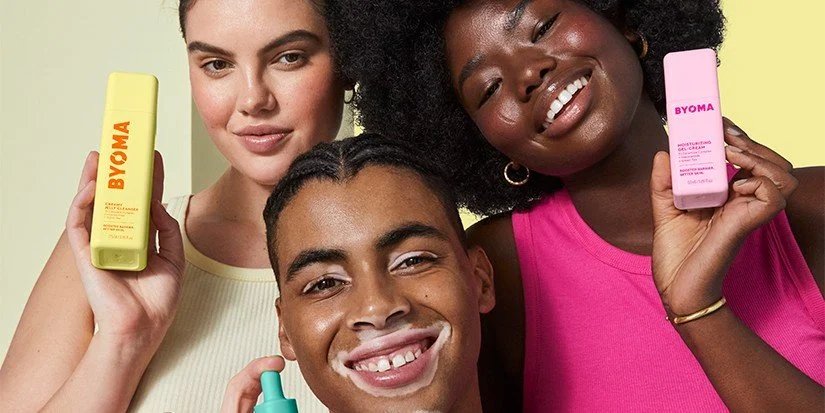
The global barrier skincare segment is projected to reach $4.2 billion by 2027, growing at a CAGR of 8.9%, and Byoma's month-long activation inside Barry's studios across the U.S., Canada, and the UK is not simply a Pride Month gesture. It is a deliberate distribution architecture move, one that positions the brand inside a high-frequency, high-affinity physical environment at a moment when prestige skincare is actively searching for post-DTC growth vectors. The activation, which includes complimentary product sampling, founder-led class experiences with Co-Founders Marc Elrick and Rob Brittain, and in-studio marketing, reflects a calculated attempt to compress the trial-to-conversion funnel by meeting a fitness-committed consumer in the precise moment their skin barrier is most compromised and most receptive.
Boutique Fitness as a Prestige Distribution Channel
Barry's operates more than 80 studios globally, with a membership base that skews heavily toward the 25-to-44 urban professional demographic, a cohort that indexes above average for prestige skincare spend. Byoma's decision to activate inside that ecosystem rather than inside a conventional retail environment signals a broader shift in how masstige-to-prestige skincare brands are approaching channel strategy. Physical sampling at boutique fitness venues delivers a contextual relevance that shelf placement at a specialty retailer cannot replicate. Post-workout skin is stripped, sensitized, and visibly reactive, creating an immediate, demonstrable need case for a barrier-repair formulation. The brand is engineering the problem and the solution within the same sixty-minute window.
Unilever Prestige, L'Occitane Group, and Shiseido's investment arms are all actively evaluating barrier-focused skincare assets as the category attracts sustained clinical credibility and consumer loyalty data that acquirers prize.
Community Programming as a Premiumization Signal
The collaboration's structure, including private press and influencer experiences in New York City, founder participation in live classes, and special-edition Pride programming, is also functioning as a premiumization signal. Byoma launched in 2022 at a masstige price architecture, averaging $14 to $22 per unit, and has since been navigating the persistent challenge of trading consumers upward in perception without abandoning accessibility. Associating the brand with Barry's, which charges between $35 and $45 per class and carries significant aspirational equity in APAC and the GCC as it expands internationally, accelerates that perception shift without a single price increase. The partnership is doing the positioning work that a traditional media buy cannot.
The M&A and Portfolio Implications for Strategic Consolidation
Byoma's parent company, The Inkey List's broader investor ecosystem, operates in a landscape where strategic consolidation is accelerating. Unilever Prestige, L'Occitane Group, and Shiseido's investment arms are all actively evaluating barrier-focused skincare assets as the category attracts sustained clinical credibility and consumer loyalty data that acquirers prize. A brand demonstrating multi-channel distribution competency, specifically the ability to operate experientially inside wellness verticals, fitness retail, and DTC simultaneously, carries a materially stronger strategic valuation than one anchored to a single channel. Byoma's Barry's activation adds a proof point to that distribution story, one that will matter in any portfolio reset conversation with a potential acquirer or growth equity partner.
The collaboration's structure, including private press and influencer experiences in New York City, founder participation in live classes, and special-edition Pride programming, is also functioning as a premiumization signal.
What the Activation Signals for Cross-Vertical Brand Strategy
The Byoma x Barry's model is not an isolated execution. It sits inside a larger directional shift in which prestige and masstige beauty brands are seeking what strategists are beginning to call wellness adjacency: earned positioning inside fitness, nutrition, and mental wellness environments that transfer equity by association rather than by traditional media investment. Glossier built a version of this thesis through experiential retail before pivoting. Charlotte Tilbury has executed it through high-profile sports sponsorships. Byoma is executing it through the sweat economy, a channel that delivers trial, content, community signal, and prestige association in a single integrated program.
The forward-looking implication is direct: brands that establish distribution architecture inside wellness verticals before category saturation will carry a structural advantage as the barrier skincare segment matures and promotional differentiation becomes harder to sustain. The Byoma x Barry's partnership is a relatively modest activation in dollar terms, but its strategic logic points toward a channel model that larger portfolio houses will study closely. When the next barrier skincare acquisition conversation opens in a GCC growth market or an APAC category review, the brands with demonstrable cross-vertical distribution credentials will command the premium.
This article references and builds on original reporting by Beauty Packaging. Read the original piece here: https://www.beautypackaging.com/breaking-news/byoma-and-barrys-team-up-for-pride-month/. BeautyScale is a commercial agency; our editorial notes are commentary on industry reporting.
Ruth Estabillo
Beauty market analyst covering trends, brands, and distribution shifts.