Black Friday 2026: $182.7 Billion in Holiday Intent Meets a Beauty Market Under Structural Pressure

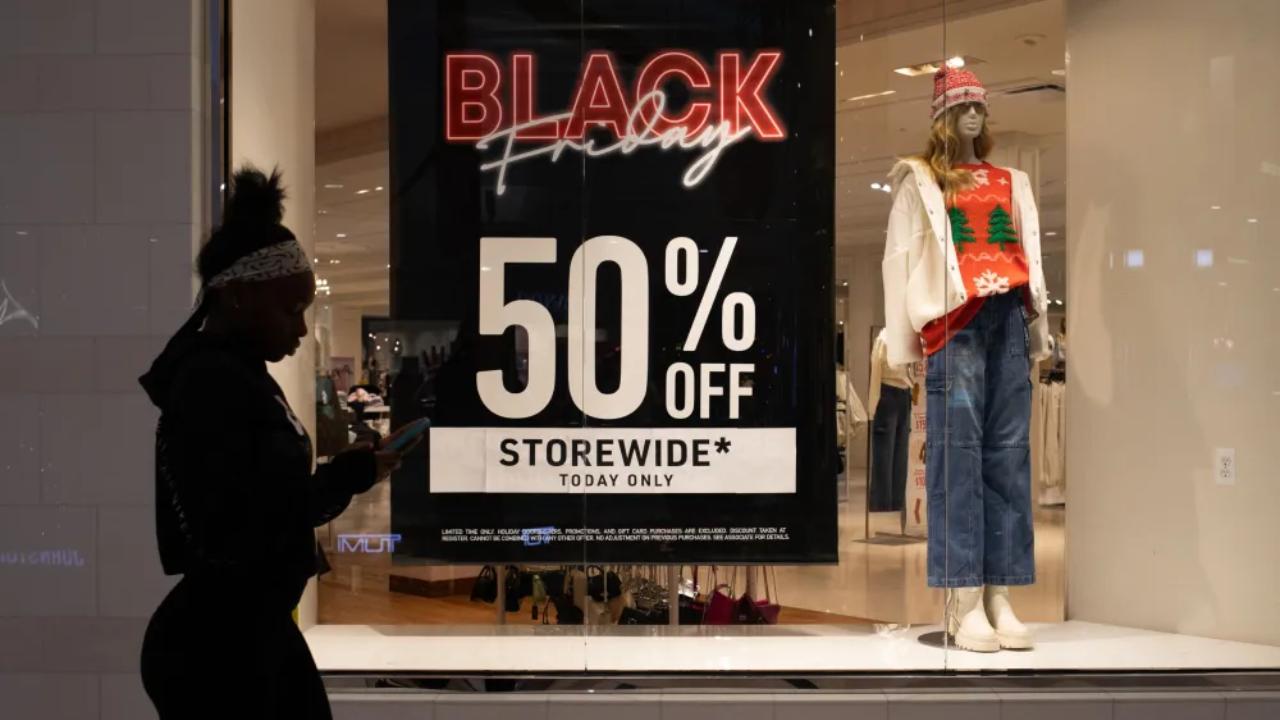
An estimated 182.7 million U.S. consumers are projected to shop across the Thanksgiving weekend in 2026, according to National Retail Federation data, yet the beauty industry enters this promotional cycle facing a more complex structural challenge than seasonal softness. Website traffic to major U.S. beauty branded properties rose 33% in the first nine months of 2026, while orders on those same sites fell 6%, per Rakuten Advertising. That divergence is not a consumer engagement story. It is a distribution architecture story, and brands without a clear channel thesis are absorbing the cost.
Discovery Gains Are Not Converting to Revenue
The traffic-to-conversion gap signals a consumer that has become more deliberate in their purchasing behavior. David Gill, VP of Consumer Insights at Rakuten Advertising, frames it precisely: shoppers are winning at research and losing brands at checkout. For beauty founders and brand managers, this dynamic exposes a critical flaw in relying on owned digital channels as a primary revenue driver without corresponding investment in conversion infrastructure, loyalty mechanics, or pricing clarity.
The problem compounds when considered alongside the broader masstige threat. Mass-market retailers including Target and Walmart have materially upgraded their beauty assortments, while grocery chains such as Trader Joe's and HEB are accelerating dupe programs that target the same SKUs prestige brands use to anchor their value proposition. This is not a temporary pricing arbitrage. It represents a durable shift in distribution architecture, one that forces specialty retailers and direct-to-consumer brands to defend territory on two fronts simultaneously.
Brands including Clinique and CoverGirl have moved to address this consumer, while Sephora's introduction of Quiet Hours this year reflects a retail-level acknowledgment that the Gen X shopper is a growth driver, not a secondary audience.
Amazon's Data Reveals a Premiumization Paradox in Skin Care
Skin care remains the dominant sales category on Amazon's U.S. beauty platform, with sets and kits generating 44% year-over-year growth during October's Prime Big Deal Days, compared to 24% for beauty overall, according to Front Row data. However, Emily Safian-Demers, VP of Consumer Insights at Front Row, identifies a structural contradiction embedded in that growth: unit volume is rising while average price points are declining. Consumers are buying more beauty, and spending less per transaction.
The exception is makeup, where Amazon recorded 30% sales growth for the 12 months ending October 2026, with average price rising 6%. The growth is concentrated in foundation and mascara, driven by an aging consumer cohort actively searching for products formulated for mature skin. Brands including Clinique and CoverGirl have moved to address this consumer, while Sephora's introduction of Quiet Hours this year reflects a retail-level acknowledgment that the Gen X shopper is a growth driver, not a secondary audience. For brand managers evaluating portfolio reset decisions, the mature beauty consumer represents an underpenetrated prestige positioning opportunity with demonstrated willingness to pay.

Promotional Calendar Fragmentation Is Eroding Urgency Economics
Amazon's expansion of its Black Friday window to a 12-day period beginning November 19 is symptomatic of a broader structural shift in how promotional urgency functions across the industry. When consumers understand that another major sale event is approximately 90 days away at any given moment, the psychological trigger that historically drove concentrated holiday conversion weakens materially. Safian-Demers confirms the behavioral shift directly: urgency has measurably declined.
The brands navigating this most effectively are those that have invested in tiered distribution strategies, maintaining hard lines between prestige channel pricing and promotional activity confined to masstige or value-tier sub-brands.
For brands with prestige positioning ambitions, this environment creates a strategic inflection point. Participating aggressively in expanded promotional windows risks price architecture erosion and long-term damage to brand equity. Opting out entirely cedes search visibility and discovery to competitors during the highest-traffic retail period of the year. The brands navigating this most effectively are those that have invested in tiered distribution strategies, maintaining hard lines between prestige channel pricing and promotional activity confined to masstige or value-tier sub-brands.
M&A Signals and Talent Movement Indicate a Market in Recalibration
The executive appointments embedded in this week's industry data are worth reading as directional indicators. Bernard Zion's appointment as CEO of Luckyscent, following tenures at L'Oréal Group, The Estée Lauder Companies, Sol de Janeiro, and Skylar, brings institutional prestige infrastructure to the niche fragrance retail segment. Separately, Leanne Rouse's promotion to CMO at Space NK, now operating inside Ulta Beauty's portfolio following the 2025 acquisition, signals that Ulta is investing in brand-level marketing leadership within its acquired assets rather than consolidating them into a generic retail identity. That is a meaningful signal for specialty retail M&A strategy across the sector.
The Estée Lauder Companies' consideration of voluntary redundancies across approximately 67 positions in France, as part of a continuing global restructuring, reinforces that the portfolio reset underway at ELC is not cosmetic. It is structural, geographic, and ongoing.
As Black Friday 2026 concludes, the brands that emerge with durable positioning will be those that treated this promotional cycle not as a revenue event but as a real-time stress test of their distribution architecture. The results will inform channel strategy decisions well into 2027.
This article references and builds on original reporting by Emily Jensen for Glossy. Read the original piece here: https://www.glossy.co/beauty/beauty-briefing-what-to-expect-this-black-friday-and-cyber-monday/. BeautyScale is a commercial agency; our editorial notes are commentary on industry reporting.
Rami Al Ariss
Beauty market analyst covering trends, brands, and distribution shifts.