ZIIP's $7M Skincare Pivot: How Beauty Tech's Distribution Architecture Is Reshaping Prestige Positioning

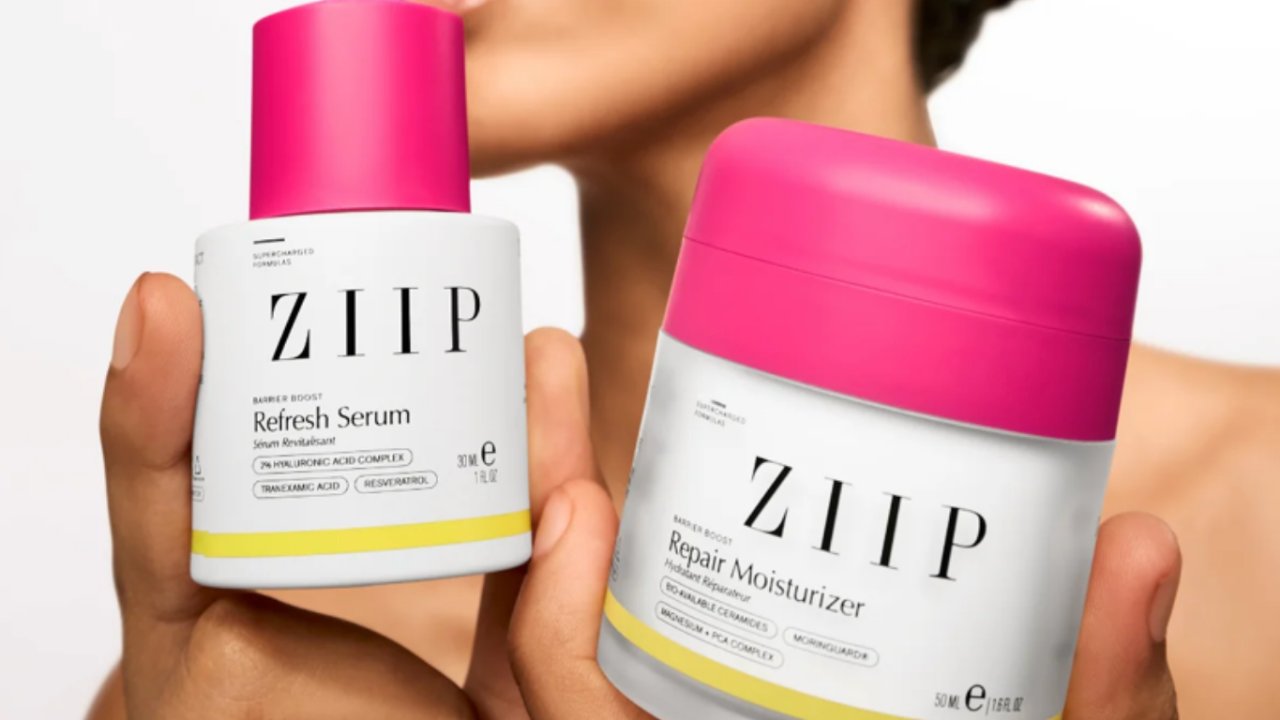
The global beauty devices market is projected to reach $115 billion by 2030, yet the brands commanding that trajectory are increasingly unwilling to remain device-only plays. ZIIP Beauty's nine-product skincare launch, executed against a backdrop of 25.7% revenue growth to £7 million in the first half of FY26, signals something more structurally significant than a line extension. It represents a deliberate portfolio reset, one that repositions a device-dependent brand toward recurring consumable revenue and a more defensible retail footprint. Within The Beauty Tech Group's consolidated architecture, where CurrentBody simultaneously posted a 44.9% revenue increase to £71.1 million, ZIIP's move into formulated skincare reads less like experimentation and more like coordinated category strategy.
The Consumable Revenue Thesis Is Now Non-Negotiable
Device brands carry an inherent commercial vulnerability: purchase cycles are long, repurchase rates are low, and average order value collapses between hardware upgrade cycles. ZIIP's entry into serums, moisturisers, and a universal cleanser directly addresses that structural gap. The nine-product range, priced between £39.99 and £59.99, is calibrated to sit comfortably in masstige territory, accessible enough to expand the addressable consumer base beyond device owners while maintaining sufficient price architecture to avoid diluting the brand's prestige positioning. This pricing band also allows ZIIP to operate profitably in direct-to-consumer channels without the margin compression that mid-tier wholesale typically demands.
The clinical methodology behind the launch deserves attention from a brand credibility standpoint. Rather than relying on ingredient-level dossiers, ZIIP commissioned Eurofins to test finished formulas on 20 participants under dermatological supervision across a minimum eight-week window. Firm Serum, formulated with 0.2% retinol alongside biomimetic growth peptides, demonstrated a 23.5% reduction in under-eye wrinkle volume over 12 weeks. Refresh Serum recorded a 44.6% increase in skin hydration at the eight-week mark. These are not cosmetic marketing claims. They are the kind of substantiated performance metrics that facilitate conversations with prestige retailers and aesthetics-adjacent channels, precisely the distribution tier ZIIP should be targeting in its next phase.
Distribution Architecture Will Determine Whether This Launch Scales
The current UK direct-to-consumer rollout is a sensible first move, allowing the brand to control pricing integrity and gather consumer data before committing to wholesale terms. But the real strategic question is which retail partners ZIIP activates next, and in which geographies. The brand's parent group already reports growth across five regions, which suggests the distribution infrastructure to support a phased international expansion exists at the group level. MENA and APAC, where premiumization in skincare is accelerating at CAGRs well above the global average, represent logical priority markets given that device-led beauty culture is already well-established in both regions. GCC consumers in particular have demonstrated consistent appetite for clinically positioned skincare at the £50 to £80 price point, a range ZIIP's serums occupy.

The four-collection structure, Pro Collagen, Spot Control, Barrier Boost, and Glass Skin, is also constructed for retailer shelf logic. Each collection addresses a discrete skin concern with a serum and moisturiser pairing, enabling modular ranging decisions by retail buyers without requiring full assortment commitment. That flexibility lowers the barrier to initial ranging conversations, a practical advantage when approaching new wholesale partners in competitive prestige beauty floors.
Portfolio Reset Within a Consolidating Beauty Tech Group
ZIIP's launch must be read in the context of The Beauty Tech Group's broader consolidation play. A group reporting 44.3% aggregate revenue growth in a single half-year period is not operating organically on instinct alone. That growth rate reflects deliberate capital allocation, category sequencing, and likely ongoing evaluation of M&A targets that could accelerate geographic or category expansion. ZIIP's transition from single-category device brand to multi-SKU skincare ecosystem increases its strategic value within that portfolio architecture, and potentially its attractiveness as a standalone asset if the group were to pursue any future separation or strategic consolidation of its brand units.
The decision to build formulas around bioelectric delivery principles, rather than simply licensing established active ingredient combinations, also creates meaningful intellectual property differentiation. Ingredients like Dendriclear, paired with 1.8% salicylic acid in the Clear Serum, and the proprietary Lectroglaze technology in the Glow Serum, give ZIIP a formulation narrative that device-agnostic skincare brands cannot replicate without significant R&D investment.
The brands that will define prestige beauty's next cycle are those converting device equity into formulated loyalty. ZIIP has the clinical validation, the parent group's distribution infrastructure, and a pricing architecture suited to both masstige volume and prestige positioning. Execution in wholesale channel development over the next 18 months will determine whether this nine-product launch becomes a category anchor or remains a direct-to-consumer footnote.
This article references and builds on original reporting by Catherine Rowe-Kosary for The Industry Beauty. Read the original piece here: https://theindustry.beauty/ziip-expands-into-skincare-with-nine-product-launch/. BeautyScale is a commercial agency; our editorial notes are commentary on industry reporting.
Nya Ravel
Beauty market analyst covering trends, brands, and distribution shifts.