TikTok Shop's $928M Beauty Quarter: How Bask & Lather's $100M Trajectory Is Rewriting Textured Haircare's Distribution Playbook
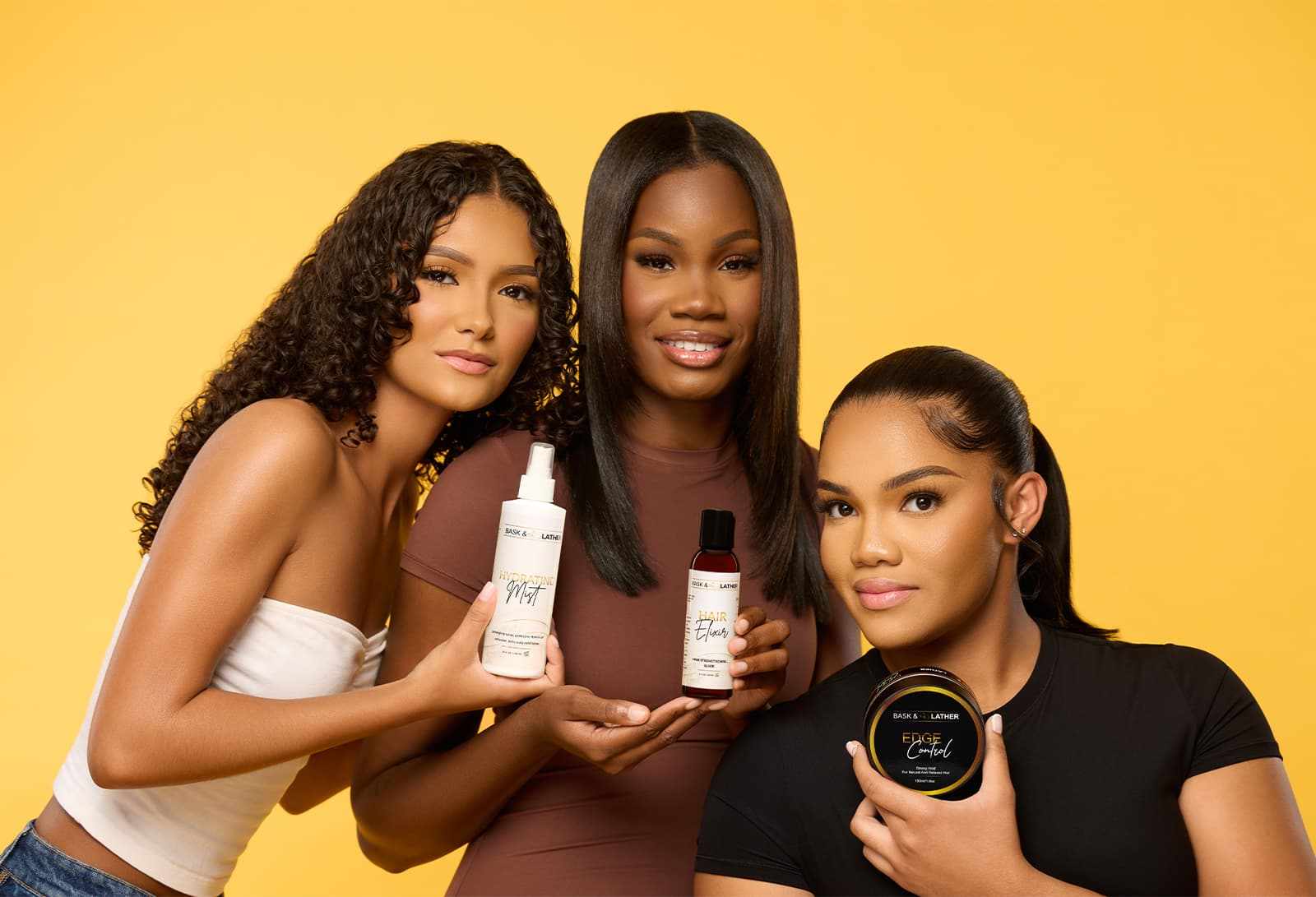
TikTok Shop generated an estimated $928.5 million in U.S. beauty sales in Q1 2025 alone — a 96% year-over-year surge that repositions the platform not as a discovery supplement but as a primary distribution architecture for independent beauty brands. Against that backdrop, Bask & Lather, the boots
TikTok Shop's $928M Beauty Quarter: How Bask & Lather's $100M Trajectory Is Rewriting Textured Haircare's Distribution Playbook
TikTok Shop generated an estimated $928.5 million in U.S. beauty sales in Q1 2025 alone — a 96% year-over-year surge that repositions the platform not as a discovery supplement but as a primary distribution architecture for independent beauty brands. Against that backdrop, Bask & Lather, the bootstrapped textured haircare brand founded by CEO Shaina Rainford in 2020, is tracking toward $100–$125 million in 2025 revenue, ranking No. 8 among all beauty brands on TikTok Shop by Q1 GMV according to Charm.io intelligence. For brand managers and investors still treating social commerce as a top-of-funnel experiment, Bask & Lather's trajectory constitutes a direct challenge to that framework.
Social Commerce Has Graduated to Channel Infrastructure
The structural shift here is not about virality. It is about distribution sequencing. Rainford's model — test organically, convert winning content into shoppable assets, amplify via paid media, and layer in 10–12 hours of daily live-selling — mirrors the channel development logic that brands historically reserved for wholesale or DTC buildouts. NielsenIQ now ranks TikTok Shop as the fourth-largest U.S. online health and beauty retailer, with approximately 10% of U.S. households transacting on the platform at an average annual spend of $118. That consumer penetration figure is no longer pilot-program territory. It is a shelf.
For textured haircare specifically, the platform's architecture creates outsized competitive opportunity. The category has historically suffered from limited mainstream retail shelf allocation and underinvestment in professional merchandising support. TikTok Shop's discovery-to-conversion loop effectively collapses the gap between brand awareness and purchase that brick-and-mortar distribution typically requires three to five years to close. Bask & Lather's Edge Control achieving the No. 1 position on both Amazon and TikTok Shop simultaneously is the commercial proof point — not a coincidence of virality.
Margin Architecture Defines Who Scales and Who Stalls
The more consequential intelligence from Bask & Lather's model sits inside the unit economics. After platform fees, creator commissions, fulfillment costs, promotional spend, and returns, net margins on TikTok Shop compress to a 20–30% range before cost of goods. That is a structurally thin position for any brand without operational scale or pricing discipline. Rainford's approach — treating discounts as time-bound conversion tools aligned to live-selling windows and launch cycles rather than as persistent demand-generation strategy — reflects a margin management philosophy that most early-stage founders deprioritize in pursuit of top-line velocity.
This matters enormously for M&A due diligence. Strategic acquirers evaluating TikTok Shop-native brands must now scrutinize GMV composition with the same rigor applied to DTC contribution margins. A brand reporting $100M in gross sales with 40% of revenue tied to promotional pricing and a 15% creator commission structure is a fundamentally different acquisition target than one generating comparable revenue at disciplined net margins. Bask & Lather's reported economics suggest the latter — a critical distinction as prestige and masstige portfolio holders assess which indie brands merit integration into broader distribution architectures.
The Halo Effect as Retail Readiness Signal
Rainford's explicit acknowledgment of TikTok's halo effect — that platform discovery converts to Amazon, DTC, and physical retail traffic — reframes how brand managers should model omnichannel attribution. The platform is functioning as a demand-generation engine whose return on investment extends well beyond its own GMV reporting. For brands planning a premiumization strategy or prestige repositioning ahead of retail expansion, TikTok Shop provides a uniquely efficient environment to establish category authority and consumer trust at scale before committing to the capital-intensive requirements of Ulta Beauty or Sephora shelf programs.
Bask & Lather has explicitly deferred larger retail partnerships until cash flow supports the operational infrastructure. That sequencing — building demand proof and margin health on social commerce before entering structured wholesale agreements — is a distribution strategy that should be modeled across the broader independent textured haircare segment.
The Investment Case for Social-Commerce-Native Haircare
The textured haircare TAM continues to attract strategic capital, with the category projected to sustain mid-to-high single-digit CAGR through the end of the decade across both North American and MENA consumer segments. Brands that have constructed durable creator networks, proprietary content libraries, and live-selling infrastructure — assets that are genuinely difficult to replicate at speed — represent compelling acquisition targets for portfolio holders seeking to close textured haircare white space. Bask & Lather's 1,000%-plus year-over-year growth and category-leading SKU positions on two major platforms simultaneously suggest a brand that has moved beyond proof of concept and into a scalable asset profile. The distribution architecture is already built. The strategic question now is who moves first to own it.