Target Codevelops Haeze With Very Great: A $49 EDP and a $7B Mass Fragrance Market Signal a New Distribution Architecture

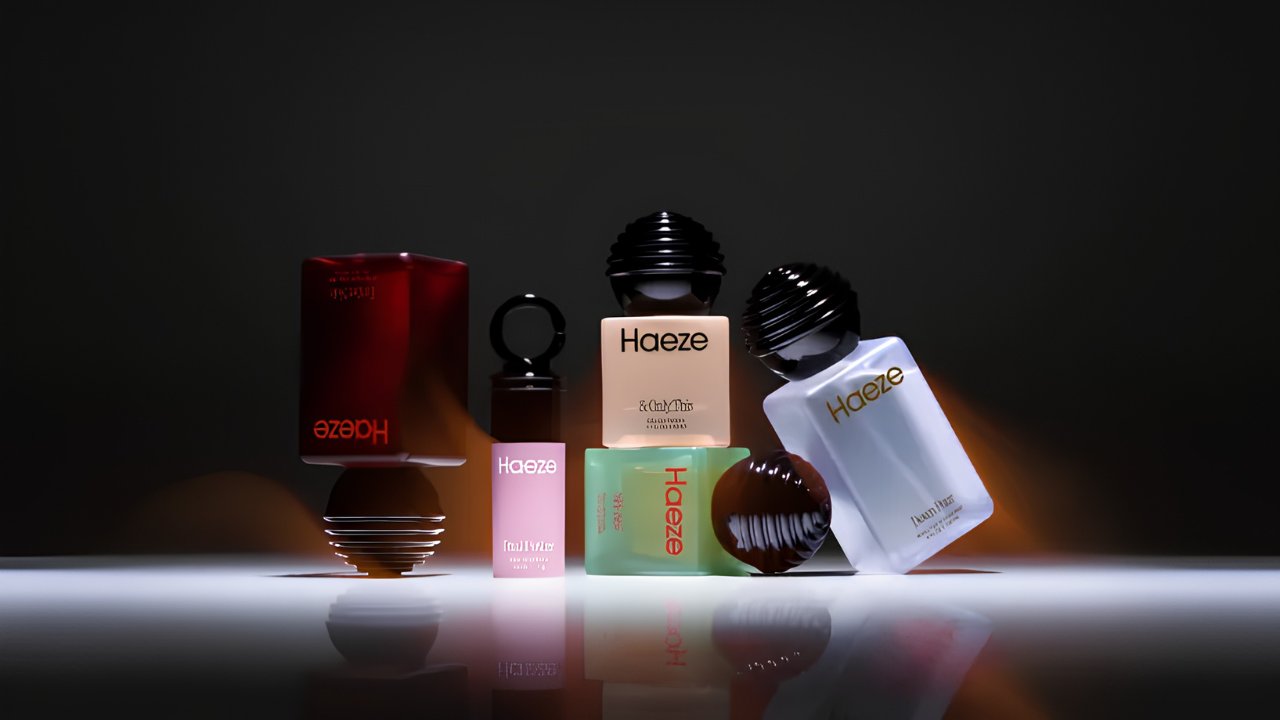
The global mass fragrance segment is projected to surpass $7 billion by 2027, expanding at a CAGR of approximately 6.4 percent, yet prestige-adjacent positioning within mass retail has remained structurally underdeveloped. Haeze, a fragrance brand codeveloped by New York incubator Very Great and Target Corporation, launches November 1 across Target's nationwide store network and target.com, entering that gap with deliberate precision. The brand represents something more consequential than a single product launch: it is a blueprint for retailer-integrated brand creation, with distribution architecture embedded at the concept stage rather than negotiated after the fact. For brand strategists and investors tracking premiumization vectors inside mass retail, Haeze is a case study worth modeling.
Retailer-as-Incubator Redefines the Codevelopment Model
Very Great, the New York-based brand incubator founded in 2016 by Josh Williams and Eric Prum, built its portfolio across W&P, Wild One, and Courant by identifying underserved lifestyle categories and applying considered design to accessible consumer segments. Haeze marks the firm's entry into beauty, and its structural logic is distinct. Target did not acquire Haeze. Target did not license it. Target codeveloped it, from brand concept through product assortment, alongside Very Great and creative director Andy Anderson, over an 18-month development cycle. That distinction carries significant strategic weight. Retailer-embedded brand creation compresses the traditional distribution risk that independent fragrance launches routinely absorb in their first two to three years.
The Givaudan partnership reinforces this further. By engaging one of Switzerland's premier fragrance houses at the formulation stage, Very Great signals that accessible price points need not compromise raw material quality. A $49 eau de parfum sitting alongside a $10 scented candle and a $20 solid fragrance with charm functionality is a deliberate masstige architecture, one that allows a consumer to enter the Haeze ecosystem at multiple price thresholds while maintaining consistent brand equity across formats.
Premiumization at Mass: The Portfolio Reset Argument
The five-fragrance debut collection, developed across amber, floral, gourmand, woody, and aquatic categories, is not assembled arbitrarily. Each scent functions as an individual SKU and as a component within a layering system, directly challenging the singular-signature-scent model that has anchored fragrance retail for decades. Anderson's stated premise, that consumers need not limit their olfactory identity to a single fragrance, maps directly onto behavioral data showing Gen Z consumers index significantly higher on fragrance layering than any prior demographic cohort.

This is precisely where prestige positioning meets mass distribution and produces a defensible middle lane. Legacy fragrance houses have long monetized layering through high-ticket ancillary products, body lotions, scented oils, and hair mists, that require meaningful consumer investment. Haeze collapses that spend barrier while preserving the layering narrative, a portfolio reset that prestige brands will find difficult to counter at Target's volume and price architecture without cannibalizing their own margin structures.
Distribution Breadth as Brand Infrastructure
Williams confirmed expansion plans extending beyond traditional beauty formats within a 12 to 18 month window, with trajectory contingent on consumer response data from the initial collection. That framing is analytically instructive. Very Great is using Target's distribution infrastructure as a real-time consumer research mechanism, deploying at scale before committing to category extensions. The capital efficiency of that approach is considerable, particularly against the backdrop of the brand's disclosed several million dollar launch investment, which covered product quality, multi-format development, and a cinematic digital content campaign across five short films.
Target SVP of essentials and beauty merchandising Amanda Nusz described the retailer's consumer base as seeking fragrance exploration that feels personal and self-directed. That language, stripped of its press-release register, translates into a documented retail insight: fragrance discovery is outperforming destination purchases across mass channels, a behavioral shift that benefits portfolio-format brands over single-SKU launches.
Forward Position: The M&A Signal Embedded in This Launch
The strategic implications for the broader beauty industry extend beyond Haeze itself. As prestige fragrance M&A intensifies, with consolidation activity across LVMH, Puig, and Kering Beauté accelerating through 2024, mass-channel fragrance brands with proven scalability and clean brand architecture are increasingly attractive acquisition targets. Very Great's incubator model, with demonstrated multi-category exits and a major retail codevelopment relationship now on record, positions Haeze as a brand built for optionality. The distribution architecture is Target today. The question investors and strategic acquirers should be asking is what that architecture looks like when it extends into APAC or GCC channels, where masstige fragrance appetite is expanding faster than domestic supply can currently address.
This article references and builds on original reporting by Ryma Chikhoune for WWD. Read the original piece here: https://wwd.com/beauty-industry-news/fragrance/very-great-haeze-fragrance-brand-target-launch-1239374602/. BeautyScale is a commercial agency; our editorial notes are commentary on industry reporting.
Josette Assaf
Beauty market analyst covering trends, brands, and distribution shifts.