Refy's $40 Skin Tint and the Zero-Approval Brief: How Creator Autonomy Is Reshaping Brand Equity Valuations
Influencer marketing spend in the global beauty sector is projected to surpass $9.3 billion by 2028, yet conversion rates on paid creator content have plateaued at an industry average of 1.2–2.8%, signaling a structural crisis of authenticity that legacy campaign architecture has failed to solve. Refy's decision to deploy a zero-approval creator brief for its Skin Base Skin Tint launch — paying 12 creators to post without brand sign-off — is not a social media stunt. It is a deliberate brand equity play with material implications for how prestige-adjacent indie labels position themselves ahead of acquisition conversations. For brand managers, investors, and retail buyers evaluating the next cohort of independent beauty brands, the Refy model introduces a new variable: institutional trust as a distribution asset.
---
The Brief Is the Product Signal
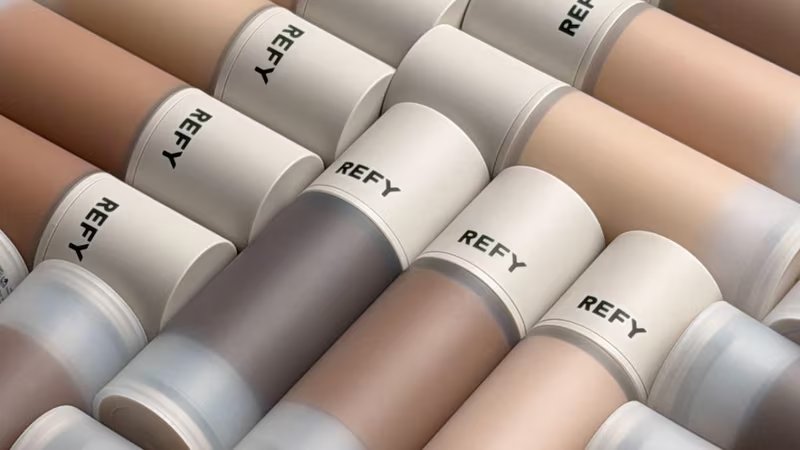
Refy's Skin Base Skin Tint retails at $40 — a price architecture that firmly occupies the masstige corridor, competing for shelf space and consumer attention against established complexion franchises from NARS, Rare Beauty, and Tower28. What differentiates Refy's launch, however, is not the product's hyaluronic acid base or its proprietary Inclusium complex. It is the operational confidence encoded in the brief itself. Charlotte Geoghegan, Refy's Head of Brand, structured a campaign brief that served a dual purpose: content generation and brand narrative amplification. When creator Kayla Ryan (1.3M TikTok followers) disclosed on camera that Refy explicitly waived approval rights, the disclosure became the creative asset. That is precision media engineering, not creative looseness.
---
Refy's Skin Base Skin Tint retails at $40 — a price architecture that firmly occupies the masstige corridor, competing for shelf space and consumer attention against established complexion franchises from NARS, Rare Beauty, and Tower28.
Authenticity Infrastructure as Premiumization Lever
The beauty industry's ongoing premiumization cycle is forcing mid-market brands into a binary: either absorb the production costs of prestige positioning or risk commoditization at retail. Refy has found a third path — deploying authenticity infrastructure as a proxy for prestige signaling without the corresponding COGS escalation. The zero-approval campaign generated organic second-order content, most notably a 500,000-view analysis video from creator Farron Clark (183K followers), which Refy subsequently monetized by commissioning Clark to post the original brief alongside her own review. This feedback loop — paid content generating earned meta-commentary generating additional paid content — compresses customer acquisition costs while simultaneously building the brand equity narrative that acquirers and retail partners scrutinize in due diligence.
Retail buyers at Sephora, Space NK, and Cult Beauty increasingly evaluate indie brands not just on sell-through velocity but on community architecture. Brands that can demonstrate organic advocacy at scale — particularly advocacy that explicitly references product confidence — present a materially lower promotional spend burden at point of sale.
---
Distribution Architecture Implications
The Refy case surfaces a critical insight for brands navigating the DTC-to-wholesale transition: creator-generated authenticity signals operate differently depending on distribution stage. At the DTC phase, zero-approval campaigns function as top-of-funnel trust mechanisms. At the wholesale phase, they function as category authority signals that justify premium shelf placement and reduced markdown exposure. Refy, currently distributed through its own DTC channel and select prestige retail partners, is constructing exactly the kind of brand equity story that supports a distribution architecture expansion — whether into Sephora's US network, Douglas across EMEA, or Sephora SEA markets across APAC.
Strategic acquirers — including Puig, L Catterton-backed portfolios, and LVMH's emerging brands division — have consistently demonstrated willingness to pay premiums for brands with defensible community moats.
The M&A implications are equally direct. Strategic acquirers — including Puig, L Catterton-backed portfolios, and LVMH's emerging brands division — have consistently demonstrated willingness to pay premiums for brands with defensible community moats. Refy's zero-approval campaign is, functionally, a live demonstration of that moat. A creator ecosystem that generates unsolicited meta-analysis of your marketing strategy is a retention and loyalty signal that no owned-channel metric fully captures.
---
The Emerging Standard for Creator Portfolio Strategy
Forward-looking brand strategy will treat creator relationships as portfolio assets subject to the same risk-adjusted logic applied to product development or retail expansion. Refy's campaign did not succeed because it was unconventional — it succeeded because the brand had two years of product development rigor behind it, de-risking the authenticity gamble before it was deployed. That sequencing matters. Brands that attempt zero-approval frameworks without equivalent product conviction will generate precisely the negative disclosure content they fear. The lesson is not to remove guardrails. The lesson is to build the product well enough that the guardrails become unnecessary.
As prestige positioning increasingly migrates from packaging and retail adjacency toward community trust and transparent brand behavior, the zero-approval brief may evolve from a bold exception into a baseline expectation — one that well-capitalized indie brands deploy as competitive differentiation before the category's next wave of strategic consolidation reprices the entire segment.